The federal Liberals’ promise to require EnerGuide efficiency audits for homes before they can be sold has two big problems: their government doesn’t have the power to require them, and the EnerGuide program isn’t suitable for it, according to Natural Resources Canada officials.
Skip to content

News
Liberals’ EnerGuide labelling promise runs into problems with practicality, the Constitution
Feds can’t mandate audits before home sales and EnerGuide is the wrong tool, deputy warned minister
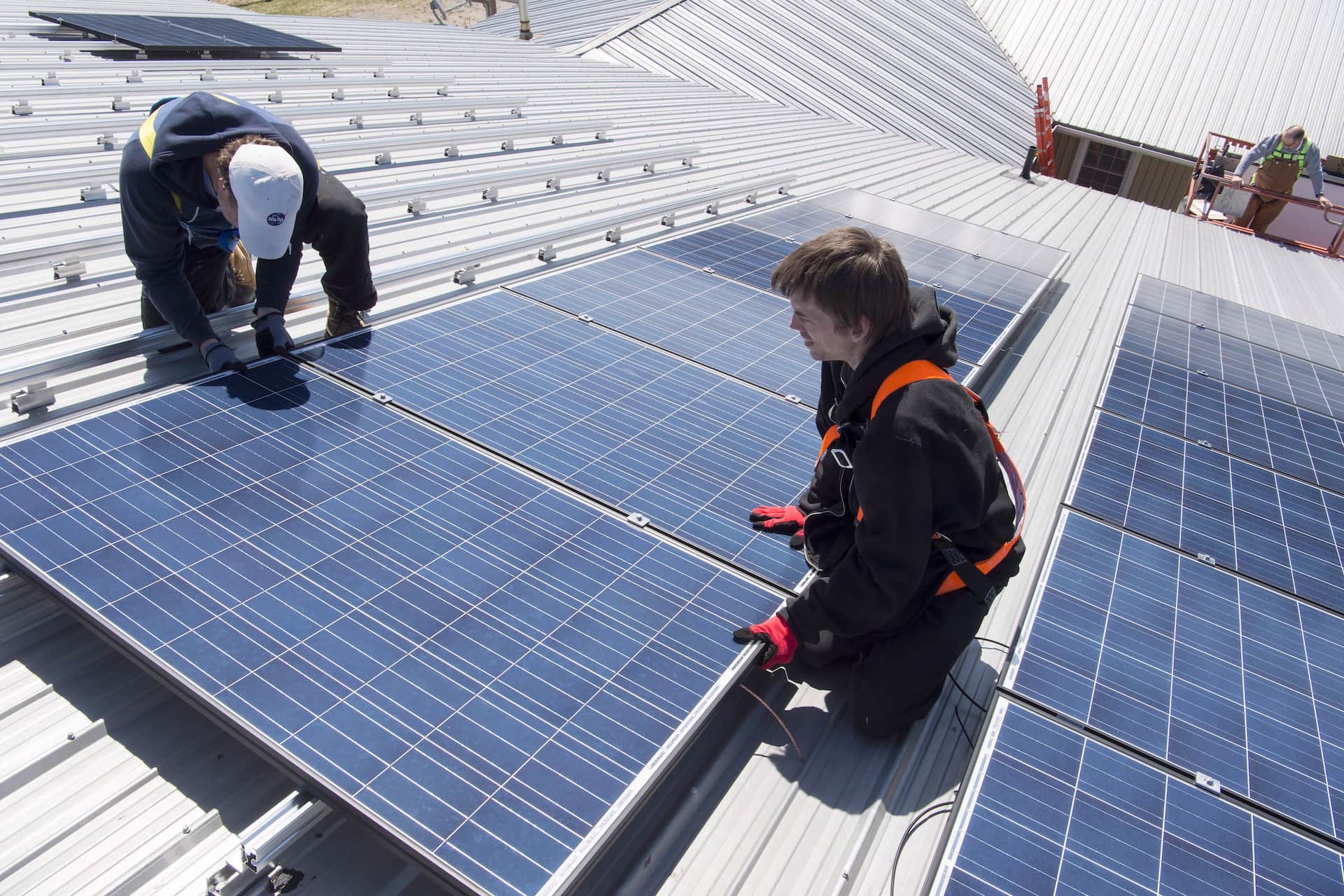
Staff of Osborne Solar Solutions check a connection under a new solar panel installation in Scugog, Ont., in April 2016. Photo: The Canadian Press/Frank Gunn
The federal Liberals’ promise to require EnerGuide efficiency audits for homes before they can be sold has two big problems: their government doesn’t have the power to require them, and the EnerGuide program isn’t suitable for it, according to Natural Resources Canada officials.
The obstacles are outlined in a February memo to Natural Resources Minister Jonathan Wilkinson signed by his deputy minister, John Hannaford, who has since been promoted to head the whole federal public service.
Talking Points
- To encourage energy efficiency retrofits, the federal Liberals promised to require EnerGuide audits and labels when homes go on the market
- According to the department charged with following through, Ottawa doesn’t have that power and the detailed EnerGuide process would add too much time and cost to home sales
The Logic obtained a partly redacted version of the document through an access-to-information request. Wilkinson’s office did not respond to The Logic’s questions about the memo’s implications.
The Liberals’ 2021 platform included a simple promise to “require EnerGuide labelling of homes at the time of sale” in a section on creating green jobs and reducing Canada’s net greenhouse-gas emissions to zero by 2050.
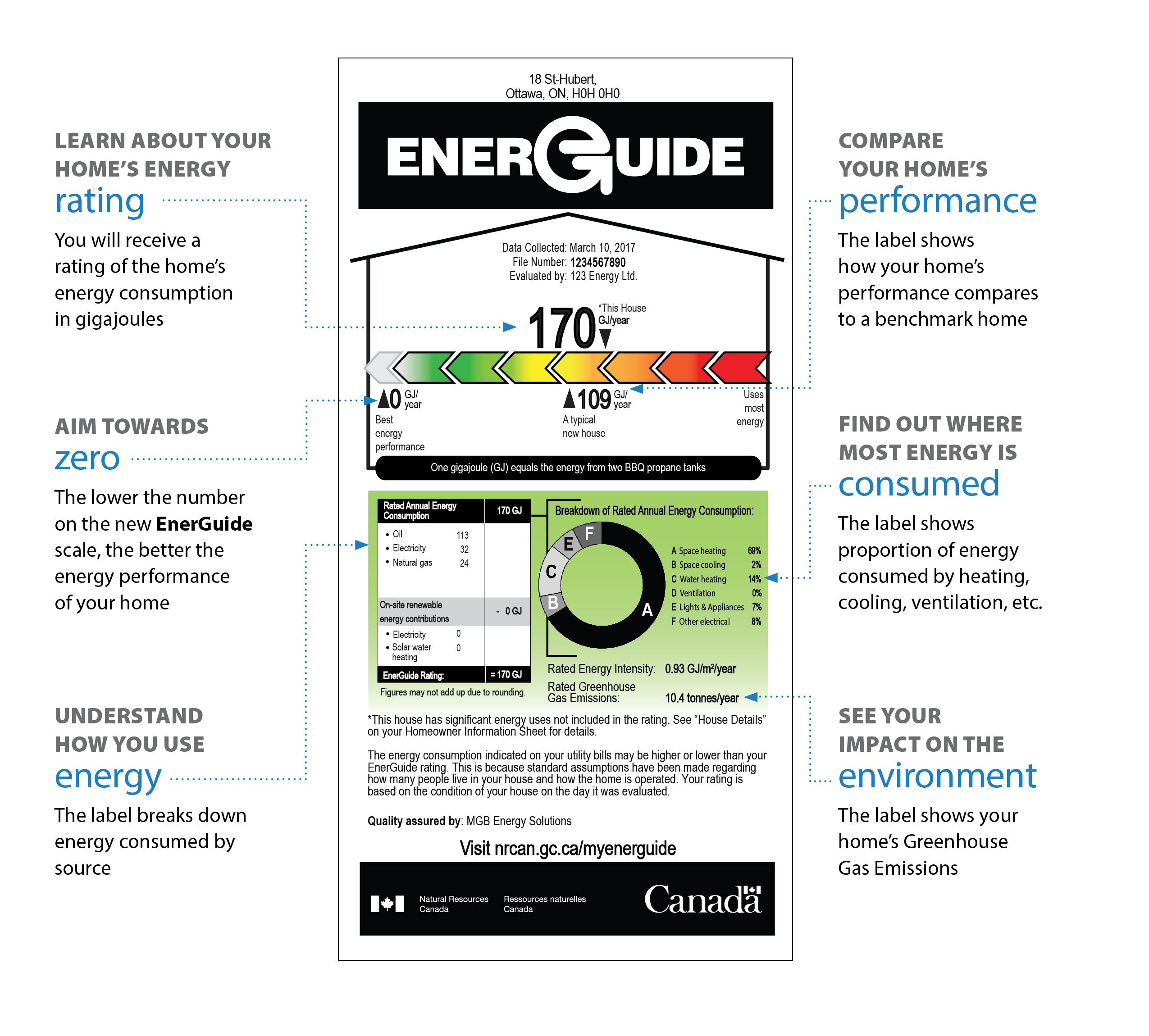
The same system for rating the energy use of appliances and cars has standards for buildings, assessing their efficiency in heating, hot water and electricity, and comparing a specific structure to other similar ones, right down to a simple graphic much like you’d see on a fridge or clothes dryer.
A homeowner who wants to qualify for government rebates for energy-efficiency upgrades, such as new windows or more insulation, will typically have to get such an audit first, to show the renovation would be useful, and a follow-up afterward to prove the job got done.
Related Articles


Wilkinson’s mandate letter from Prime Minister Justin Trudeau put fulfilling the pledge to also make these audits mandatory for home sales on the minister’s to-do list.
Natural Resources has been working on it since 2021, Hannaford’s memo said. Provinces, territories, municipalities and other stakeholders like financial institutions all seem to like the idea of these labels, it said.
That is important because the federal government can’t actually mandate them. The Constitution says provinces have authority over property rights, and that covers most elements of real estate transactions.
Natural Resources staff have talked about it amongst themselves and with people in other federal departments, and found that “there is no clear federal path to legally requiring home energy labelling on all homes,” the memo said.
So to honour their campaign promise, they will need to get the other governments on board.
The EnerGuide program is a good start, the Hannaford memo said, because it’s widely known and trusted.
“However, early feedback is clear: as it stands, the current system is not well suited for time-of-sale labelling, and does not meet the needs of many jurisdictions looking to expand labelling,” the memo said. “It is seen as both too expensive and too time consuming. This is particularly problematic considering the short timelines involved in real estate transactions.”
“For heaven’s sake, we’re talking about spending $500,000 or $1 million on a house? Are you really worried about $400 to get this inspection done?”
This is fixable, EnerGuide expert Kai Millyard told The Logic in an interview, but it would take work. Millyard trains EnerGuide home auditors for Green Communities Canada, an association of local environmental non-profits with members from Victoria to Moncton, N.B.
“You would need to phase it in, presumably, because the volume of business would be enormous compared to what we’re doing now,” he said.
The sector has been through a similar shock already, when the federal government began offering new rebates on home-energy retrofits in 2021, which required property owners to get energy assessments first.
“There was a shocking and pleasant response by the public to the offer, a huge demand to participate. The number of auditors available was just nowhere near what was needed to meet that level of demand,” Millyard said. Waiting lists for the audits got to be months long.
Green Communities’s members went on a hiring and training spree. Now, with about three times as many people doing the energy audits, wait times are down to about two weeks, Millyard said. A physical walk-through of a house and a “blower test” to look for air leaks takes a few hours. In some cases, property owners can get a report that day; if an energy auditor is busy, it’s more likely to take a couple of weeks.
The cost, typically several hundred dollars, is easily covered by rebates on new heating systems, better windows or other efficiency improvements, he said.
Even if you only get the report, understanding the operating costs of a home is worthwhile, Millyard said: “For heaven’s sake, we’re talking about spending $500,000 or $1 million on a house? Are you really worried about $400 to get this inspection done?”
People who are already worried about the cost of living in general, and the cost of housing in particular, might be.
One alternative the NRCan document offers is virtual assessments—some combination of a questionnaire and pre-existing data, which would produce a rough rating very quickly. But, the memo said, “a cautious approach is warranted.”
Much of the reasoning is blacked out in the version released to The Logic, but one paragraph mentioned a report last year from Ottawa’s Smart Prosperity Institute that came down firmly against virtual assessments. Consumers won’t trust a report that’s full of generalities, and even if they do, it won’t give them specific information on how to get the best bang for their energy-efficiency buck, the institute’s report said. Getting people to make those improvements is the goal, and there’s no point to a rating system that doesn’t do that.
The federal department’s plan is to keep consulting and meeting, aiming to have provinces and territories sign onto a national labelling system by the end of 2025.



Loading...
Thanks for sharing!
You have shared 5 articles this month and reached the maximum amount of shares available.
CloseThis account has reached its share limit.
If you would like to purchase a sharing license please contact The Logic support at [email protected].
CloseGift the full article!
You have gifted 0 article(s) this month and have 5 remaining.
Recipients will be able to read the full text of the article after submitting their email address. They will not have access to other articles or subscriber benefits.
Photo: The Canadian Press/Frank Gunn
Most Popular This Week




In-depth, agenda-setting reporting
Great journalism delivered straight to your inbox.
Commentary
Carmichael: Canadian ignorance about India is a strategic weakness
Briefing
Aritzia shares pop after earnings rise 204%
First Nation in Alberta goes to court over fast-tracked oil pipeline
Chinese EV maker Geely Auto Group to launch in Canadian market in 2027
Best business newsletter in Canada
Get up to speed in minutes with insights and analysis on the most important stories of the day, every weekday.
Exclusive events
See the bigger picture with reporters and industry experts in subscriber-exclusive events.
Membership in The Logic Council
Membership provides access to our popular Slack channel, participation in subscriber surveys and invitations to exclusive events with our journalists and special guests.