Listen Now
0:00
OTTAWA — Canadians have sharply different views of the federal government’s push to modernize homebuilding, according to an internal document obtained by The Logic.
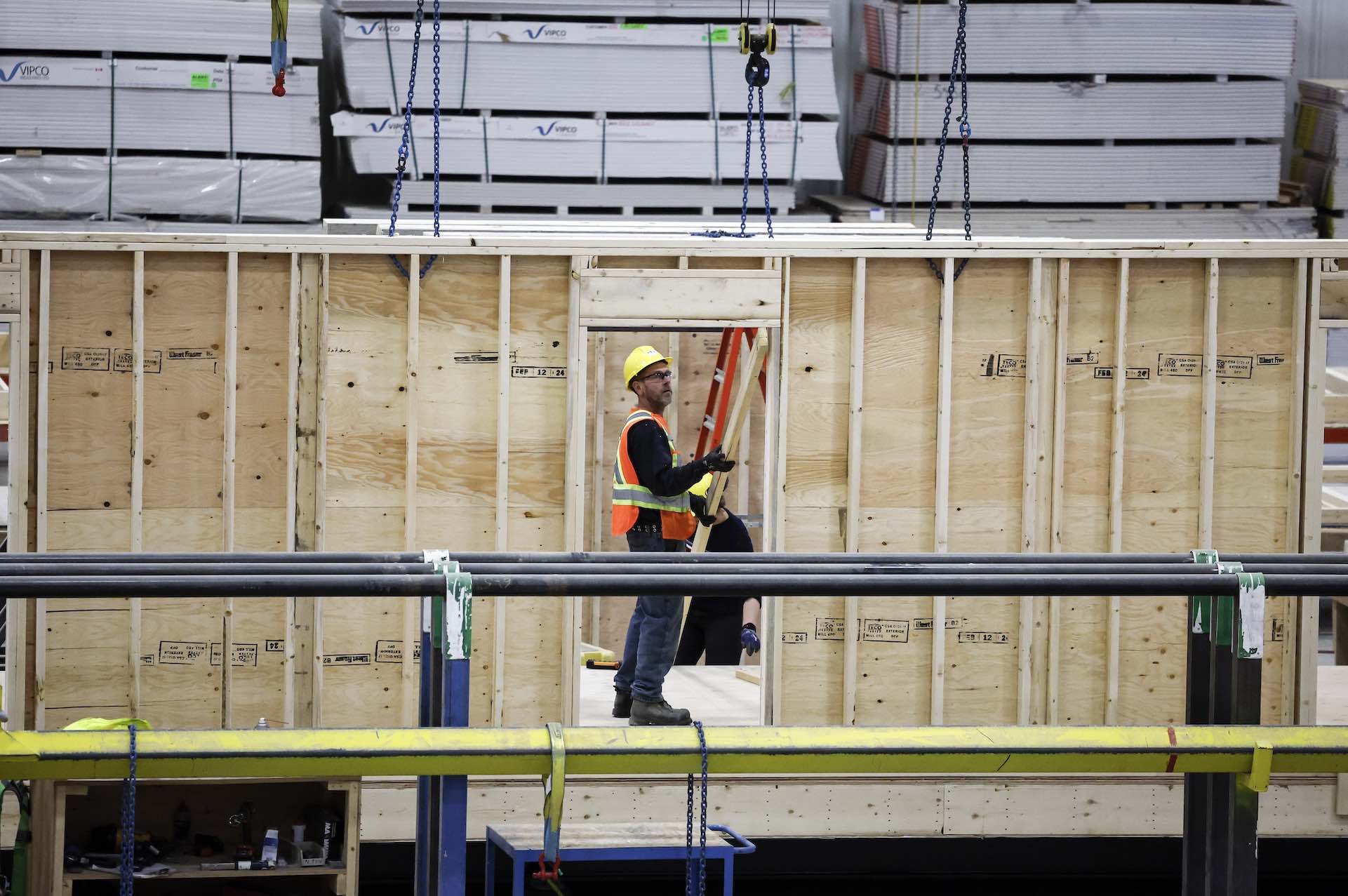
The Privy Council Office held regional focus groups to determine how Canadians feel about “modern methods of construction,” including prefabricated and factory-built homes, as part of the government’s strategy to boost homebuilding productivity. The government ordered its new, $13-billion homebuilding agency, Build Canada Homes, to prioritize modern building methods in hopes of cutting down on construction timelines, costs and emissions.
Talking Points
- Canadians’ views of prefabricated housing vary widely by region, which could affect the success of government efforts to improve homebuilding productivity, an internal document says
- The federal government’s strategy depends on public and industry acceptance of modern building methods, but government focus groups suggest people in some parts of the country are skeptical
“Wide acceptance among both the industry and Canadians is critical to the success of this strategy,” staff said in a March briefing note prepared for the deputy minister of Housing, Infrastructure and Communities. The Logic obtained the memo through access to information laws.
Focus group participants in northwestern Ontario told the government they were skeptical. They compared the modern building methods to mobile, “Ikea” or “Lego” homes, and questioned whether they can really produce quality homes at a more affordable price.
Perceptions in Toronto were split: roughly half of the participants characterized modular or factory-built homes as lower quality and generic, while others saw them as a potential solution to the local housing crunch.
Related Articles
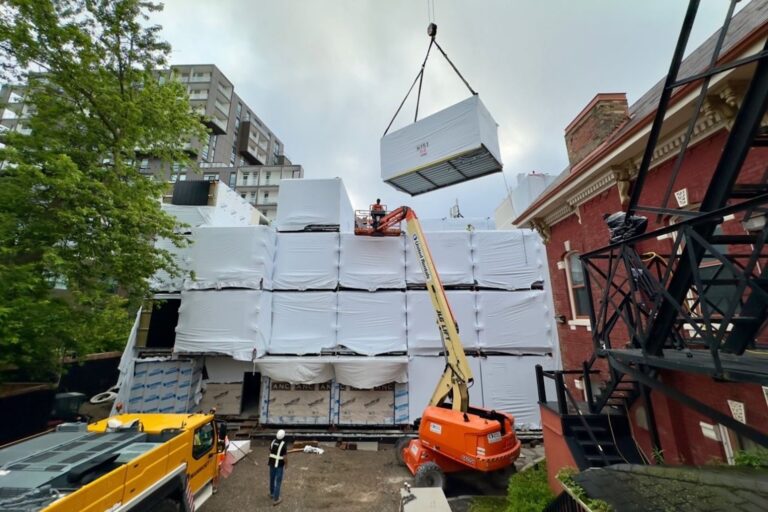

People in Alberta, home to ATCO Structures, one of Canada’s largest modular home builders, were more enthusiastic about the potential speed and affordability advantages.
“Some noted concerns about insurance availability and land costs, and a few believed that affordability might imply cheaper materials, but overall, Alberta expressed the strongest confidence,” the memo said.
The government planned to host more focus groups in Montreal, Winnipeg, Nova Scotia and Iqaluit to better understand regional differences, according to the document. The Housing Department did not respond to The Logic’s request for information about the results of those interviews, or how it plans to use the findings.
The regional differences could influence developers’ willingness to take up new building methods, the memo noted.
Modern construction involves a range of methods, including off-site construction, prefabricated parts, and the use of robotics and AI. The Canadian modular construction market was valued at $5.5 billion in 2025, and accounted for about 5.5 per cent of the overall construction market, according to a 2026 report commissioned by the Modular Building Institute, a global trade association. Forecasts suggest that figure is set to grow.
Housing Minister Gregor Robertson told The Logic last year that he plans to push housing developers to embrace new technologies and building methods. He said Build Canada Homes could require private companies to use those methods as a condition of doing business with it.
Part of the challenge, though, is the housing industry’s boom-and-bust cycle, which puts added pressure on prefabrication companies that require more upfront expenses and overhead than traditional homebuilding.
That makes a steady flow of demand crucial to the future of the modular housing industry, said Tom Hardiman, executive director of the Modular Building Institute. “The developers are really in the driver’s seat for a lot of this.”
The government believes stigmas attached to new building methods could be holding developers back. “Anecdotally, it is believed that few construction firms are pursuing [modern methods of construction] because developers see limited market demand, driven in part by public perception that [the] homes are low-quality or unattractive,” the memo said.
With files from David Reevely