
Listen Now
0:00
MONTREAL — The Canadian and German governments are giving LawZero a combined $300 million to fund the development of AI pioneer Yoshua Bengio’s vision of a safer version of the technology.
The Montreal-based non-profit will use the grants for R&D, and to buy compute from a new cluster that Canadian AI infrastructure conglomerate Hypertec and 5C will build for it. LawZero will also open an office in Berlin.
Bengio launched the organization in June 2025, and it has since grown to almost 50 staff. LawZero is building Scientist AI, a system trained on a base of verifiable facts. It’s designed to avoid what Bengio considers troubling properties of the most advanced foundation models and AI agents, including sycophancy and persuasion. LawZero plans to sell Scientist AI as a guardrail to commercial AI tools, either in co-operation with other model makers or by going directly to their customers.
Related Articles
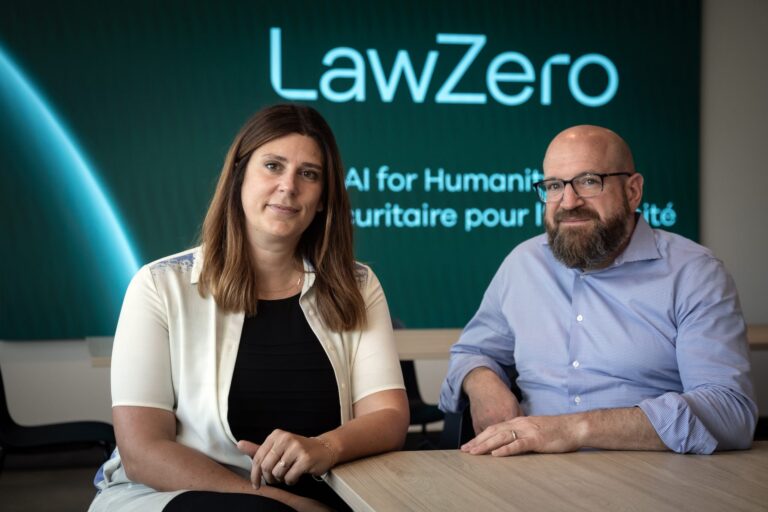

“We are getting a commitment of governments that they care about our mission at a time when the world is realizing that this is a really important mission,” Bengio told The Logic. “We need to figure out how to build AI that will follow our instructions and not do crazy stuff.”
OpenAI and Anthropic have warned that their latest frontier models have strong coding capabilities and the ability to find and exploit software vulnerabilities. Systems from both companies—and one from Meta—have hacked other organizations during testing.
LawZero had previously raised US$35 million from backers including the Gates Foundation, groups funded by former Google CEO Eric Schmidt and Skype co-founder Jaan Tallinn. Existing funders also include the Future of Life Institute and Coefficient Giving, both of which are closely associated with the movement warning AI poses an existential risk to humanity.
Nvidia has also donated compute to Bell. The chip giant has endorsed one of Hypertec’s divisions to build servers around its processors. Hypertec has also agreed to let AI institute Mila test new applications and designs on a compute cluster it’s building in LaSalle, Que. LawZero spun out of Mila, where Bengio was previously scientific director. Hypertec’s data centre arm, 5C, is building facilities in the U.S.
LawZero needed more money to build its tools and pay for the processing power to train them, president Sam Ramadori told The Logic in July. “There’s a reason why you cannot acquire nuclear bombs as they are very difficult to make,” he said. “AI has the potential to become as dangerous as nuclear, but will be far more accessible if we don’t act on it now.”
The Canadian and German governments are each providing half the funding. Ottawa cited LawZero in its recent national AI strategy, promising to back research into foundation models if they’re built with safety in mind, and to help export them to countries “actively seeking trusted alternatives.”
Canada and Germany have promised to co-operate on AI via their Sovereign Technology Alliance, announced in February. German Digitization Minister Karsten Wildberger said Bengio “starts from first principles, asking how to make AI safe by design.” He was speaking at the All In conference in Montreal, just before LawZero announced the funding. “We build properly—openly and safely,” AI Minister Evan Solomon said at the same event. He cited the joint Canadian-German funding for LawZero as a “critical step” towards that.