OTTAWA — Ontario’s Progressive Conservatives have been playing hard for union support as they try to get re-elected on June 2.
They’ve racked up endorsements from several notable private-sector unions, but their efforts have left some of the most precarious workers in the province—those who depend on apps like Uber and SkipTheDishes to piece together livings—cold.
In government, the Tories passed two labour-reform laws in less than a year: last fall’s Working for Workers Act, 2021 and the spring’s Working for Workers Act, 2022. Both were grab bags of measures that Labour Minister Monte McNaughton said were aimed at rebalancing the employer-employee relationships in favour of workers.
Talking Point
Construction unions are supporting the Ontario Progressive Conservatives, but a gig workers’ group says despite the Tories’ stated goal of rebalancing work relationships, they’ve just reinforced app platforms’ power.
“It really is about addressing the future-work issue, and that’s a big one coming out of the pandemic,” McNaughton told The Logic after he introduced the first bill.
Having won his seat by big margins three elections running, McNaughton’s taken the “working for workers” slogan on the road this campaign, stumping for candidates far afield from his southwestern Ontario riding.
Both laws had implications for workers in tech and tech-disrupted fields: the first banned non-compete clauses in most employment contracts, required larger employers to have explicit policies on workers’ right to disconnect and gave delivery workers washroom rights in businesses they serve.
The second, focused primarily on “digital platform workers,” guaranteed minimum wage for gig workers, plus tips, and required the operators of platforms like Uber or SkipTheDishes to give workers explanations if the operators kicked them off.
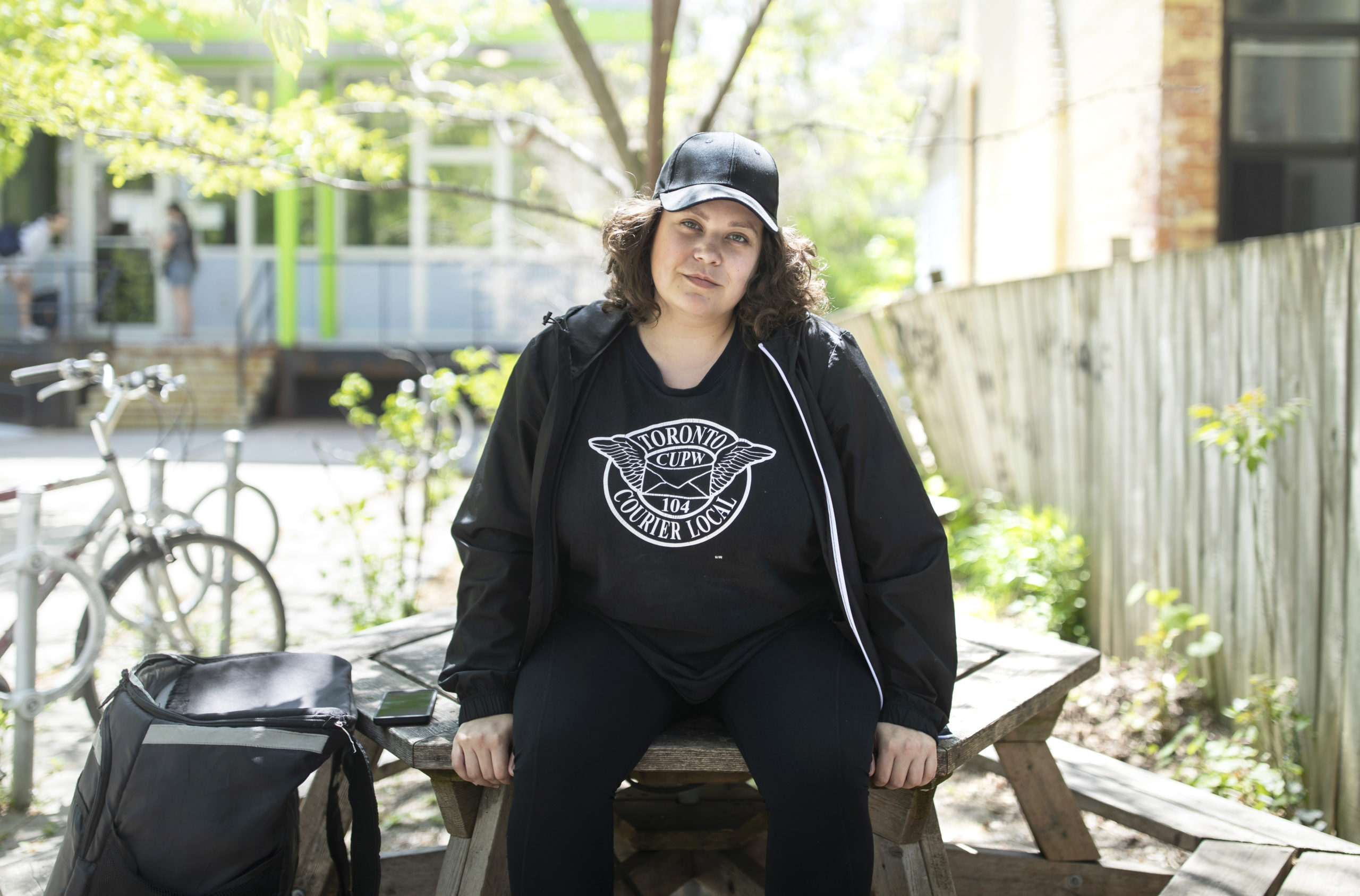
Jennifer Scott is president of Gig Workers United, an unofficial union backed by the Canadian Union of Postal Workers that focuses on gig delivery workers in the Toronto area. She’s been delivering for about five years, she said, since she found she needed to supplement what she was making as a personal assistant.
Finding a new job is hard; signing up with DoorDash took three days from contact to first assignment, she said.
“I didn’t know, to be honest, that it was a little bit of a circular job,” Scott told The Logic.
Both of McNaughton’s laws grew from poisoned ground, Scott said: recommendations from a panel on post-pandemic labour called the Ontario Workforce Recovery Advisory Committee, or OWRAC, which included policy specialists, lawyers and a bank vice-president, but no worker representatives.
The result, in her view, is legislation that could practically have been written by app platforms’ lawyers.
One example: the minimum-wage guarantee in the second bill applies when someone doing app-based work is on a “work assignment”—in the case of a delivery worker, that means while he or she is ferrying a person or parcel.
“When apps talk about it, they use the term ‘engaged time.’ And so what really it describes as giving minimum wage to gig workers is minimum wage for engaged time only. So that’s for only a portion of the time that you’re working,” Scott said.
She pointed to U.S. research commissioned by Lyft and Uber showing that drivers using their apps cover about a third of their miles waiting for a ride request and 10 per cent going to pick someone up.
The new law, she said, “changes the term for what minimum wage is, from ‘minimum wage’ being the minimum you can pay someone per hour to be at work, to an employer has the ability to dictate when a worker is working and not working.”
Furthermore, Scott said, by creating a new category of workers—digital platform ones—the law undermined efforts like hers to get them recognized as actual employees of the app-makers, with all the commitment that would entail.
“That kind of carve-out will impact many workers,” Scott said. “Like, many workers who work with bad bosses, many workers who work contract jobs, otherwise precarious jobs.”
In California, app-based work has expanded far beyond delivering passengers and food, such as to health workers. After voters there approved the creation of a new category of app-based workers under state law (whose constitutionality is still being fought out in court), a shadowy group filed, then withdrew, a new ballot initiative to extend the category to nurses, dental hygienists, occupational therapists and others who get assignments via apps.
A copycat move here “could be devastating to the entire labour movement in Ontario,” Scott said.
The economic revival that’s followed the waning of the COVID-19 pandemic has led to labour shortages, which might strengthen workers’ hands in dealing with employers. But as patrons have returned to restaurants, for instance, Scott said it’s meant fewer assignments for Skip, Uber and DoorDash deliverators.
“Gas prices make it incredibly difficult for folks to continue to work or to earn enough money. And, you know, when that happens, and when all of these things happen, workers do what I did when I started in the sector: we work more,” she said.
The New Democrats and Liberals have gone after voters contending with precarious work and employers who keep them at arm’s length.
In their platform, the NDP promise to “prevent gig and contract workers from being misclassified as independent contractors when they are actually employees” and to require employers to compensate workers the same for the same work regardless of their employment status. They also say they would create a new provincial benefits program to cover all workers with dental and vision coverage, including people who work through apps.
The Liberals’ pledges are similar: to “modernize the definition of ‘employee’ to include those in the gig economy so they get better access to benefits and protections”; require employers to pay workers for being on call; and make employers with productivity quotas, like parcel-delivery services, tell employees what those are. Like the New Democrats, they pledge to create a new “portable” benefits package; in the Liberals’ case, employers would have to use it or provide comparable plans of their own.
Without endorsing either party, Scott said she’s been glad to hear both New Democrats and Liberals talking about the employee-classification issue in particular.
Still, neither party seems to have done much to beat back the raids the Progressive Conservative have made on their support from organized labour more broadly. Public-sector unions are still fiercely critical of the Tories, but the party’s racked up endorsements from several private-sector union leaders, especially in construction: among them LiUNA (representing a range of labourers from truck drivers to cafeteria attendants to drywall hangers) and locals representing Ontario electrical workers, boilermakers and painters.
The Progressive Conservatives promise a gigantic construction program if they’re re-elected: $158 billion-with-a-b over 10 years on “highways and key infrastructure.” That means a lot of work for construction companies and their employees.
Approvals from those latter three unions are notable because they were members of the Working Families coalition, a group of unions that got together to fight the Progressive Conservatives’ re-election bid in 2003, the last time they were in power in Ontario. The group worked against the Tories in every election through 2014; it still has a website up attacking the Tories’ then-leader Tim Hudak.
In 2018, the coalition ran a social-media campaign against Ford but was much less of a force. This time, it’s clearly cracked.