OTTAWA — Canada’s prime research universities are attracting a lot fewer international students than they used to, and some of the sharpest declines are in graduate-level engineering and science programs.
Skip to content

News
The number of international students choosing Canada is falling fast
Foreign enrolments have plunged in science and engineering grad programs. Critics say immigration caps are making the world’s best minds feel unwelcome.
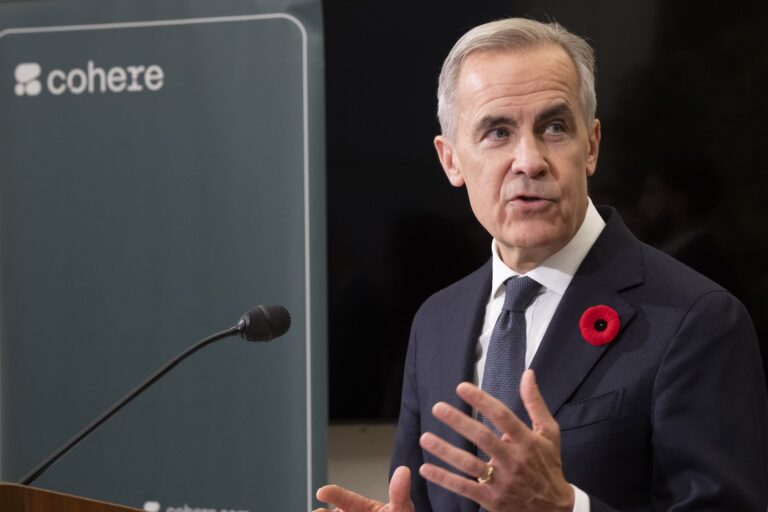
International student enrolment at Canada's largest universities fell sharply after the federal government reduced the admissions cap in January 2024. Photo: The Canadian Press/Ryan Remiorz
OTTAWA — Canada’s prime research universities are attracting a lot fewer international students than they used to, and some of the sharpest declines are in graduate-level engineering and science programs.
The U15, the association representing schools like the University of Toronto, McGill and the University of British Columbia, blames the federal government’s cuts to study permits and its restrictions on foreign students’ options for staying in Canada after finishing their programs.
Talking Points
- Foreign enrolment in Canadian universities’ graduate programs in engineering and science has plunged since the federal government cracked down on study permits—even though those programs weren’t the targets
- The message some of the best minds in the world have received is that Canada doesn’t want them, says Robert Asselin who heads the association of the country’s top research universities
“Like capital, talent is mobile. They can go elsewhere if they feel that they’re not welcome here, and this is what’s happening,” said Robert Asselin, the U15’s CEO.
According to U15 figures, foreign student enrolments in the first years of its members’ bachelor’s degree programs fell 18.7 per cent between September 2023 and September 2024, when federal caps on study permits started affecting admissions.
Across all programs and years, international student enrolment declined 5.6 per cent in a year, from 144,203 students to 136,110.
Related Articles

But not all programs suffered the same.
International enrolment in graduate programs in electrical and computer engineering plunged 21.4 per cent, according to the association’s figures. The next worst-off graduate programs: medical residencies, chemical engineering, environmental sciences, and biology and botany, all of which saw foreign student enrolment drop by double-digit percentages.
Prime Minister Mark Carney wants to advance Canadian-made artificial intelligence and build big things, Asselin said, which takes expertise. “If you don’t have this kind of STEM talent—just overall talent—to make this happen, it just won’t,” he said.
The federal government cut overall international student admissions to Canada by 35 per cent in the 2024–25 school year. When then-immigration minister Marc Miller made the move in January 2024, immigration’s effect on housing and public services was big in public debate. But he said at the time he was cracking down on profiteers taking advantage of the system.
“It is not the intention of this program to have sham commerce degrees or business degrees, [from schools] that are sitting on top of a massage parlour, that someone doesn’t even go to, and then they come into a province and drive an Uber,” Miller said.
The consequences are still ricocheting through Ontario’s colleges. At their provincial government’s urging, many had set up privately managed outposts to cash in on foreign students’ higher tuition fees. Indeed, students at two such private institutions offering college-approved degrees in Toronto told The Logic then that they saw the programs mainly as a way to get to live and work in Canada.
There’s no graduate program at a U15 university that’s a bogus operation above a massage parlour, Asselin said. “There’s no ambiguity on our programs and the path to residency. Those are people that come here to study for real.”
He called for the federal government to abolish the graduate-student caps immediately and start a campaign to rebuild Canada’s reputation as a destination for the brightest minds, especially throughout Asia.
Cutting the number of university grad students was never the government’s goal, wrote Matthew Krupovich, a spokesperson for Immigration Minister Lena Metlege Diab, in a statement to The Logic.
Provinces and territories got quotas for the number of students the federal government was willing to let into the country, which they could distribute as they saw fit. The allocations were meant “to ensure the number of graduate international students remains well managed,” he wrote, adding they kept the numbers steady at 2023 levels.
“What we’ve said around the world is, ‘Don’t come to Canada. We don’t want you here.’”
Foreign students earning bachelor’s degrees or higher are exempt from newly imposed limits on staying in Canada to work after finishing school, he pointed out. As far as the federal government is concerned, if the provinces and territories aren’t using their allocated slots, that’s their business.
“Canada remains open to graduate students,” Krupovich wrote.
The Canadian message heard abroad is rather different, said Asselin. “What we’ve said around the world is, ‘Don’t come to Canada. We don’t want you here. Even if you’re smart, even if you have the best grades, the best marks, we’re closing the door.’”
The caps on study permits have amplified the effects of Canada’s lack of support for graduate-level research, said Amir Moghadam, a PhD student at the University of Toronto in biomedical engineering who is also president of the grad students’ union and the international student representative on the board of the Canadian Federation of Students.
“The government is using [foreign students] as a scapegoat to just not be accountable for the decades of underfunding,” he said.
Canadian universities have been struggling for years with attracting top talent. They long complained about eroding federal funding for graduate students and research (an expert report the government itself commissioned called the situation bleak in 2023). Overall enrolment in elite engineering programs had already been stagnating before the study permit cuts were announced; university administrators said Canada wasn’t competitive with the United Kingdom or the United States.
The federal Liberals took the issue up in their 2024 budget, with big boosts to funding for graduate research.
It’s still less than top schools elsewhere offer, Moghadam said, and now foreign students feel blamed for other ills.
“I have met with a lot of international students who have had these xenophobic experiences. They have faced racism. And it is not only about the students abroad who feel Canada doesn’t want them any more. The students who are already here, they do not feel welcomed any more,” he said.
Moghadam, whose research is on nanoparticles that could lead to vaccines against cancer, came to Canada from Iran in 2021 because of Canada’s world-class healthtech ecosystem. Would he make the same decision again?
He hesitated a long time before answering that he would. He likes his research, his lab and the University of Toronto, and his own work is well-funded, thanks to multiple scholarships and awards.
“I’m not representative of everyone. So personally, yes, I would do it again, but I’m not the majority,” he said.



Loading...
Thanks for sharing!
You have shared 5 articles this month and reached the maximum amount of shares available.
CloseThis account has reached its share limit.
If you would like to purchase a sharing license please contact The Logic support at [email protected].
CloseGift the full article!
You have gifted 0 article(s) this month and have 5 remaining.
Recipients will be able to read the full text of the article after submitting their email address. They will not have access to other articles or subscriber benefits.
Photo: The Canadian Press/Ryan Remiorz
Most Popular This Week



In-depth, agenda-setting reporting
Great journalism delivered straight to your inbox.
Exclusive
Tenstorrent is lobbying Ottawa for data-centre funding and sovereign AI contracts
Briefing
Ex-Cohere engineers and Blue J executive raise US$6M to launch new firm
CN confirms work with Strathcona on northern B.C. crude-by-rail project
Canada and Cohere sign AI safety pledge with Anthropic, OpenAI and other industry giants
Best business newsletter in Canada
Get up to speed in minutes with insights and analysis on the most important stories of the day, every weekday.
Exclusive events
See the bigger picture with reporters and industry experts in subscriber-exclusive events.
Membership in The Logic Council
Membership provides access to our popular Slack channel, participation in subscriber surveys and invitations to exclusive events with our journalists and special guests.