OTTAWA — The federal government is struggling with how to make publicly funded scientific research publicly available, stymied by technical challenges and finding the money to pay journals to make their work freely accessible.
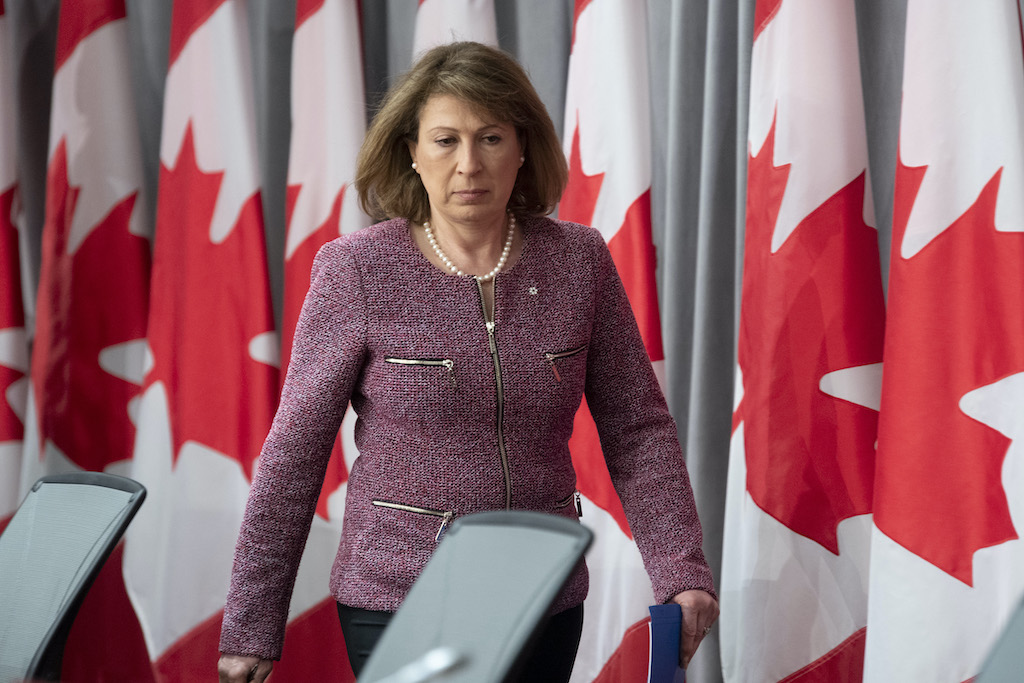
Open science increases trust, raises the credibility of the word, accelerates progress and “makes data available to innovators and others who want to use it,” said Mona Nemer, the federal government’s chief science advisor, in an interview with The Logic.
Nemer laid out a “Roadmap for Open Science” in early 2020, touting the benefits of spreading knowledge faster and producing higher-quality work. Scientists could avoid doubling up efforts and the world could benefit from their research more quickly, the document argued. The world was about to prove the point.
Talking Point
The pandemic demonstrated the value of sharing scientific knowledge freely and quickly and the Canadian government is following a roadmap to making its research widely available. But progress is behind schedule, with departments worried about paying journals’ fees, translating into both official languages and an incomplete self-publishing system.
“The pandemic has given us so many examples of open science in action,” Nemer said. From initial sequencing of the virus that causes COVID-19 through testing vaccines and treatments, everything has moved faster because scientists have shared their findings freely and widely, she said.
“Science that is openly accessible is used more, cited more and gets more credit in many ways.”
The roadmap acknowledged that disseminating science freely wouldn’t be simple, but set long deadlines: “New science articles published in academic scholarly journals” should be freely available by January of this year, and the government’s own scientific publications should be free by January 2023.
Several federal departments do formal scientific research, from Fisheries and Oceans to National Defence, Environment to Agriculture. Most followed up the roadmap with action plans, spelling out particular obstacles they faced and how they were going to tackle them.
A big one: money. Peer-reviewed journals typically charge to read their contents. Some offer authors the option of paying to make their work freely accessible, but that “gold” open access is dear. The major science journal Nature, the flagship publication of large academic publisher Springer Nature, charges €9,500, or just over $13,500.
The other major standard is “green” open access, which allows researchers to post their work on their own sites, or in other repositories. These agreements vary from publisher to publisher. Nature allows authors to self-publish submitted work that hasn’t been peer-reviewed (called a “pre-print”) fairly readily, but requires a six-month lag between its own publication of a finalized peer-reviewed paper and the authors posting it themselves.
Health Canada identified paying for first-rate open access as a significant problem in its action plan, posted last summer, following a survey of its staff: its scientists publish an average of 258 papers a year between them, and those fees add up.
“Health Canada’s Open Science Survey clearly demonstrated that [open-access] costs are a burden to already tight project budgets, as publishing costs usually fall under the responsibility of researchers,” the plan says. “The survey also brought to light an unforeseen consequence of OA: some of the specialized journals have significantly higher OA fees, which can make them out of reach for Health Canada scientists.”
They’d cope with this by publishing in cheaper, less prominent journals, where fewer people would see the work, the plan reads.
National Defence worried about this, too. According to its plan, “there is an obligation to move towards open publications, but authors are still encouraged to look for well-established publishers (high-impact factor, etc.) to maintain the reputation of [science-based departments and agencies] in their mandate to deliver advice that is based on high-quality peer-reviewed science…. There is a cost associated with Gold access publishing in well-established publications, and this needs to be taken into budgetary considerations.”
The Health Canada plan also points out something even more mundane: government credit cards allow maximum charges of $5,000, so how could scientists even pay some of those fees?
That’s been sorted out, spokesperson Anna Maddison told The Logic by email, thanks to cooperation from Health Canada’s accounting branch. But the bigger budget question remains.
“The main challenge to having Health Canada’s new scientific publications open at the time of publication is the increasing open-access fees paid to scientific journals,” she wrote. “Health Canada is working on various methods to address this challenge. For example, the department recently collaborated with the Federal Sciences Libraries Network to work out an agreement with Springer Nature on open-access fees.”
That agreement with the one large publisher sees the government cover the fees, rather than the researchers having to find the money themselves.
Agriculture Canada considered that central funding an important measure. According to an internal version of its open-science plan, released to The Logic through an access-to-information request, open-access fees still come out of research budgets, but in a way that doesn’t directly implicate researchers.
“Funding can be extracted from the branch-level allocations before allocation to project budgets,” it said. “Maintaining the OA fees outside of the project budgets is expected to be perceived as not detracting from the project budget while still fulfilling the OA requirements.”
The department “continues to evaluate options for open-access publishing fees and various implementation models, in order to ensure equal access to fund recipients and to maximize the public good,” spokesperson Cameron Newbigging told The Logic. According to the draft plan, that was supposed to be settled by the end of January.
Nemer said that if paying open-access fees to journals does ding research budgets, the advantage in spreading the work more widely outweighs that cost.
Agriculture Canada also missed a self-imposed deadline at the end of December 2021 to create an open repository for pre-prints, for the green open-access standard.
It ran one on a trial basis along with other federal science departments, Newbigging wrote. “Although the pilot was a significant step forward, more time is needed to set up a successful platform in support of the recommendations and recommended timelines outlined in the Roadmap for Open Science. Taking the time to get the platform right will ultimately provide greater value to the public and avoid the establishment of separate systems developed by individual departments and agencies.”
Nemer said the problems are primarily technical, to do with ease of use and security. But there’s an additional challenge if the papers are going to be published by the government itself, rather than a third party: they legally must be in both official languages. That could be addressed with bilingual summaries, Nemer said.
A meeting is scheduled for next week to set fresh timelines for settling these problems, Nemer said. And she stressed how much work has already been done, from getting those open-access science plans created by each department to setting rules for when security concerns justify keeping research secret.
“I see a lot of goodwill and people wanting to move forward,” Nemer said.