A network of Facebook scam accounts is using increasingly political messaging to push a series of deepfake videos featuring Mark Carney, Elon Musk and Canadian network news anchors. The scam, which is being promoted across dozens of Facebook advertisements, is flooding the social network with adverts linking to fake news reports at a time when all legitimate news is blocked on the platform in Canada.
Skip to content

 A screengrab of a generative AI scam video featuring a deepfake version of CBC News anchor Rosemary Barton. Photo: Facebook/Screenshot

News
Facebook is being flooded with deepfake news reports about Mark Carney
A network of scam accounts are running Facebook ads featuring an AI-generated prime minister at a time when all news is blocked on the Meta-owned platform in Canada
A screengrab of a generative AI scam video featuring a deepfake version of Liberal Leader Mark Carney. The video is one of many scams featuring Carney going viral on Facebook. Photo: Facebook/Screengrab
A network of Facebook scam accounts is using increasingly political messaging to push a series of deepfake videos featuring Mark Carney, Elon Musk and Canadian network news anchors. The scam, which is being promoted across dozens of Facebook advertisements, is flooding the social network with adverts linking to fake news reports at a time when all legitimate news is blocked on the platform in Canada.
Talking Points
- A network of Facebook accounts is pushing a series of deepfake videos featuring Liberal Leader Mark Carney, Elon Musk and fake CTV and CBC anchors
- 25 per cent of Canadians say they’ve seen content on Facebook from sources mimicking legitimate news sources in the last month, according to a digital literacy coalition monitoring the federal election
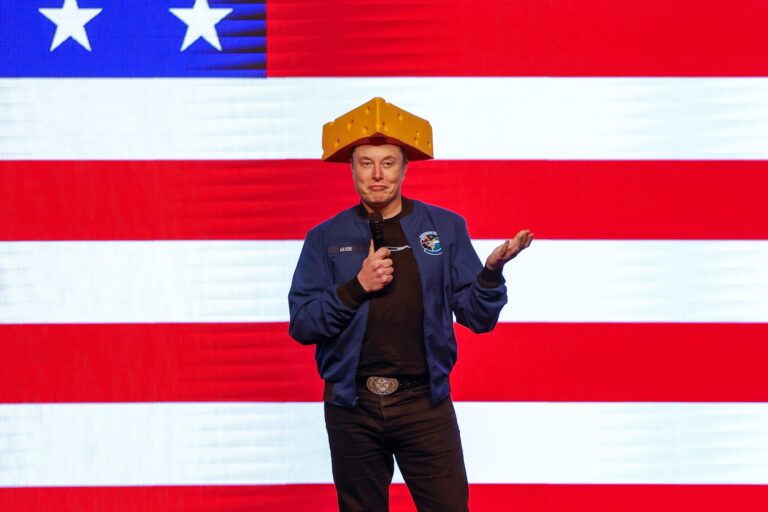
More than 25 different Facebook accounts, some with Canadian-themed names, have promoted multiple fake news articles involving political actors, including a three-minute video of a deepfake CBC report fronted by anchor Rosemary Barton, in which a deepfake Musk, appearing on a deepfake Joe Rogan podcast, accuses a deepfake Carney of lying about a non-existent passive income scheme.
The posts are widespread on the Meta-owned platform, with 25 per cent of Canadians saying they’ve seen content on Facebook mimicking legitimate news in the last month, according to the Canadian Digital Media Research Network (CDMRN), which is part of a digital literacy coalition monitoring the federal election campaign.
The advertisements, many of which feature deepfakes videos, often include political messaging. “Carney’s Major Announcement Shakes Canada!” reads one. “Canada’s next Prime Minister shocks Canadians with an announcement” reads another. Many of the advertisements feature photos of Carney or Conservative Party Leader Pierre Poilievre.
Some of the scams link out to a fake version of the CBC’s website that gives further details of the scam “passive income” scheme. Page transparency details for the profiles running the scam ads show that some of the accounts are managed by people in Indonesia and the United States.
Related Articles

“This AI content is increasingly difficult to avoid: it can be easily and quickly created, leading to high numbers of generative AI posts, and malicious actors are amplifying their reach by paying platforms to circulate them further,” reads the CDMRN report. The group said the content poses a moderate threat to the flow and integrity of election information, and raised its threat level as a result—the first time it has done so during the campaign.
“Our concern is that as the numbers go up and this content spreads, it could impact perceptions on political parties, political candidates, and ultimately impact the broader outcomes of the election,” said Jennie Phillips, project director at the CDMRN.
Facebook blocked the sharing of news content in Canada in 2023, in response to federal legislation compelling tech companies to pay for journalism appearing on their platforms. As a result, election-related content on Facebook has largely come from third-party groups including Canada Proud, a conservative advocacy group.
Nearly 57 per cent of Canadians continue to rely on Facebook as a news and current affairs source despite the block of news content on the site, according to a recent Media Ecosystem Observatory survey.
As The Logic reported last week, a network of accounts on Musk-owned X is amplifying misinformation about Canada’s economy and leadership from U.S. right-wing sites and Russian state-owned media entity RT, among others.



Loading...
Thanks for sharing!
You have shared 5 articles this month and reached the maximum amount of shares available.
CloseThis account has reached its share limit.
If you would like to purchase a sharing license please contact The Logic support at [email protected].
CloseGift the full article!
You have gifted 0 article(s) this month and have 5 remaining.
Recipients will be able to read the full text of the article after submitting their email address. They will not have access to other articles or subscriber benefits.
Photo: Facebook/Screengrab
A screengrab of a generative AI scam video featuring a deepfake version of CBC News anchor Rosemary Barton.
Most Popular This Week


In-depth, agenda-setting reporting
Great journalism delivered straight to your inbox.
News
AI could help invent new materials. First, firms must figure out how to make them
Briefing
Mecka raises US$60M to gather data for robot training
Businesses should expect AI to get better, but not necessarily cheaper
Weston family and Fairfax agree to buy drugstore Boots for US$8.9B
Best business newsletter in Canada
Get up to speed in minutes with insights and analysis on the most important stories of the day, every weekday.
Exclusive events
See the bigger picture with reporters and industry experts in subscriber-exclusive events.
Membership in The Logic Council
Membership provides access to our popular Slack channel, participation in subscriber surveys and invitations to exclusive events with our journalists and special guests.