Listen Now
0:00
Toronto-founded chip designer Tenstorrent is courting Ottawa for funding to expand its artificial intelligence infrastructure and support a proposed large-scale data centre, as the company seeks to capitalize on the government’s push to develop homegrown AI technology.
The company is also pursuing federal contracts for its chips and computing systems, according to federal lobbying records reviewed by The Logic. It’s pitching its technology as a way to strengthen domestic semiconductor supply chains, reduce dependence on foreign technology and support national security and defence.
Talking Points
- Tenstorrent is seeking federal funding and government contracts for AI computing infrastructure, positioning itself as a domestic chip option
- Analysts say Tenstorrent could help reduce Canada’s dependence on chip giant Nvidia, even if its decision to move its headquarters to the U.S. brings into question its ability to claim it remains a domestic supplier
Tenstorrent hired consultant Regan Watts in March to lobby federal officials, including at Innovation, Science and Economic Development Canada (ISED), the Prime Minister’s Office and Shared Services Canada, which supplies technology to federal departments.
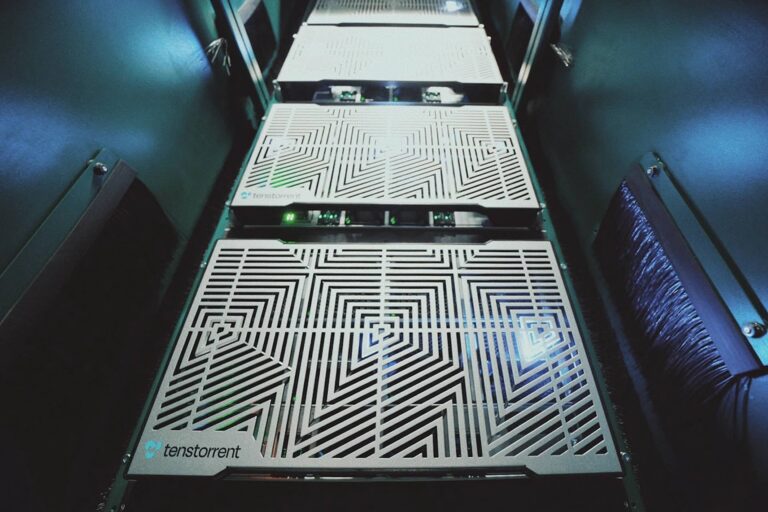
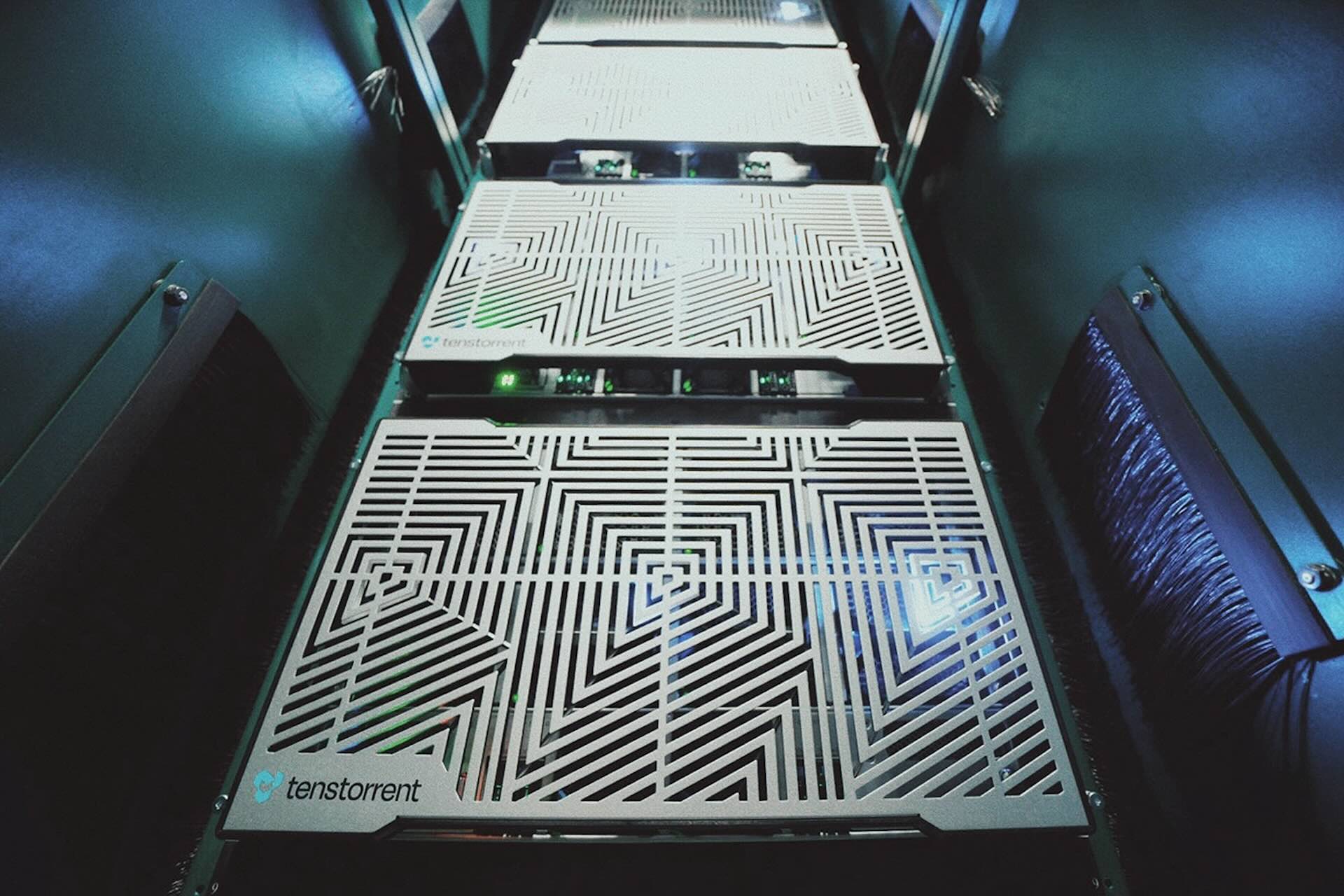
An updated lobbying registration filed on Nov. 4 identifies Tenstorrent’s Exabox initiative, which includes computing equipment installed in data centres in Markham, Ont., and downtown Toronto. The submission also refers to a separate proposed commercial AI data centre involving unnamed consortium partners. The company, which was founded in Toronto in 2016 but relocated its headquarters to the U.S. in 2023, has met with Canadian government officials five times in the last six months.
Tenstorrent is trying to carve out a place in a field dominated by Nvidia, which controls about 90 per cent of the chip market. Tenstorrent announced last month that it raised US$1.5 billion at a US$6.2-billion valuation to help scale production of its Galaxy servers, which combine multiple AI chips to handle demanding tasks. The company says it can offer more efficient and lower-cost alternatives to its competitors’ chips and servers.
Related Articles
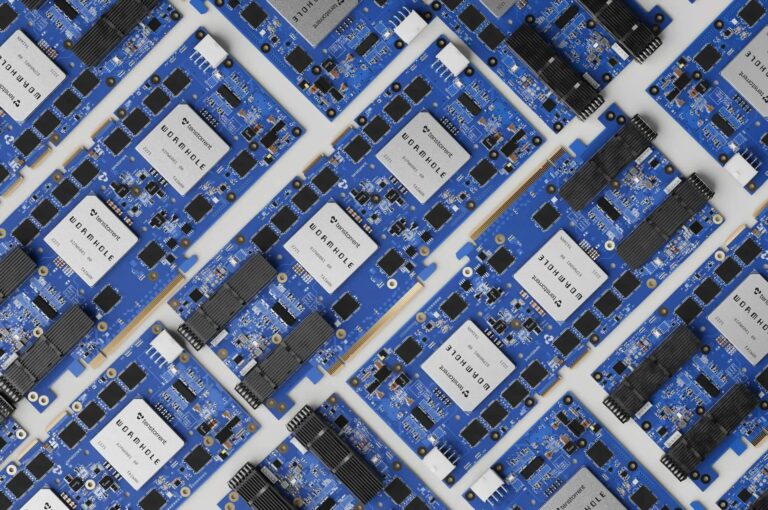

Nvidia’s chips are widely used both to train AI models and for inference, which is the computing needed to run trained models, such as through chatbots, for instance. Tenstorrent focuses primarily on inference, where it also competes with Groq, Cerebras and SambaNova, said Richa Agrawal, a semiconductor analyst at Counterpoint Research.
Drawing customers away from Nvidia’s widely used technology won’t be easy. Tenstorrent needs to demonstrate that its chips can reliably power AI models across large computing systems, and that its software can support customers’ applications. It needs to prove that its chips are reliable, work with customers’ existing software and can run AI applications at a competitive cost.
Its Exabox initiative cited in its lobbying records helps make that case, said Stephen Sopko, a semiconductor analyst at New York-based consulting firm HyperFrame Research. The technology takes multiple servers powered by Tenstorrent’s chips and packages them together into one larger computing system. Sopko said Tenstorrent is likely using the system in the Markham and Toronto data centres it cited to prove that its chips can work on a larger scale.
“Strategically, that matters because buyers of AI infrastructure want to see an alternative to Nvidia running at cluster scale before they commit,” Sopko said. “A live Canadian cluster gives Tenstorrent a showroom, a development platform, and a credible sovereign AI story.”
Tenstorrent spokesperson Justin Mauldin declined to comment on the firm’s lobbying activities and didn’t answer questions about the data centres mentioned in the lobbying registration.
Tenstorrent’s lobbying comes as the federal government offers hundreds of millions of dollars to grow Canada’s AI sector. Its $700-million AI Compute Challenge supports commercial data centres and encourages companies to use Canadian-developed chips and other technology. In last week’s budget, the government said it will help Canadian AI companies access 500 megawatts of “sovereign AI compute” through various financing tools.
“The government of Canada is supporting projects that expand domestic compute capacity and improve access for Canadian users,” ISED spokesperson Justin Simard said in response to questions about Tenstorrent’s lobbying. Simard would not say whether the company has applied for funding, citing commercial confidentiality.
Agrawal said government contracts could be more valuable to Tenstorrent than loans or grants. She said many government AI applications, such as document processing, translation and internal assistants, don’t require Nvidia’s most powerful chips. If successful, she argued, Tenstorrent would get itself a strong reference customer that could help it land business from other governments looking for sovereign AI infrastructure.
While Tenstorrent is positioning itself to Ottawa as a domestic option, its Canadian credentials have become murky since moving to the U.S. It still has a large R&D operation in Toronto, and about 200 of its 1,000 employees work in the city. Its chips are made outside Canada by companies including Samsung and Taiwan Semiconductor Manufacturing Co.
Jaxson Khan, CEO of consulting firm Aperture AI, said Tenstorrent’s substantial operations in Canada could make it eligible for government support, based on how Ottawa typically defines a Canadian company. Khan, a former policy adviser who helped design Ottawa’s $2.4-billion sovereign compute strategy, said Tenstorrent would have a stronger case for being a sovereign AI option if it could demonstrate demand for its technology among Canadian businesses.
He added, though, that support for the business could still help reduce Canada’s dependence on one dominant supplier, making the country less vulnerable to supply chain disruptions including, for instance, from trade disputes or demand spikes.