OTTAWA — The federal government is working on a voluntary code of practice for generative AI that could commit participating firms to safety measures, testing and disclosures. The convention is designed as an interim step ahead of binding regulations, and comes as the U.S. and other jurisdictions launch similar initiatives.
Skip to content

Exclusive
Ottawa developing voluntary guardrails for safety, transparency in generative AI
Biden administration secured similar commitments from leading tech firms
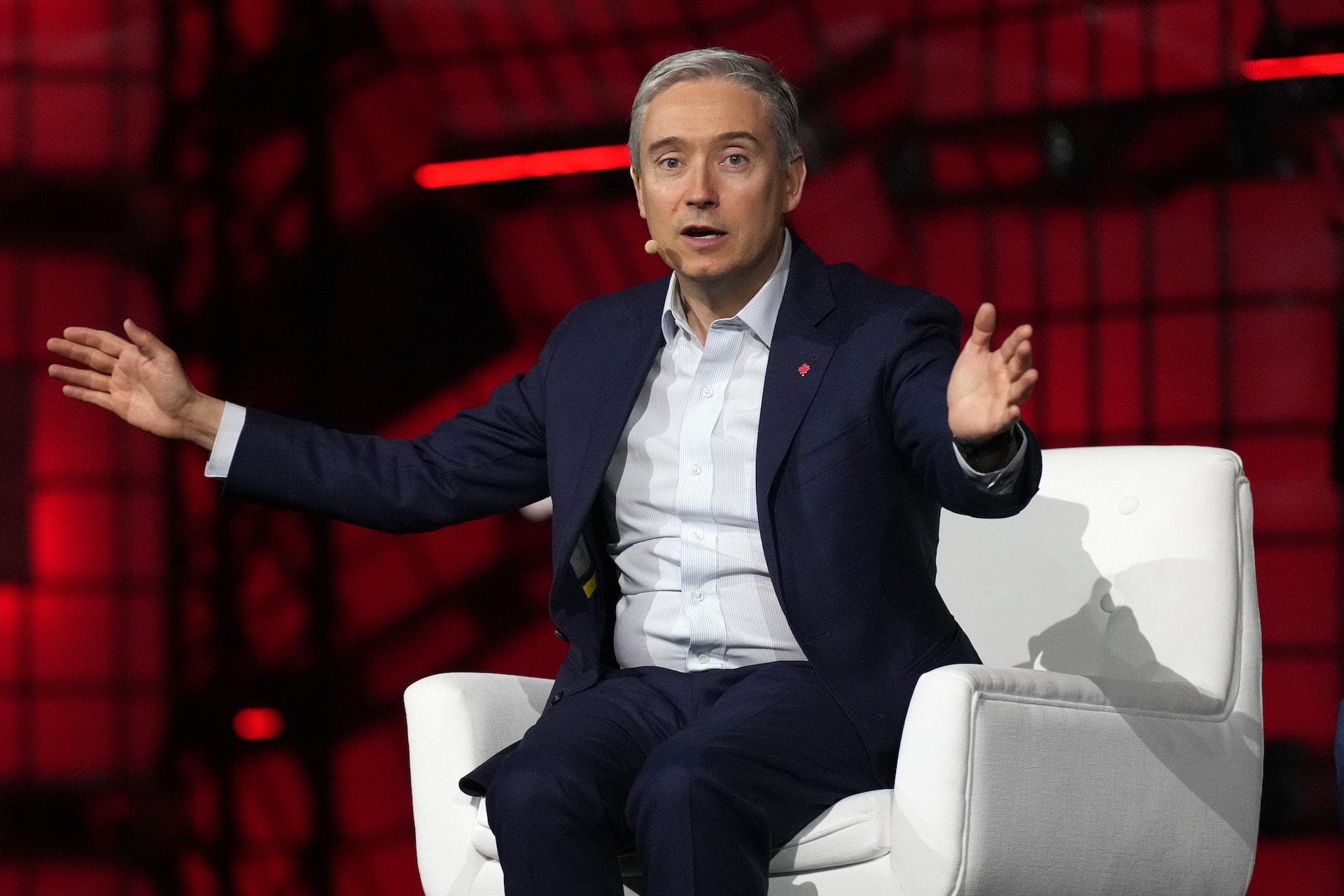
Innovation Minister François-Philippe Champagne at the Collision conference in Toronto in June 2023, where he revealed that Canada is working with the U.S. and EU on a voluntary code for AI companies. Photo: The Canadian Press/Chris Young
OTTAWA — The federal government is working on a voluntary code of practice for generative AI that could commit participating firms to safety measures, testing and disclosures. The convention is designed as an interim step ahead of binding regulations, and comes as the U.S. and other jurisdictions launch similar initiatives.
Generative AI systems include large language models that produce text and code, as well as tools that make images. Since the viral debut of San Francisco-based OpenAI’s ChatGPT in November 2022, lawmakers around the world have increasingly sought to engage with and set rules for the companies building the technology.
Talking Points
- The federal innovation department is consulting on voluntary guidelines for generative AI, with participating developers agreeing to identify and address harmful uses of the technology
- Ottawa plans to prioritize the regulation of large language models and other content-producing systems if its proposed AI law passes, according to documents obtained by The Logic
Innovation, Science and Economic Development Canada (ISED) is conducting consultation sessions this month with AI companies and academics on a suggested code of practice for generative AI. The government’s draft guardrails are designed to be “sufficiently robust” that companies building and implementing generative tools can “avoid harmful impacts, build trust in their systems, and transition smoothly to compliance with Canada’s forthcoming regulatory regime,” according to a document officials in the department’s AI hub sent to consultation participants, which The Logic obtained.
The Liberal government has already proposed legislation to govern all kinds of AI. In June 2022, Innovation Minister François-Philippe Champagne introduced Bill C-27, which includes the Artificial Intelligence and Data Act (AIDA). That law would create requirements for people developing and deploying “high-impact systems.” But ISED will define the criteria for those systems and what measures organizations must take in regulations, which won’t be implemented until at least two years after the bill becomes law.
Related Articles

If the legislation does pass, the department will prioritize the regulation of generative AI systems to address “the urgent need and broad support for guardrails,” states the consultation document circulated this month. The code is intended as a bridge measure until those rules take effect.
“ISED officials have begun conducting a brief consultation on generative AI with AI experts, including from academia, industry, and civil society on a voluntary AI code of practice intended for Canadian AI companies,” said Audrey Champoux, a spokesperson for Champagne, in a statement. The department did not answer The Logic’s question about when it planned to implement the initiative.
The document outlines 13 potential commitments for participating companies to promote safety, equity, transparency and accountability in the use of generative systems. For example, firms could promise to try to stop harmful or inappropriate applications, like impersonating someone or providing legal advice. Developers could pledge to check that they were training their systems on representative datasets and take steps to address the risk of biased outputs.
They could also agree to watermark or otherwise tag content their tools are used to create, and to clearly identify AI systems that could be mistaken for humans. And companies building generative products could commit to rigorously testing them, including by “red-teaming”—the process of trying to make the systems do things they’re not supposed to in order to identify flaws.
Other countries have rolled out similar voluntary initiatives. Last month, the Biden administration announced that seven tech firms had agreed to a set of eight measures to address generative AI risks. Signatories included Amazon, Google, Meta, Microsoft and OpenAI. Many of the commitments are similar to the ones Ottawa is considering; a few go farther, including agreeing to independent pre-launch testing of their products.
ISED’s code will “reinforce Canada’s contributions to active international deliberations” on generative AI’s risks, according to the consultation document. In June, Champagne said his government is working with the U.S. and EU to develop a joint voluntary AI code. ISED officials have also participated in discussions at the G7 on regulating the technology.
Digital rights groups and academic experts have said the government did not properly consult before adding AIDA to legislation updating the country’s private-sector privacy rules, and that the law is flawed. ISED has not formally announced this month’s consultations on the code, and on Friday, some policy observers expressed concern that Ottawa was once again limiting public engagement on the initiative, after University of Ottawa professor Michael Geist tweeted about it.
The consultation document states that the government has “engaged extensively with stakeholders on AIDA,” noting the code is a product of those discussions. Champagne’s advisory council on AI will also review the commitments. ISED is seeking feedback on whether the code focuses on the right principles, whether the promises it’s seeking are sufficient and appropriate, and what other measures it could take. The department held two round tables last week, with two more to follow at the end of the month.
The comment period for the code is scheduled to close in mid-September, according to the federal consultations database.



Loading...
Thanks for sharing!
You have shared 5 articles this month and reached the maximum amount of shares available.
CloseThis account has reached its share limit.
If you would like to purchase a sharing license please contact The Logic support at [email protected].
CloseGift the full article!
You have gifted 0 article(s) this month and have 5 remaining.
Recipients will be able to read the full text of the article after submitting their email address. They will not have access to other articles or subscriber benefits.
Photo: The Canadian Press/Chris Young
Most Popular This Week


In-depth, agenda-setting reporting
Great journalism delivered straight to your inbox.
News
Cenovus announces $5.7B takeover of Athabasca, with a nod to Carney’s Mega Deduction
Briefing
Defence minister picks longtime CCI executive as new chief of staff
U of T launches $100M program to draw top-tier PhD students to focus on key social issues
Brookfield says there’s ‘enough to go around’ as it partners with rivals on AI investments
Best business newsletter in Canada
Get up to speed in minutes with insights and analysis on the most important stories of the day, every weekday.
Exclusive events
See the bigger picture with reporters and industry experts in subscriber-exclusive events.
Membership in The Logic Council
Membership provides access to our popular Slack channel, participation in subscriber surveys and invitations to exclusive events with our journalists and special guests.