Skip to content

Exclusive
Why Japan wants the USMCA to survive
Investors see Canada as a trustworthy route to the U.S. market, says Japan’s ambassador in Ottawa, and they don’t want that to change
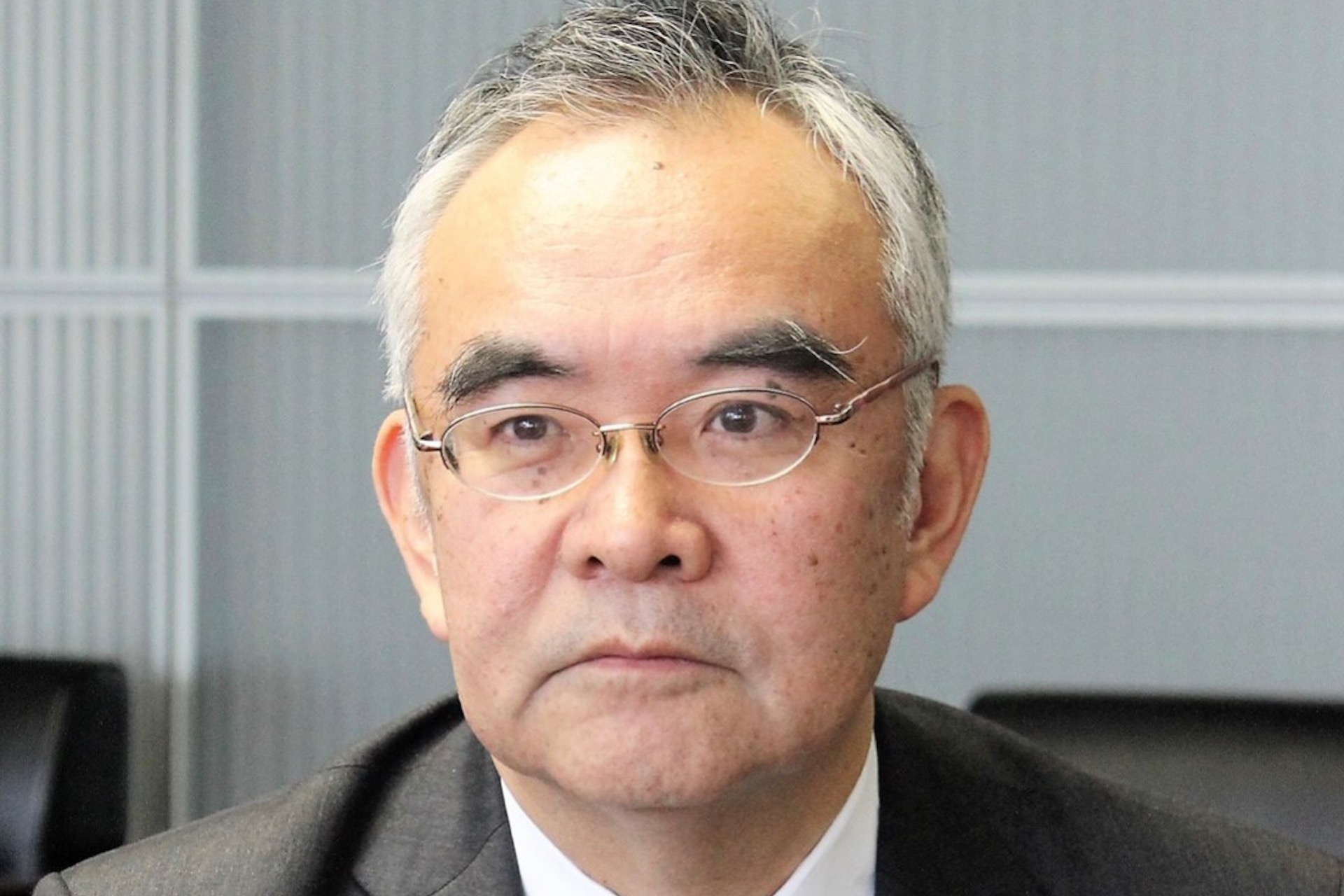
Japanese companies have tailored their North American supply chains with the USMCA in mind, says Kanji Yamonouchi, Japan’s ambassador to Canada. Photo: Handout/Embassy of Japan in Canada
OTTAWA — The North American trade pact has made it easier for Japanese firms to invest in Canada to access the U.S. market, Japan’s envoy to Ottawa told The Logic, which is why his country is hoping the deal survives a potentially contentious review next year.
“That agreement is very important, not only for Canada, but for us,” Ambassador Kanji Yamanouchi said Monday in an interview in Ottawa. “One of the reasons why the major Japanese companies have invested here is Canada is a gateway to that big market.”
Talking Points
- Japanese Ambassador Kanji Yamanouchi said his country is keen to see the United States-Mexico-Canada Agreement renewed because many Japanese firms invested in the region based on the deal’s benefits
- Yamanouchi said dealing with the Trump administration has served as a “wake-up call” that has pushed Canada to make it easier to export LNG to Japan and other Asian countries
Canada has a high-quality labour force and can be trusted, Yamanouchi continued, so those are other draws. But he noted the United States-Mexico-Canada Agreement (USMCA) makes the country part of a combined North American market worth more than US$30 trillion in real GDP.
During his first administration, U.S. President Donald Trump celebrated the updated continental trade deal that he negotiated. But after returning to the White House this year, he has been sowing doubt about its future. All three countries are set to review the deal, also known on this side of the border by the Canada-first acronym CUSMA, by July 2026.
Related Articles

The review is a matter of interest across the Pacific—“We are watching,” Yamanouchi said—because of the way Japanese firms have set up operations throughout North America. They have done so based on “careful calculations” that determined “the most effective, most efficient production line [to be] in North America—only based on this agreement,” Yamanouchi said. “This agreement is a core of the significance of the North American market. So if this is broken, then it’s a totally new world.”
On Monday, the ambassador was in the room when representatives of Keidanren, an influential Japanese business organization, signed a memorandum of co-operation with the Business Council of Canada. Despite being part of a delegation aimed at boosting bilateral ties, Yuji Akasaka, chair of the board at Japan Airlines, also spoke about the trilateral trade deal. “Many Japanese companies have expanded into Canada, the United States and Mexico to build supply chains, with CUSMA forming the foundation for this,” Akasaka, co-chair of the Canada committee at Keidanren, said in his speech.
Still, both countries are in the G7 and, unlike the U.S., parties to the Comprehensive and Progressive Agreement for Trans-Pacific Partnership (CPTPP), alongside 10 other countries in the Indo-Pacific region and, as of last year, the United Kingdom. Foreign direct investment into Canada from Japan was valued at about $42 billion in 2024.
Prime Minister Mark Carney has pledged to double Canada’s non-U.S. exports to reduce reliance on its suddenly unreliable largest trading partner. Japan is looking to reduce its own dependence on Russia for liquefied natural gas (LNG). In June, LNG Canada, a joint venture in which Japanese conglomerate Mitsubishi has a 15 per cent stake, began exporting the fuel to Asia, mainly to Japan.
Carney and his Liberal government have been promoting LNG as part of that trade diversification strategy and identified two LNG-related projects to be fast-tracked through the approvals process. It is a shift in tone from 2023, when then-prime minister Justin Trudeau seemed lukewarm to Japan’s desire for Canadian LNG, focusing instead on critical minerals.
Yamanouchi suggested Canada is now working to catch up. It is the fifth-largest producer of natural gas in the world, he noted, but until recently exported the fuel only to the U.S., which is the biggest producer of natural gas and buys it at a discount. Changing that dynamic “requires a lot of effort and initiative,” he said, pointing to Canada’s heavy regulations and its lack of export infrastructure, along with its obligation to consult Indigenous Peoples and Ottawa’s need to co-ordinate with provincial governments. “Now you face the second administration of Trump,” Yamanouchi said, adding: “That is kind of a wake-up call. Now you have started to work hard to fulfill your potential and we are just witnessing it.”
The federal government is hoping for more than a witness. Foreign Affairs Minister Anita Anand encouraged the Japanese business leaders in Ottawa—who also met separately Monday with Carney and Natural Resources Minister Tim Hodgson—to review the work of the Major Projects Office. In the interview, Yamanouchi said Japan is interested in Canada’s LNG, but also highlighted small modular reactors, critical minerals, artificial intelligence and quantum computing as areas of interest.
Japan might be interested in expanding its trade with Canada, but it also has not waited around. Trump reached a deal with Japan for US$550 billion in investments in the U.S., including commitments by Tokyo Gas and Japanese power generation company JERA to buy LNG from a proposed pipeline to be built in Alaska.
Canada does, however, have some intangibles in its favour, Yamanouchi said. In his speech to the business leaders, the ambassador stressed that Japan’s reliance on imports, especially for energy, means it places a high value on another aspect of its relationship with Canada. “If we need energy from a country which is difficult to trust or the country which we can trust, it’s much better for us to have trade with a country with trust.”



Loading...
Thanks for sharing!
You have shared 5 articles this month and reached the maximum amount of shares available.
CloseThis account has reached its share limit.
If you would like to purchase a sharing license please contact The Logic support at [email protected].
CloseGift the full article!
You have gifted 0 article(s) this month and have 5 remaining.
Recipients will be able to read the full text of the article after submitting their email address. They will not have access to other articles or subscriber benefits.
Photo: Handout/Embassy of Japan in Canada
Most Popular This Week


In-depth, agenda-setting reporting
Great journalism delivered straight to your inbox.
The Big Read
Alberta’s referendum is just the start of the turmoil
Briefing
EverWind plans $10B data centre and wind development in Nova Scotia
Canada ready to force Stelco to sell its Canadian operations, Joly says
Feds plan a 60 MW defence-oriented data centre for Ottawa
Best business newsletter in Canada
Get up to speed in minutes with insights and analysis on the most important stories of the day, every weekday.
Exclusive events
See the bigger picture with reporters and industry experts in subscriber-exclusive events.
Membership in The Logic Council
Membership provides access to our popular Slack channel, participation in subscriber surveys and invitations to exclusive events with our journalists and special guests.