After one of Canada’s biggest-ever tech exits, two former Wave Financial executives unveiled their new decentralized-identity startup Thursday with backing from some big-name investors. Here’s what you need to know:
Skip to content

News
Ex-Wave Financial executives unveil digital-ID startup Qui Identity
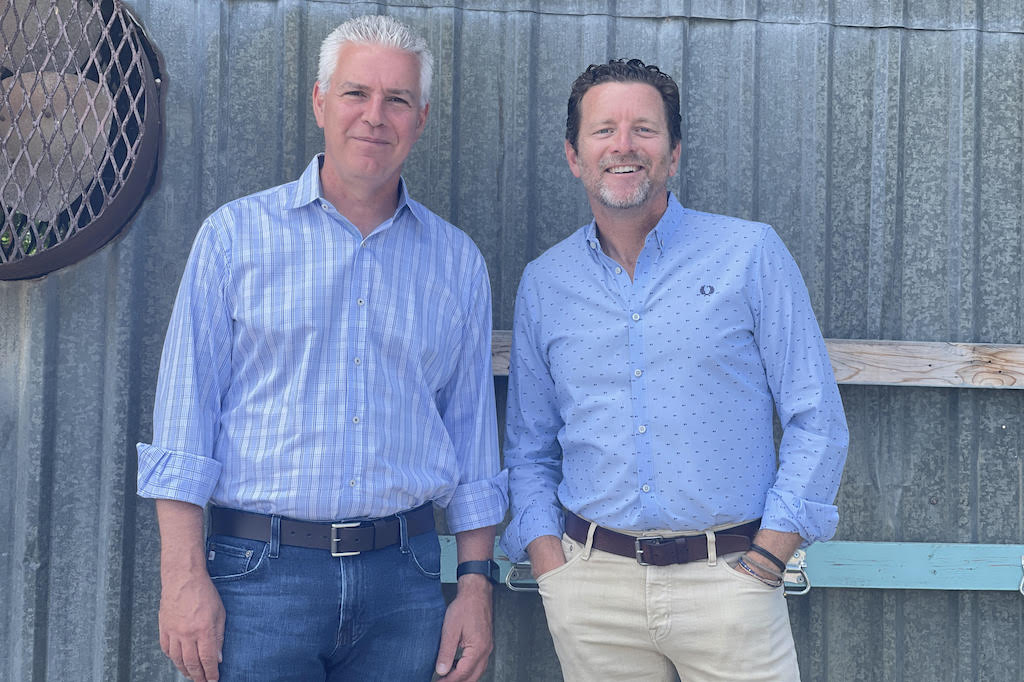
Peter Carrescia (left) and Kirk Simpson (right) of Qui. Photo: Handout | Qui
After one of Canada’s biggest-ever tech exits, two former Wave Financial executives unveiled their new decentralized-identity startup Thursday with backing from some big-name investors. Here’s what you need to know:
Talking Point
Startups, spurred by public concerns about cybersecurity and the need to accommodate the growth of digital commerce, are looking for new ways to verify and store personal information using blockchain-enabled technology.
It’s French for “who”: Qui Identity is the brainchild of Kirk Simpson, co-founder of fintech Wave Financial, and Peter Carrescia, a former founding managing director at OMERS who later joined Wave as a senior vice-president. Wave sold to the tax-preparation firm H&R Block for $537 million in 2019, a deal that remains a landmark in Canadian tech. (Wave’s other co-founder, James Lochrie, has since launched his own VC firm, based out of Calgary.)
On Thursday, the pair announced the completion of Qui’s $6.5-million seed funding round led by Round 13 Digital Asset Fund, with participation from OMERS Ventures, Loblaw-linked Wittington Ventures and some “prominent” angel investors whom the company declined to identify.
Why it matters: Qui is the latest startup to raise money in a bid to establish itself in the nascent blockchain-enabled identification space.
Carrescia told The Logic he sees “so much opportunity” in decentralized-identity technology because it offers users a secure, self-controlled space to store personal data without relying on companies like Google.
In a statement, Round 13 Digital Asset Fund managing partner Satraj Bambra said he believes “decentralization provides compelling advantages over traditional centralized web approaches and no more so than in the area of identity.”
How does the tech work?: It’s essentially a secure digital wallet where users can store all kinds of personal information: their name, home address and employment info, credit-card numbers. It would use a cryptographic key for verification instead of a password. Rather than set up countless accounts with food-delivery apps, banks and streaming services, users would hold their personal information themselves and then transmit it to third parties as needed.
Qui’s press release says identity tech could eventually be expanded to include things like receipts for the assets people own, either physical or digital.
Who are they up against?: The decentralized-ID space is still in the early stages, but the money is starting to flood in.
In April, the identity startup Spruce Systems raised US$34 million in a deal led by Andreessen Horowitz, following its US$7.5-million seed funding last year. Salt Lake City-based Trinsic, another digital-identity service provider, recently raised US$8.5 million in seed funding backed by Toronto investors Georgian. Trulioo, a more established digital-identity provider based in Vancouver, raised $60 million in Series C funding, with Goldman Sachs as the main investor. Calgary-based Credivera provides credential-verification services for things like workforce training.
What’s next: Qui will use its seed funding to bring on new staff, and is aiming to release its first product in the first quarter of 2023.
Simpson said the technology could be particularly useful in eliminating the “friction” involved in verifying information, for example when people are applying for mortgages or financial services that require background checks.
He said he witnessed the struggle of client verification at Wave Financial, where they would have to independently verify thousands of small businesses in order to provide them payroll or other services.
“We saw that pain firsthand,” he said.



Loading...
Thanks for sharing!
You have shared 5 articles this month and reached the maximum amount of shares available.
CloseThis account has reached its share limit.
If you would like to purchase a sharing license please contact The Logic support at [email protected].
CloseGift the full article!
You have gifted 0 article(s) this month and have 5 remaining.
Recipients will be able to read the full text of the article after submitting their email address. They will not have access to other articles or subscriber benefits.
Photo: Handout | Qui
Most Popular This Week




In-depth, agenda-setting reporting
Great journalism delivered straight to your inbox.
Commentary
Carmichael: Canadian ignorance about India is a strategic weakness
Briefing
Aritzia shares pop after earnings rise 204%
First Nation in Alberta goes to court over fast-tracked oil pipeline
Chinese EV maker Geely Auto Group to launch in Canadian market in 2027
Best business newsletter in Canada
Get up to speed in minutes with insights and analysis on the most important stories of the day, every weekday.
Exclusive events
See the bigger picture with reporters and industry experts in subscriber-exclusive events.
Membership in The Logic Council
Membership provides access to our popular Slack channel, participation in subscriber surveys and invitations to exclusive events with our journalists and special guests.