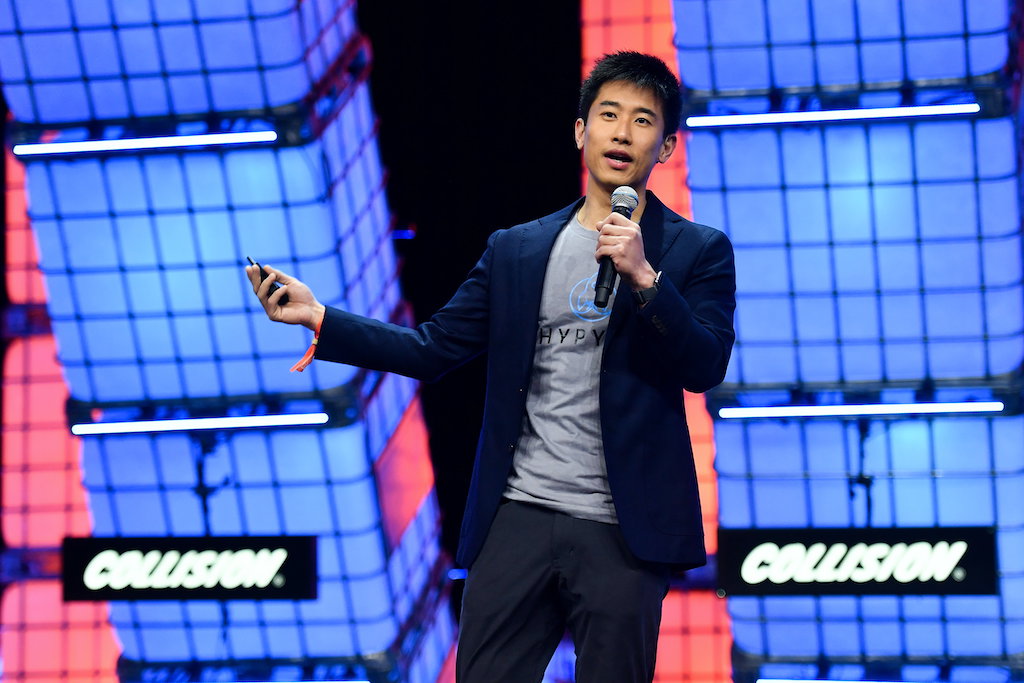
Dan Li got his first taste for the challenges of running an e-commerce store in his role as an older brother. About six years ago, Li’s sister—a high school student at the time—had aspirations to open a store selling hair accessories and jewelry. But in Deep River, Ont., an Ottawa Valley town of about 4,000 people, the pool of potential customers was small. So Li, then a product manager at LinkedIn, suggested putting the venture online instead, and together the siblings launched a Shopify store.
Through that experience, Li began meeting other merchants. “That really inspired me to want to be a part of that community and help make their lives a little easier,” he said.
The idea stuck with him after leaving his job at LinkedIn for Harvard Business School. While there, he reconnected with an old friend, Sam Chuang, who had himself been a Shopify merchant, and the idea for Shypyard was born.
Talking Point
Dan Li and Sam Chuang started Shypyard in early 2020 to help small and mid-sized online merchants manage their supply chains. They announced an oversubscribed seed round on Wednesday led by Alphabet-backed Gradient Ventures with participation from Canadian angel investors.
The startup offers a supply-chain-management platform for small- and medium-sized businesses that sell through online retail platforms like Target, Walmart and Amazon, as well as Shopify. It helps merchants forecast their sales and determines inventory needs based on those projections. “For most commerce businesses, inventory is one of their biggest uses of cash,” said Li. “Every dollar of inventory they’re holding up, it’s a dollar of marketing that they can’t put forth. So for us, it’s helping them balance the demand generation through marketing, as well as the fulfillment of demand through inventory.”
The company has been testing the product with a small group since last fall. It uses a subscription model geared to the client’s size. On Wednesday, it officially launched public beta testing and announced the close of a US$3-million seed round led by Gradient Ventures, a venture capital arm of Alphabet.
“We knew we had a huge opportunity ahead of us, and we needed the capital to pursue this opportunity fully,” said Li.
The company plans to use its funding to hire sales and marketing staff, said Li, who wants to grow the team of 11 people to 15 or 20 by the end of the year. “The main thing is getting [this product] to as many entrepreneurs as possible and proving the value with as many of them as possible.”
Li and Chuang initially aimed to raise US$2 million, but increased their target. “Because we already had a prototype, we didn’t think that we’d require a lot of capital to build a first release of it. And then when we went to fundraise, we realized there was a ton of interest in this space and this market and the opportunity,” Li said.
The co-founders lucked out with their timing, he added. Li and Chuang had just come up with the idea for the startup as COVID-19 was first spreading. Since then, e-commerce adoption has accelerated substantially, as prolonged lockdowns in many parts of the world forced shoppers to quickly change their habits. E-commerce sales in the U.S. jumped more than 50 per cent from 2019 and 2021; in Canada, sales almost doubled from May 2019 to May 2022.
“We didn’t realize the e-commerce industry would take off,” said Li. “We didn’t know whether it would still be safe for frontline workers in warehouses and [along] the fulfillment chain to continue operating. … It was a pretty crazy time, but after six months or so, we noticed, ‘OK, there’s definitely a trend towards e-commerce.’”
Capital has also flocked to companies in the space. The online wholesale marketplace Faire, which has headquarters in San Francisco and Waterloo, Ont., raised $222 million at a $3.6-billion valuation in October 2020. And global VC funding in the vertical reached nearly US$80 billion in 2021, up from about US$32 billion both in 2019 and 2020, according to PitchBook.
Growth in the sector has slowed in recent months. Firms like Amazon have trimmed hiring targets and Shopify has laid off staff. But Li said e-commerce adoption is still well ahead of where he and Chuang expected it to be when they started Shypyard.
The company has an office in New York and a development team in Taipei, but Li said its workforce is mostly distributed. The co-founder is currently in New York, but said he’s considering a return to Canada.
Most of Shypyard’s funding came from California-based firms, with Liquid 2 Ventures and Position Ventures also participating in the round. But Li said his connections to Canada’s founder and angel networks—he spent his spare time tinkering at the University of Waterloo’s Velocity Lab while studying computer science at the school—helped close the deal.
Former Shopify product lead Daniel Patricio was among the local angel investors in Shypyard’s seed round. Patricio had recently left Shopify to focus full time on his own online store, Bull and Cleaver, when a colleague introduced him to Li. Patricio began testing Shypyard’s software and said he quickly saw its potential.
“The product kind of saved my ass,” said Patricio, who sells biltong, a South African dried cured meat. “We were growing super fast and it just became such a powerful tool. It’s solely what I use for inventory planning in my store.”
Patricio said Shypyard’s edge over other logistics-planning systems is its ability to calculate real-time inventory based on demand inputs and other customizable features, which he said “puts intelligent merchants in the [driver’s] seat.”
Li said he wanted to give small and mid-sized merchants the same kinds of supply-chain-management tools that are available to large corporations. Several of his business-school classmates had worked on demand or inventory planning for companies like Kellogg’s, General Mills and Pepsi, where he said they had access to sophisticated tools like Oracle.
“As a small [or] medium business, you just can’t afford [it] or it’s just too cumbersome to implement,” he said.