Listen Now
0:00
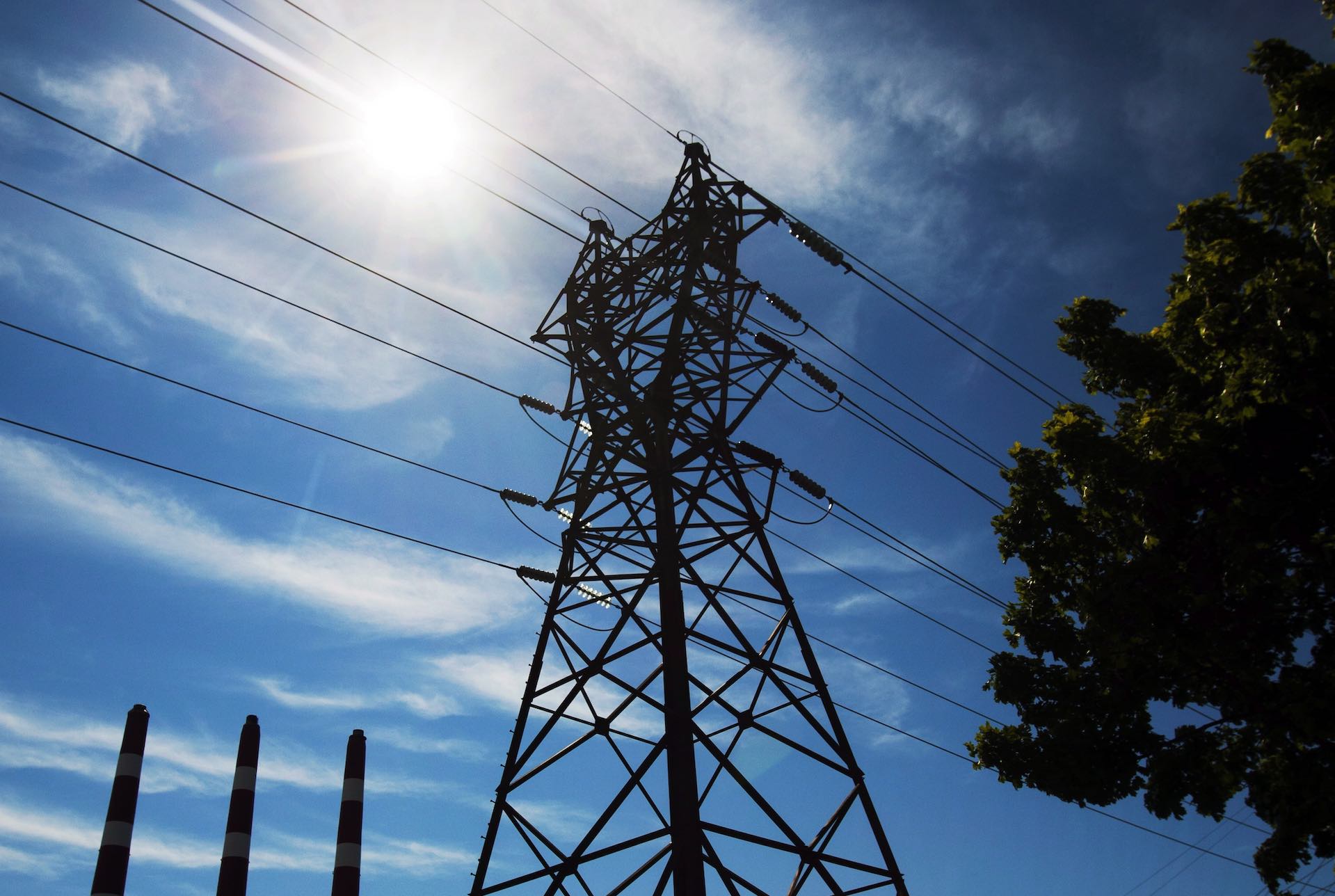
CALGARY — A proposed merger of two Canadian utility giants is set to create an energy-infrastructure “powerhouse” with the financial might to pursue major transmission projects envisioned by Ottawa, as well as the electricity and natural-gas infrastructure needed to meet soaring energy demand from population growth and new power-hungry data centres.
Halifax-based Emera is proposing to combine with Calgary-based Canadian Utilities Ltd.—currently controlled by ATCO Ltd.—in an all-stock transaction that would create one of North America’s largest utility companies, with an enterprise value of $72 billion and equity value of $35 billion. The new company would retain Emera’s name and its headquarters in Halifax, while maintaining Canadian Utilities’ corporate and operational headquarters in Calgary and Edmonton.
Related Articles

The complex deal would also see ATCO, a Calgary mainstay whose holdings range from electricity and natural-gas utilities to modular housing, split apart. Its controlling stake in Canadian Utilities would be folded into Emera, while its industrial services business would be spun into a separate publicly traded company under the ATCO name.
The deal represents a dramatic transformation for one of Western Canada’s most prominent corporate empires. The Southern family—which controls ATCO, and, through it, Canadian Utilities—would relinquish control of the utility business in exchange for a stake in the much larger Emera. It would retain voting control over the newly independent ATCO, which would become a smaller firm focused on housing, defence and remote infrastructure. It would remain headquartered in Calgary under the leadership of CEO Nancy Southern.
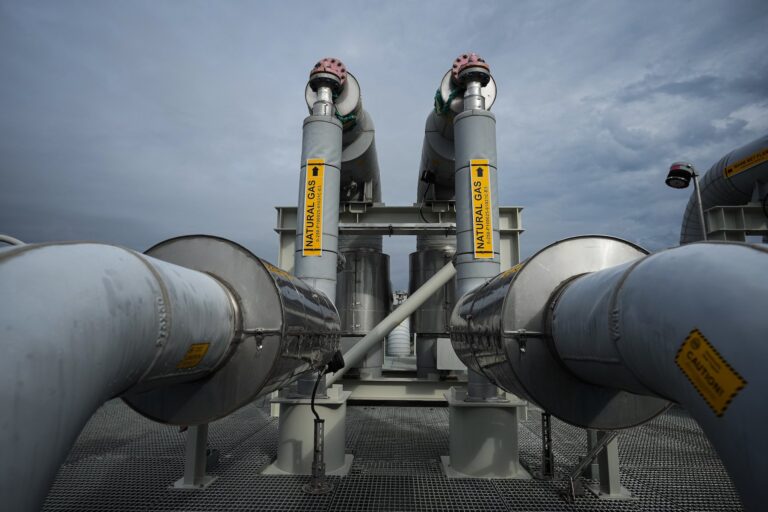
The companies are hoping to capitalize on a looming wave of government-backed investment in energy infrastructure and other projects of national importance, as well as billions of dollars in investments to expand power and natural gas networks in fast-growing markets like Alberta and Florida.
“The timing is right because the amount of opportunities in the utility sector today requires significant capital investment,” Southern said on a conference call Tuesday. “We feel that in this complex world, scale is going to matter.”
Southern pointed to Ottawa’s push for a more interconnected national power grid, citing new cross-country transmission infrastructure as “a big opportunity” for the combined company.
Emera CEO Scott Balfour, who is expected to serve as chief executive of the merged company, said in a separate conference call that the larger company would be positioned to pursue new regional transmission interconnections and other energy projects.
“This is a moment for Canada,” Balfour said, pointing to the federal government’s focus on building projects of national interest. “This combination, really truly creating a Canadian champion, puts us in a position to support and frankly capitalize on the opportunities that arise from this moment that Canada has.”
A utility giant emerges
The post-merger value of Emera would put it among the 20 largest North American utilities, the companies said Tuesday. It would have a net asset base worth roughly $45 billion and serve six million customers. Existing Emera shareholders would own about 60 per cent of the new company, while former ATCO and Canadian Utilities shareholders would collectively own the remaining 40 per cent.
Executives from both Emera and Canadian Utilities played down the notion of a corporate merger aimed at cost-cutting. The deal is primarily a bet on greater financial scale allowing the company to pursue larger capital projects, and more of them.
“Combinations like this really aren’t about synergies,” Balfour said. “The strategic thesis around this is really all about the opportunity to drive more growth.”
The larger company is expected to benefit from greater geographic reach, increased access to capital and exposure to “two of the fastest growing jurisdictions in North America—Florida and Alberta,” the companies said. Emera already owns Tampa Electric and Peoples Gas in the United States, while Canadian Utilities’ operations are heavily concentrated in Alberta.
About 80 per cent of adjusted earnings of the merged company would come from Florida and Alberta.
Canadian Utilities will maintain corporate and operational headquarters in Calgary and Edmonton, as well as “a strong continued presence” in markets including Perth, Australia. Emera’s U.S. operations will continue to be headquartered in Tampa, Fla.
The deal faces a lengthy and complex approval process. It must still be approved by shareholders from ATCO and Canadian Utilities, while Emera’s shareholders must approve the issuance of the shares needed to finance the all-stock deal. It also faces court and a number of regulatory approvals. The companies expect the deal could close in the second half of 2027.
ATCO’s transformation
ATCO has long been a supplier to the Canadian government, with hundreds of contracts in public disclosures—some of them, particularly for National Defence, worth tens of millions of dollars. A European subsidiary served Kandahar Airfield, Canada’s key base when the Canadian Forces were deployed in Afghanistan.
In September, it boasted of setting up a temporary military base for 350 people in Resolute Bay, Nunavut, in just three weeks.
Northern and remote infrastructure is a growth industry as Canada and NATO allies invest in their militaries. At just four northern military sites in the territories and Labrador, Prime Minister Mark Carney has pledged to spend $32 billion on upgrades.
“There’s approximately $180 billion in defence procurement opportunities ahead of us, and $290 billion in defence-related capital investment over the coming decade, primarily in Canada’s Arctic,” Southern said on the conference call.
Countries in Europe are preparing in case Russia’s invasion of Ukraine turns into a wider war. Poland is looking for a contractor to build bomb shelters, Southern said. Some countries are considering reintroducing conscription and will need buildings to house and train troops. If ATCO becomes a business that investors can evaluate separately from its giant utility holding, that should make raising capital to answer those calls easier, she said.
Long-distance connections
The opportunity Southern sees goes beyond pure military efforts.
In March 2026, ATCO bought 40 per cent of West Kitikmeot Resources, the Inuit-led company working on the Grays Bay port and road project in Nunavut. It’s to connect a new port on the coast of the Northwest Passage to Yellowknife via mineral-rich parts of Nunavut and the Northwest Territories. The proposal is in the Major Project Office’s hands.
ATCO has a ports business that could be useful there and anywhere an existing port operator wants to expand, Southern said.
In all, the structures and logistics business, the core of the post-merger ATCO, made $94 million in profit in 2024 and $120 million in 2025, according to the company’s last annual filing, on revenues of $1.1 billion and $1.3 billion, respectively.
Ultimately, Southern said, ATCO’s non-utility businesses spin off money in a way the utilities don’t. Movable rental buildings finish paying for themselves within four years, for instance. “That’s a real cash-generating business, and that’s what we really want to focus on in the new ATCO.”