VANCOUVER — The Egg Farmers of Canada want the federal government to crack down on labelling requirements, preventing plant-based protein makers from calling their products “eggs.”
Skip to content

News
Egg Farmers cry foul over labels on plant-based alternatives
Group asks Ottawa to block the use of the word ‘egg’ on imitators’ products
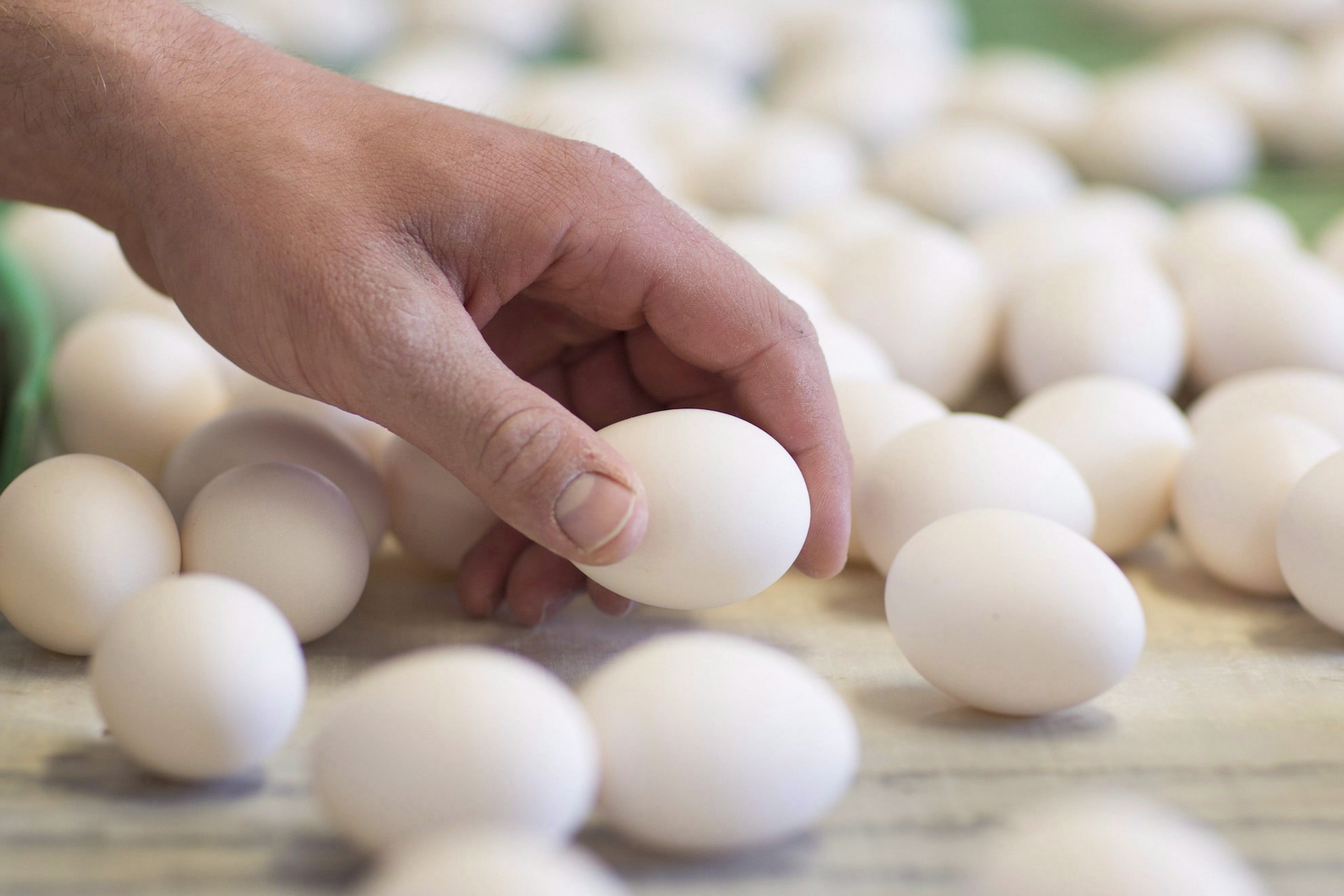
Eggs being sorted on a farm in West Lincoln, Ont., in March 2016. Photo: The Canadian Press/Peter Power
VANCOUVER — The Egg Farmers of Canada want the federal government to crack down on labelling requirements, preventing plant-based protein makers from calling their products “eggs.”
“Consumers face more choices than ever before when it comes to food items, including new product alternatives such as plant-based proteins and egg substitutes,” wrote the national organization, which represents more than 1,200 egg farmers, in a submission for consultations ahead of this year’s federal budget.
Talking Points
- The Egg Farmers of Canada want the federal government to review and update labelling requirements to distinguish between eggs and plant-based alternatives
- The Canadian Food Inspection Agency says it will hold consultations in the coming months around plant-based dairy and egg alternatives
While vegetarians have long had access to veggie burgers and other meatless options, plant-based proteins have caught the attention of Silicon Valley in recent years. Entrepreneurs and investors saw the meat industry as broken, and ready for disruption. Startups aimed to rebrand veggie options as mimicking their meat counterparts—complete with bleeding, and a fattier mouthfeel.
New entrants attracted big venture capital dollars and touted themselves as the future of food, helping combat climate change by using fewer natural resources. The craze culminated in a massive initial public offering from Beyond Meat in May 2019. The company’s shares rose 163 per cent on opening day.
Despite the initial excitement dying down, and criticism that Beyond Meat and others misread what consumers want, it’s indisputable that we now have access to more plant-based alternatives than before. There are meatless burgers, sausages, crumbles, nuggets and ribs—to name a few. Dairy milk can be replaced with almond, oat, soy, cashew, pistachio and coconut imitants. Vegan cheeses now include parmesan, ricotta, curds, feta and brie options.
Egg alternatives have started to crop up on grocery shelves, as well. Consumers can purchase “plant-based egg,” made mostly of lupin beans, as a liquid in a bottle for frying, scrambling or baking. Ready-to-go options include plant-based patties and scrambles. There are even hard-boiled or poached egg alternatives for sale.
Related Articles

Some of these new products have packaging that has imagery of or the word “eggs” on it, the Egg Farmers said in their submission. “This generates consumer confusion, implying the presence of real eggs and conveys the impression that egg substitute products are functionally and nutritionally interchangeable with eggs, which they are not.”
The Egg Farmers of Canada declined requests for comment. “We’d be happy to touch base at a later date once we have a sense of next steps that the government might be considering in the area of labelling modernization,” wrote spokesperson Elissa Zaks in an email.
The organization wants “a review of new product alternatives to eggs,” according to its submission. It also calls for the federal government to update food-labelling requirements “to allow clear distinctions to be made for consumers between natural and ‘true’ forms of eggs, and new product alternatives.”
It’s the opposite of what the plant-based-alternative industry wants. Plant-Based Foods of Canada, which represents producers, believes “common language makes common sense,” said Leslie Ewing, the group’s executive director. “Regulations need to move to where consumers already are. They’re already using this language to reference the products,” she said.
The Canadian Food Inspection Agency, which is responsible for food safety in the country, has set precedents for this with some plant-based products by requiring oat, soy and other plant-based milk alternatives be labelled “beverages,” and alternative-cheese products not be called “cheese,” the Egg Farmers’ pre-budget brief reads. “The same requirement should be mandated for egg substitutes,” the submission argues.
In Canada, the word “milk” can only be used to describe “normal lacteal secretion … obtained from the mammary gland of the cow,” according to the CFIA, which relies on a definition from the federal Food and Drug Regulations. (Milk from other animals must be clearly labelled as such.) Cheese is a little more complicated. In 2019, a B.C.-based vegan-cheese maker won the right to use the word “cheese” to describe its products in marketing materials, so long as they are identified as being dairy-free and plant-based.
When asked what the makers of plant-based cheese, milk and egg alternatives can call their products on labels, the CFIA told The Logic that it does not pre-approve labelling, and that its inspectors decide on a case-by-case basis whether a product is compliant.
Still, “we are aware of changes in the marketplace and recognize the importance of having clear guidance on how to label, sell, advertise and package these foods in a manner that is truthful, and what might be considered false and misleading to the consumer,” wrote spokesperson Christine Nasrallah in an email to The Logic. It’s launching a consultation on plant-based dairy and egg alternatives in the coming months.
In November 2020, the CFIA started consultations on simulated meat and poultry products, as well as some other plant-based foods. Current regulations require any imitations be identified as “simulated,” and include on their packaging the phrase “contains no meat” or “contains no poultry.” Those consultations sought to determine whether a product that is not an attempt to replicate a meat one, such as a soy burger, needs the additional phrase.
In July 2021, the agency published a report summarizing what it heard in thousands of responses, with most indicating that “plant-based foods should be allowed to use meat terminology,” and that it is not hard to distinguish between vegetarian and meat options. The CFIA expects to publish final guidelines for those products in the coming months, it said.
Ewing said her group will participate in the agency’s upcoming dairy and egg consultations, which will be open for feedback for 60 to 90 days. After analyzing submissions, the CFIA may publish a report, update its guidance or seek further feedback.



Loading...
Thanks for sharing!
You have shared 5 articles this month and reached the maximum amount of shares available.
CloseThis account has reached its share limit.
If you would like to purchase a sharing license please contact The Logic support at [email protected].
CloseGift the full article!
You have gifted 0 article(s) this month and have 5 remaining.
Recipients will be able to read the full text of the article after submitting their email address. They will not have access to other articles or subscriber benefits.
Photo: The Canadian Press/Peter Power
Most Popular This Week




In-depth, agenda-setting reporting
Great journalism delivered straight to your inbox.
Commentary
Carmichael: Canadian ignorance about India is a strategic weakness
Briefing
Aritzia shares pop after earnings rise 204%
First Nation in Alberta goes to court over fast-tracked oil pipeline
Chinese EV maker Geely Auto Group to launch in Canadian market in 2027
Best business newsletter in Canada
Get up to speed in minutes with insights and analysis on the most important stories of the day, every weekday.
Exclusive events
See the bigger picture with reporters and industry experts in subscriber-exclusive events.
Membership in The Logic Council
Membership provides access to our popular Slack channel, participation in subscriber surveys and invitations to exclusive events with our journalists and special guests.