AI’s thirst for clean energy is raising hopes in the long-forgotten geothermal sector
CALGARY — When John Redfern co-founded his Calgary-based geothermal company Eavor Technologies in 2018, the technology was still on the fringes of Canada’s energy space.
But a spike in emissions-free electricity demand—driven in part by Big Tech’s massive appetite for power to run their AI data centres and a new global focus on energy security—has thrust the technology into the mainstream, leading the Microsoft-backed startup to expand its ambitions.
News
AI’s thirst for clean energy is raising hopes in the long-forgotten geothermal sector
Alberta’s Eavor Technologies is among those expanding its ambitions: ‘We’re aiming at a bigger prize’
CALGARY — When John Redfern co-founded his Calgary-based geothermal company Eavor Technologies in 2018, the technology was still on the fringes of Canada’s energy space.
But a spike in emissions-free electricity demand—driven in part by Big Tech’s massive appetite for power to run their AI data centres and a new global focus on energy security—has thrust the technology into the mainstream, leading the Microsoft-backed startup to expand its ambitions.
“We’re aiming at a bigger prize, a chunkier prize,” Redfern said in an interview with The Logic.
Talking Points
Geothermal power has been around for over a century, but today only accounts for one per cent of global electricity supply
A sharp uptick in clean energy demand, led by Silicon Valley’s insatiable appetite for AI, could finally bring the technology to the forefront
Meeting that growing demand will mean tapping into gigantic and hard-to-access power sources deep beneath the Earth’s surface. The technology works by drilling wellbores into pockets of ultra-hot steam several kilometres underground, creating a “massive radiator,” as Redfern puts it, whereby heat from the Earth’s core can be drawn back to surface and converted into electricity.
Several major tech and energy companies have already bet on Eavor. It closed its latest round of fundraising, a US$182-million Series B, at the end of 2023 with backing from the Microsoft Climate Fund, oil giant British Petroleum and Austrian petrochemical firm OMV. Two months earlier, Eavor was the first company to get funding from the federal government’s Canada Growth Fund—a $15-billion spending program aimed at supporting decarbonization tech—when the agency bought a $90-million stake in the geothermal firm.
“We look forward to Eavor’s innovations in geothermal energy solutions to scale the market with consistent and reliable sources of clean energy,” Microsoft’s general manager of renewables Adrian Anderson said in a statement at the time.
While countries like the U.S., Philippines, Italy and Iceland have embraced geothermal power, its development has remained limited globally, hindered by a range of holdups from high costs to lack of regulatory clarity. Despite the technology being more than 100 years old, geothermal accounts for just one per cent of global electricity supply, according to the Paris-based International Energy Agency.
Canada’s geothermal development in particular has moved at a snail’s pace. Eavor is easily among Canada’s most prominent and well-financed geothermal companies, but has trained much of its attention on Germany, the U.S. and even the Caribbean.
Yet geothermal has gained new attention in recent years as U.S. tech giants race to build next-generation AI, which will in turn require massive amounts of electricity to operate. The IEA said rising demand for clean power could see geothermal account for as much as 15 per cent of electricity demand growth by 2050.
Houston-based Sage Geosystems will use its geothermal technology to power some of Meta’s data centres, while Fervo Energy—also located in Houston—partnered with Google on a test facility that has generated power since 2023.
Eavor has also been in discussions with several Big Tech companies looking to build data centres, Redfern said, but declined to identify which ones.
“All the geothermal players are getting a lot of attention from the big hyperscalers, and they’re all looking for something we can deliver in five to 10 years,” Redfern said.
The Alberta government, which has sought to convince AI developers to build their data centres in the province, is touting natural gas as a cheap power source that can help companies ease their hardware bottlenecks.
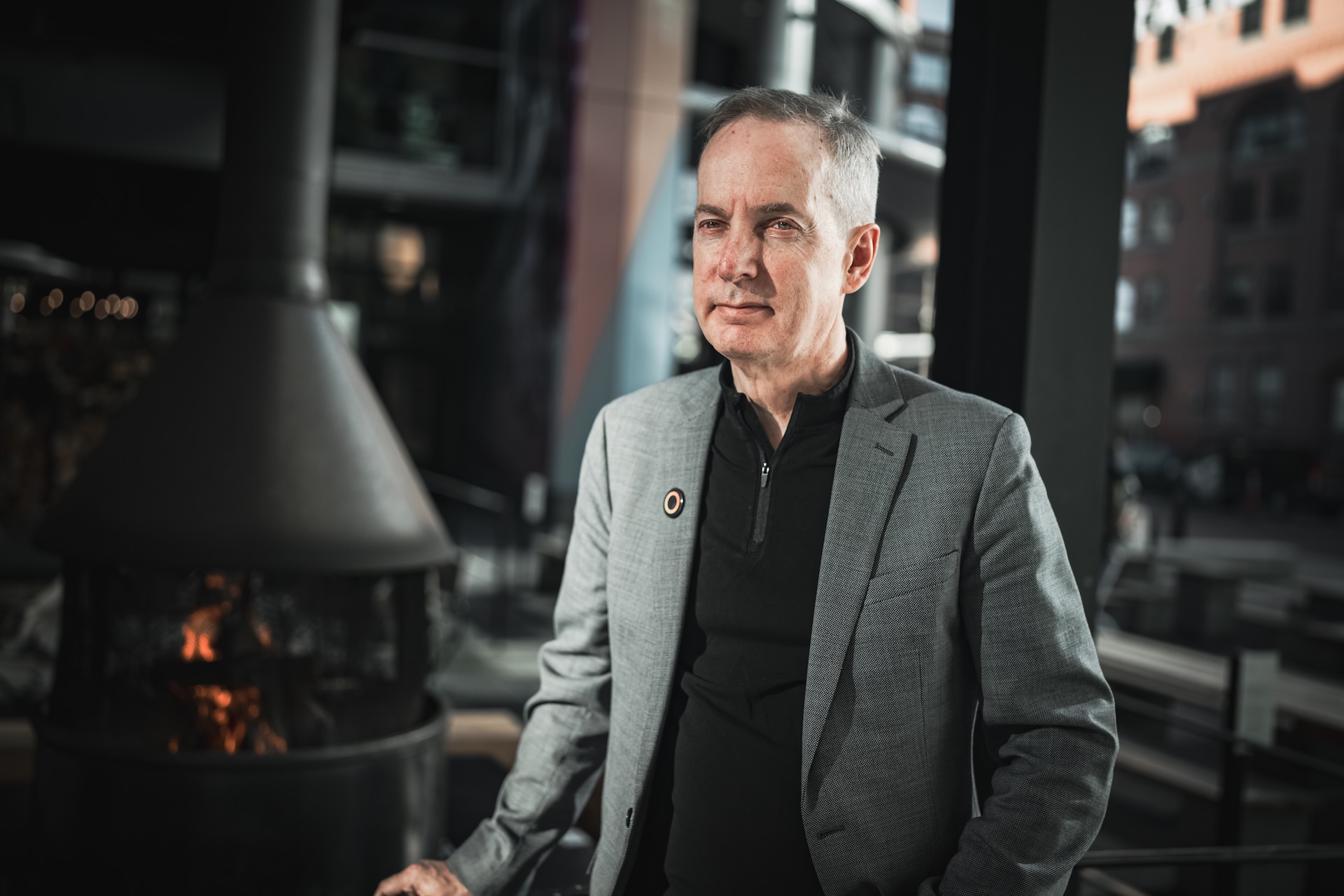
Eavor Technologies co-founder John Redfern. Photo: Handout
Alberta innovation minister Nate Glubish has met with a long list of Silicon Valley tech firms about building Alberta-based centres, and attended a global AI conference in the United Arab Emirates last month to meet with potential investors.
In an October 2024 interview he toldThe Logic that builders are “desperate” for data centres they can build immediately in order to keep their AI competitive.
“They understand that over the next five years, they have to build this infrastructure and turn it on,” Glubish said.
Redfern believes, however, that in the longer term those companies will prefer emissions-free, stable power sources that can help them keep their ballooning GHG emissions profiles under control.
While hydro will fill some of that gap, North American capacityconstraints and the sprawling amount of land that hydro projects require will complicate their development. That leaves geothermal and nuclear, which come with their own hindrances but have more versatility as to where they can be built. Many tech companies, Redfern said, want to build data centres with isolated power sources to avoid drawing critical supplies from the public grid.
Microsoft recently inked a 20-year deal for nuclear power that involves reviving the previously shuttered Three Mile Island plant in Pennsylvania, and Google is looking to tap into small modular nuclear reactors, some of which may not come online until 2035.
“They know they’re going to need some base load, carbon-free power, and there’s only two things that can deliver that in its required density,” Redfern said.
Eavor has completed three test facilities for its technology, and is currently building its first commercial facility in Germany as the country pivots toward geothermal power in an effort to reduce its Russian natural gas dependence.
In Alberta, the company recently partnered with the provincial government to create the Alberta Drilling Accelerator, a site where companies can test advanced drilling technologies that might be used to tap into deep subsurface reservoirs. There, Redfern said, Eavor could drill a wellbore as many as 15 kilometres below the surface—the deepest on record—to tap into a roaring-hot reservoir registering as much as 450 degrees Celsius.
Previously, such efforts might have been reserved for tapping into deep underground oil reservoirs, but a new focus on clean electricity has radically shifted the focus.
“Everyone is fixated,” Redfern said. “We’re into the electrification of everything, which only works if you have secure power that you can call on at a reasonable price.”
Recipients will be able to read the full text of the article after submitting their email address. They will not have access to other articles or subscriber benefits.
Great journalism delivered straight to your inbox.
Commentary
Carmichael: Canadian ignorance about India is a strategic weakness
By
Kevin Carmichael
Briefing
Aritzia shares pop after earnings rise 204%
By Anita Balakrishnan |
First Nation in Alberta goes to court over fast-tracked oil pipeline
By Chaimae Chouiekh |
Chinese EV maker Geely Auto Group to launch in Canadian market in 2027
By Joanna Smith |
Best business newsletter in Canada
Get up to speed in minutes with insights and analysis on the most important stories of the day, every weekday.
Exclusive events
See the bigger picture with reporters and industry experts in subscriber-exclusive events.
Membership in The Logic Council
Membership provides access to our popular Slack channel, participation in subscriber surveys and invitations to exclusive events with our journalists and special guests.