Listen Now
0:00
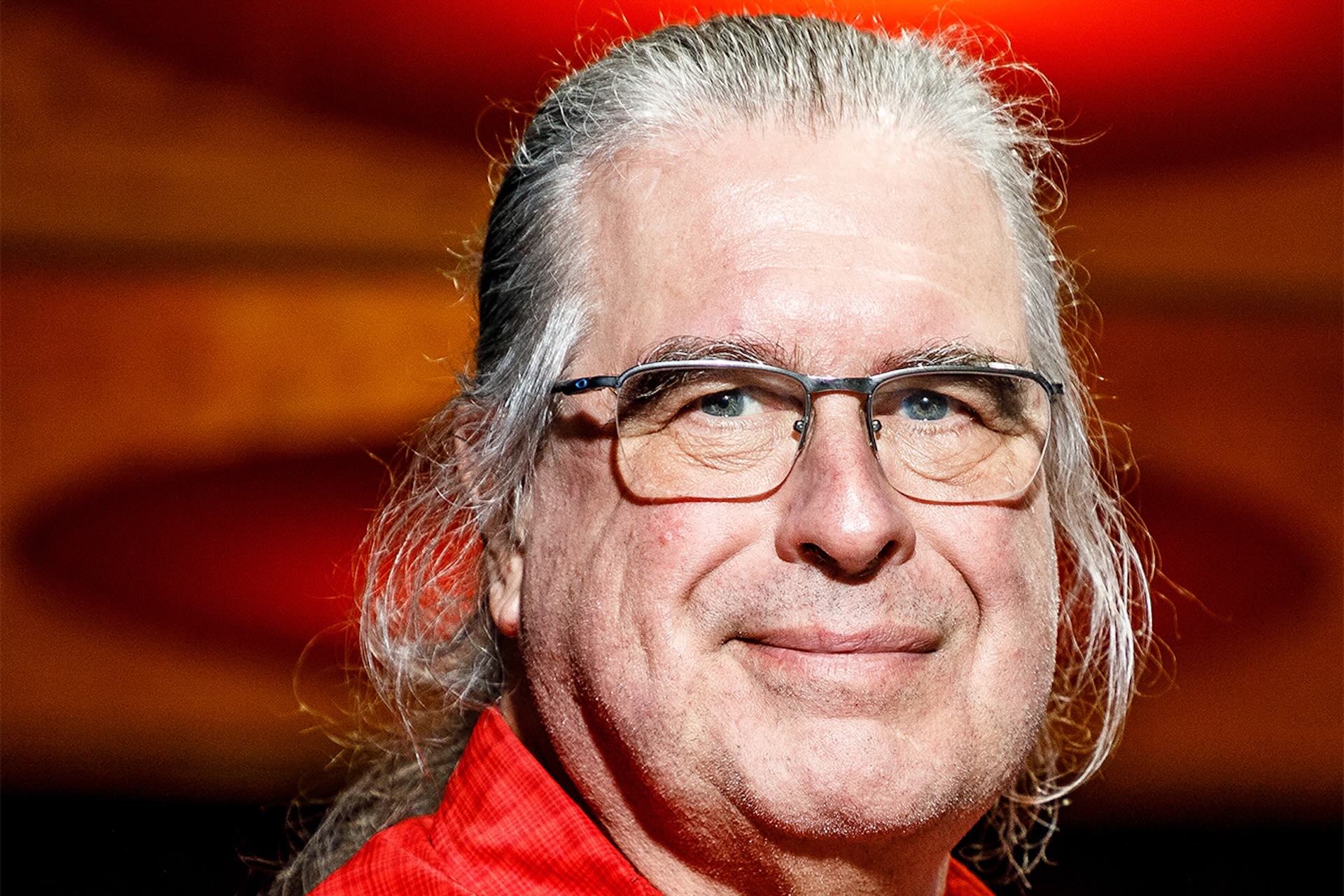
Canadian computer scientist Gilles Brassard has won the Turing Award for helping lay the foundations of quantum information science, which is set to change the way information moves around the world.
The Université de Montréal (UdeM) professor shares the Association of Computer Machinery’s top prize with his longtime collaborator Charles Bennett, an American physicist and IBM researcher. Together, they developed a way to encrypt communications that should be unbreakable however powerful computers get. The pair were also on a team that demonstrated quantum teleportation, moving information over significant space using the oddly-synced behaviour of distant particles.
Talking Points
- Gilles Brassard, a computer science professor at Université de Montréal, has won the Turing Award with longtime collaborator Charles Bennett for their work to help establish quantum information science
- The pair came up with an unbreakable system for communicating information that should withstand even quantum computers threatening the encryption methods currently securing the internet. They also helped demonstrate quantum teleportation.
“I’m very much interested in stuff that is just out of this world,” Brassard told The Logic. “If it looks too reasonable, I’m less interested, research-wise.” These days, Brassard also uses his time and his profile to warn of the dangers that will arise in the near future when quantum computers break all classical encryption methods.
Brassard and Bennett met in the ocean in San Juan, Puerto Rico, in 1979. Brassard was scheduled to give a talk at the academic conference they were both attending; Bennett spotted him in the waves and swam up to talk about quantum theory. By the time they left the water, the two had the makings of their first joint work.
A decade earlier, Stephen Wiesner, a graduate student at Columbia University, had figured out how to use quantum theory to make bank notes unforgeable. Meshing physics and computer science, Brassard and Bennett extended the idea to confidential communication. “It’s a very beautiful example of interdisciplinary research,” Brassard said.
Related Articles
Together, the pair developed BB84, a protocol that could convey information between two users with absolute secrecy—any third party trying to eavesdrop would disturb the transmission and be detected. The system is named for Bennett and Brassard, and the year it was published. It was “secure even against an opponent with superior technology and unlimited computing power,” they wrote in a December 1984 research paper.
The tech world wasn’t yet ready for BB84. To use it, developers would have needed to build a whole new technical infrastructure to move quantum information around. Instead, the internet, emerging around the same time, largely relied on a different system for securing information called public-key cryptography. Popular protocols relied on math problems that the classical computers of the era weren’t powerful enough to solve. “We had no reason to believe that the infrastructure that was being put in place to secure the internet… would be insecure,” Brassard said.
Peter Shor provided that reason. At Bell Labs in 1994, the researcher showed that a quantum computer would be able to do the math that kept the internet secure much faster, and therefore break widely-used encryption protocols. Still, the tech world did not act. Shor had “invented this algorithm on a science-fiction machine, so who cares?” said Brassard, describing the attitude at the time.
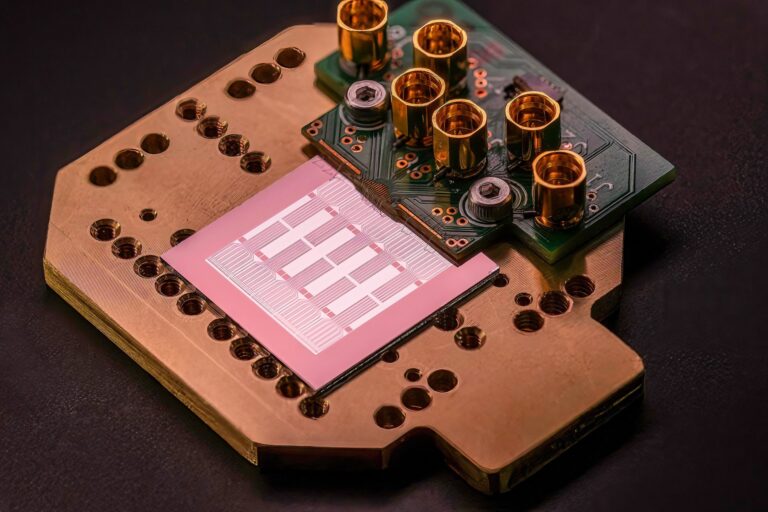
Effective quantum computers are a lot closer to reality now than in 1994. In recent years, researchers at academic labs, startups and tech giants have claimed to make hardware and technical breakthroughs that could lead to large-scale, useful machines. The U.S. Defense Advanced Research Projects Agency, or DARPA, is currently running a program designed to produce quantum computers that can solve real-world commercial and industrial problems at a reasonable cost by 2033.
Disaster awaits when the machines get good enough, Brassard has long warned. If quantum computers can break the public-key cryptography employed by most sites and software—people in the field call it “Q day”—communication that uses it will no longer be secure.
Brassard is even more concerned about “harvest now, decrypt later” attacks, in which intelligence agencies or criminal operations hack and collect data they can’t currently read, then break it once they’ve developed working quantum computers. That could include sensitive information like people’s medical histories, or state secrets. “The entire internet for the past 40 years becomes an open book, and there’s nothing you can do to save the past,” Brassard said.
AI researcher Yoshua Bengio—UdeM’s other Turing Award winner—has gone through a similar arc, helping lay the foundations of a disruptive technology that he now believes poses significant risks that aren’t being properly addressed. Brassard accepts the comparison to Bengio, and proposes his own, to a mythological Trojan priestess-princess who warned against letting in a Greek wooden horse. “I knew that disaster was looming and I kept telling people, and I was ignored—just like Cassandra,” Brassard said. “Now, they’re paying attention.”
Governments are waking up to the need to adopt quantum cryptography, the technology that Brassard and Bennett pioneered four decades ago. China, for example, has already built the infrastructure to communicate via systems similar to BB84.
The Turing Award—the highest honour in computer science—will bring more attention to the technology. Brassard is clearly thrilled to have won it. Perhaps it will mark “the end of my Cassandra life,” he joked.
Brassard and Bennett have already received the Breakthrough and Wolf prizes for physics, and are often named as contenders for the Nobel Prize. These days, the Canadian researcher and his students are using computer science to help explain and understand physics. They’re also tackling more impossible problems, like nonlocal games, in which a group of disconnected people are somehow able to answer questions correctly together without communicating. “I like science fiction,” Brassard said.













