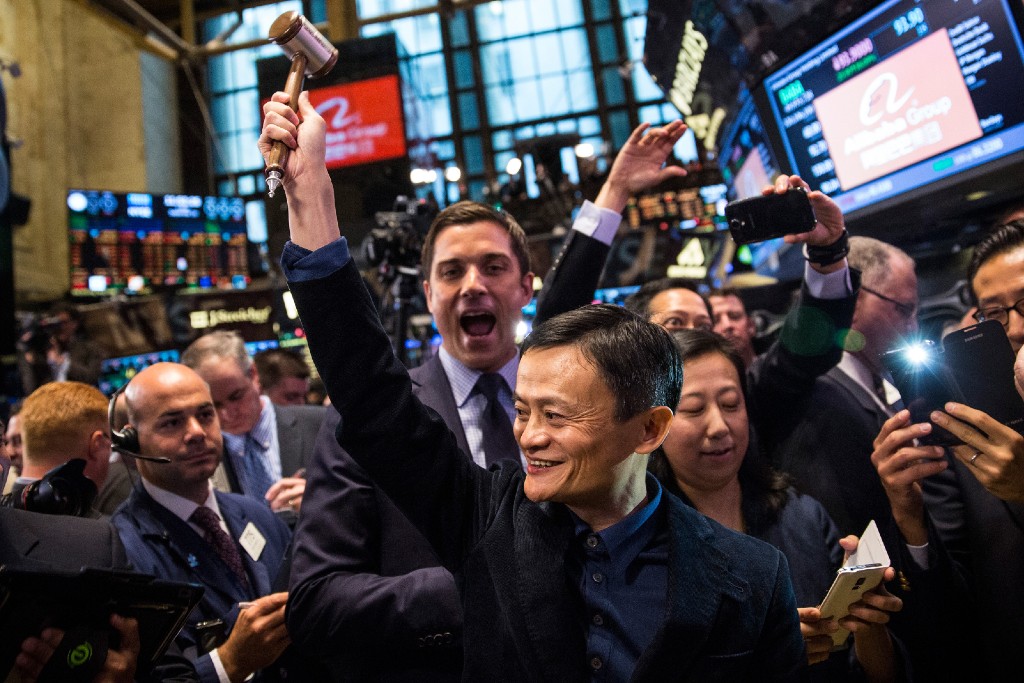
The Canada Pension Plan Investment Board sold all its U.S.-listed shares in Chinese tech giant Alibaba this summer, part of a multibillion-dollar sell-off of public assets headquartered in the country.
It’s one of several major Canadian pension funds, including the British Columbia Investment Management Corporation (BCI) and the Caisse de Dépôt et Placement du Quebec (CDPQ), to have drastically reduced their exposure to Chinese stocks amid a regulatory crackdown in Beijing and prolonged macroeconomic turmoil.
The pensions’ stock sale is part of a broader global retreat from the Chinese market. The Hang Seng China Enterprises Index of stocks—a benchmark index for Hong Kong-listed stocks—lost 28 per cent of its value in the year since June 30, 2021. As of Friday, the index had declined nearly 21 per cent more.
Talking Point
Canada’s largest pension funds have sold billions of dollars worth of Chinese stocks in the past year, amid a sweeping regulatory crackdown in Beijing and prolonged macroeconomic turmoil. The selloff coincides with a broader global retreat from the Chinese market and a threat that some Chinese stocks will be delisted from U.S. exchanges. Meanwhile, some Canadian pensions have increased their exposure to the stocks while they’ve been cheap.
Over the same period, CPP Investments’ portfolio of Chinese assets held on U.S. stock exchanges fell about 67 per cent, from over US$5.2 billion to about US$1.7 billion. That includes the sale of about US$2.24 billion worth of shares in 19 companies the firm offloaded completely between July 2021 and July 2022. Along with Alibaba, CPP sold off U.S. shares in online market JD.com, holding company KE Holdings and electric scooter firm Niu Technologies.
CPP declined to answer The Logic’s questions about the recent Chinese stock sales.
“We have spent many years prudently establishing ourselves in select emerging markets, forging strong relationships with local partners that we believe will continue to add value to the fund,” spokesperson Frank Switzer said by email. “We weigh these benefits against the known challenges we encounter in emerging markets, some of which we observed this year.”
Like other investors, CPP—which invests pension contributions on behalf of about 20 million Canadians, managing $539 billion in assets—had become increasingly bullish on China’s growing economy in the years leading up to the pandemic. But new economic and political uncertainty has triggered a recent outflow of investments. The country’s real estate market has slowed substantially and its strict “zero-COVID” policy has crimped consumer spending. Geopolitical tensions between the U.S. and concerns around President Xi Jinping’s friendship with Russia’s Valdimir Putin have also raised concerns for investors. In the first quarter of the year, overseas investors shed more than $150 billion in China-based yuan-denominated assets, the largest decline on record.
Global investors betting on China were particularly interested in tech stocks in recent years, as the country churned out global leaders in areas like e-commerce, telecommunications, social media and fintech. Tech companies, however, have been disproportionately affected by efforts to curb monopolistic practices and improve user privacy and cybersecurity.
Chinese tech stocks “have offered some of the best and most liquid, fast growing ways to get access to the China growth story,” said Cyrus Kanga, a finance instructor at Camosun College in Victoria, B.C. and former equities trader in Hong Kong and Taiwan. “The environment itself has been very cloudy in the last couple of years,” said Kanga. “With all the pressures and concerns, and no clear insight into when any of these will ease or if they’re just going to get worse it’s no surprise people would reduce what would be overweight positions or move out of those sectors altogether.”
CDPQ’s Chinese stocks listed in the U.S. lost 58 per cent, declining from US$680 million to US$285 million during the same period. As of June 30, the fund had sold about 29 per cent of the Chinese stocks it held a year earlier, including all shares in UP Fintech Holding, an online brokerage firm, and Agora, which powers popular social audio app Clubhouse.
BCI’s Chinese stocks declined 80 per cent, from US$404 million to under US$78 million, with the firm selling about 73 per cent of its shares from U.S. exchanges that it owned a year earlier.
Some investors, meanwhile, are taking advantage of the declining value of Chinese stocks, purchasing the assets at a discount. The value of OTPP’s Chinese stocks increased slightly from about US$222 million to nearly US$246 million year-over-year since June 30, 2021, as the firm added about 11 million in additional shares to its portfolio. The Public Sector Pension Investment Board (PSP) saw its U.S.-listed Chinese stock value nearly doubled during that period, from about US$44 million to nearly US$86 million.
“In crisis can often come opportunity,” said Kanga. “Specific to tech in China, valuations are considered historically cheap right now,” he said. “If you still believe that China is going to be one of the fastest growing economies in the world, then the Chinese tech plays are still very attractive and now, an increasingly attractive way to play that, given the valuations.”
Alberta Investment Management Corporation and Healthcare of Ontario Pension Plan (HOOPP) each increased their number of Chinese shares in the U.S. between July 2021 and July 2022. HOOPP in particular broadened its exposure to several companies, buying about US$60 million worth of shares in private education firm New Oriental and US$32 million in internet-services firm Baidu. Still, the total value of the two pension funds’ Chinese shares declined year-over-year.
CPP Investments remains the Canadian pension fund most exposed to China’s market. The firm set up a Hong Kong office in 2008, targeting Asia as a crucial growth market. Assets in the Asia Pacific region made up 26 per cent of the fund’s total portfolio at the end of its fiscal 2022. However, returns on the investments were negative 1.7 per cent in 2022, compared to an 8-per-cent 5-year return.
The fund’s latest annual report offers more detail on the heightened risks associated with assets in the country. “Factors driving the decline in China included the public equity market reaction to new regulatory interventions, a resurgence of COVID-19 in the fourth quarter and investor fears of the potential for sanctions from Western countries if China were to support Russia in Ukraine,” reads the report. “U.S.-China relations and Canada-China relations remain tense, and China’s economic and regulatory reforms could continue to negatively impact our investments.”
Other large international investors have been selling Chinese assets. Warren Buffet’s Berkshire Hathaway has trimmed its stake in the country’s largest electric vehicle-maker BYD over the past month, while Japanese holding company Softbank sold most of its stake in Alibaba. Earlier this month, South African internet group Naspers moved US$7.6-billion worth of shares in tech and entertainment conglomerate Tencent to Hong Kong’s Central Clearing and Automated Settlement System in preparation to sell them.
Kanga said some Canadian investors may have moved their U.S.-listed Chinese stocks to other foreign exchanges. One reason for the move, he said, might be to preempt the shares being delisted from American exchanges. In May, the SEC added over 80 Chinese companies to a watchlist of firms facing possible exclusion from the country’s exchanges if they fail to comply with new auditing requirements. It added Alibaba to the list in July.
“It’s very possible that [funds] would say, ‘Look, I am not going to have these New York listed holdings,’” said Kanga. “[They] might increase the weighted holding in a different market where it’s listed, specifically in Hong Kong.”
Didi Global, one of the firms CPP Investments sold between July 2021 and July 2022, delisted from the New York Stock Exchange on June 10, a year after its IPO, amid Beijing’s cybersecurity investigation that deflated the stock. Five other state-owned companies were delisted from the NYSE in August.
CDPQ was the only pension fund to address The Logic’s questions about whether it moved shares in Chinese companies it no longer holds in the U.S. “They were indeed sold, they were not moved,” said spokesperson Kate Monfette. “Our investments in China aim to take advantage of the size of its market and are focused on the domestic consumer sector,” said Monfette, noting that public equities make up about two-thirds of the fund’s Chinese assets which, in total, represent about three per cent of the portfolio.
BCI, which also cut its exposure to Chinese stocks over the past year, told The Logic it still views China and other emerging markets as investment opportunities. “The weights of emerging markets in general—and China in particular—in various indices are below their real economic weight in the world,” said spokesperson Janice Toker by email. Toker did not say why the fund sold most of its Chinese shares in the U.S.—or whether any of them were moved to other exchanges—but said its active management strategy “makes it possible for us to be agile and selective when entering and exiting positions, and enables us to manage risks in a timely manner, including geopolitical and sanctions-related risks.”
Kanga said investors’ tempered interest in China could be a boon for other developing markets, particularly India, given its size. “The money comes out of China, but it has to go somewhere else,” he said. “They need to still be in emerging markets.”