OTTAWA — A series of glitches has plagued a $706-million digital system that Canada launched a year ago to collect duties and taxes on commercial imports, and that business groups had warned for months was not ready for prime time.
Skip to content


News
Canada’s new online customs system is plagued by glitches
Ottawa says it has taken steps to stop constant outages that landed the $706-million tool on a U.S. list of non-tariff trade barriers
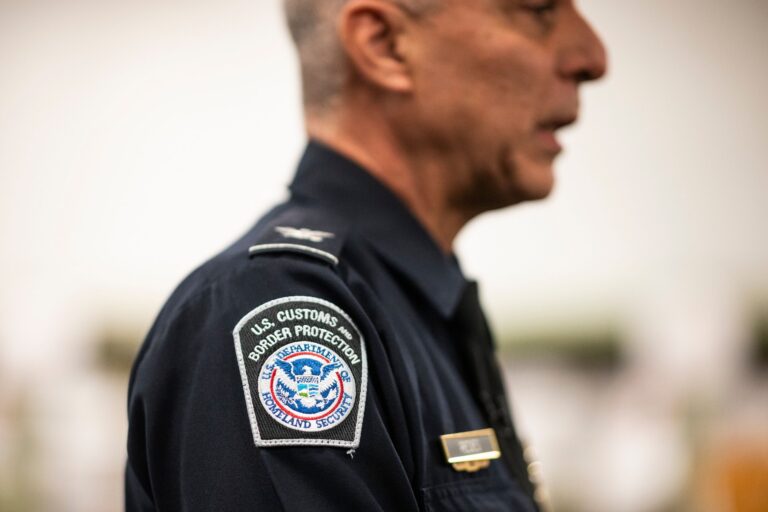
Business groups say problems with Canada’s new online customs collection system are costing time and money. Photo: AFP via Getty Images/Geoff Robins
OTTAWA — A series of glitches has plagued a $706-million digital system that Canada launched a year ago to collect duties and taxes on commercial imports, and that business groups had warned for months was not ready for prime time.
The bugs in the system even caught the eye of the Office of the U.S. Trade Representative, which mentioned the platform in its most recent annual report on foreign trade barriers.
“It’s costing time, it’s costing money to have to deal with these outages,” said Julia Kuzeljevich, director of policy and regulatory affairs at the Canadian International Freight Forwarders Association, which represents firms such as freight brokers and warehouse operators. “It’s not looking good for Canada as a trading nation.”
Talking Points
- A $706-million digital system Canada’s border agency launched to collect duties and taxes on commercial imports has experienced a series of outages and other problems
- The agency says upgrades made after last year’s launch improved the user experience, but the auditor general is planning to scrutinize the project
The Canada Border Services Agency (CBSA) launched the new tool—known as CBSA Assessment and Revenue Management, or CARM—in October 2024 to replace outdated software. The agency typically collects about $40 billion per year in duties and taxes on commercial imports, and the agency has said the “aging technology” that predated CARM was putting that money at risk.
The rollout has not been smooth. Kuzeljevich’s organization counted 49 outages between Oct. 5, 2024 and Sept. 28 of this year, based on notices the CBSA provides to industry. Only three were for scheduled maintenance. Not every CBSA outage has been specific to the new platform. In late September, a failure of different systems—not included in the count—delayed both travellers and commercial trucks at the Canada-U.S. border, with agents having to process things by hand. Wherever they originate, the chronic interruptions are a major problem, the association told federal Public Safety Minister Gary Anandasangaree in an Oct. 3 letter. “Unfortunately, these constant outages are now an inherent flaw of CBSA’s customs systems, not just a bug.”
Related Articles
Karine Martel, a CBSA spokesperson, acknowledged bumps in the road after CARM launched. “As with any major digital transformation, despite all the preparation and testing, there were challenges to address,” she said in a written statement. They included “higher-than-average systems downtime” last October and November, but most outages were shorter than four hours, and had little impact on imports, she said. The CBSA improved the underlying infrastructure, she added, and since December the availability of the CARM portal had increased from 90 per cent to 99.9 per cent.
Still, to Conservative MP David McKenzie, the system’s problems bring to mind the Phoenix pay system, which came to symbolize Ottawa’s costly struggles to purchase the tech needed to effectively run a modern government. It spent nearly $4 billion on Phoenix to replace an antiquated payroll system, but glitches caused tens of thousands of public servants to be underpaid, overpaid or not paid at all. “It gives me concern about our federal government’s ability to effectively procure large operating systems,” said McKenzie, who recently asked about CARM at the House of Commons trade committee.
The U.S. trade representative’s issues with CARM are not limited to performance. Its annual report on trade barriers last spring noted importers must now register and provide a security deposit before their goods can be released—even if they are based outside Canada. But the report also pointed to general bugginess that left importers struggling to access the portal. “When we need to be focused on reducing trade irritants with the U.S., here’s this irritant that we’ve imposed on ourselves,” said McKenzie, who represents Calgary Signal Hill.
“It’s not looking good for Canada as a trading nation.”
Canadian business groups have long been flagging CARM’s issues. “We believe the system is not ready,” Kim Campbell, past chair of I.E. Canada, which represents importers and exporters, told the Commons trade committee in March 2024. Each round of testing had been “extremely frustrating,” she said, “filled with errors and confusion.” Candace Snider, vice-chair of the board of directors at the Canadian Society of Customs Brokers, warned MPs the system was making mistakes, or letting others slip through. The CBSA ultimately extended the transition phase.
Others have shared concerns about the system even when it is working as intended. The Canadian Federation of Independent Business warned earlier this year that the financial security requirements would add to trade “chaos” at a time when many were navigating disruption caused by U.S. President Donald Trump’s trade policies, plus Canada’s retaliatory tariffs. “We were sold on this idea that it would modernize and make trade much easier, even for small business owners,” said Michelle Auger, a senior policy analyst with the federation. The CBSA did end up creating some wiggle room in the system, including by allowing the use of a credit card.
Auditor general Karen Hogan is planning to scrutinize the project, The Globe and Mail reported in July. It was chosen “through our regular audit-planning process, which considers factors such as risk, significance and public interest,” spokeswoman Claire Baudry told The Logic in an email. The timeline for the audit has not been published.
About $678 million of the $706 million authorized for CARM had been spent as of March 31, said the CBSA’s Martel—almost $499 million for development and nearly $180 million for maintenance. Since CARM came online, the agency has assessed more than $49 billion in duties and taxes, she added.
Louise Upton, a partner at Deloitte, which led the project, told MPs last October there is always “trepidation” about a new system. A year later, Deloitte spokeswoman Katie Watkins said the consulting firm is proud of its work.



Loading...
Thanks for sharing!
You have shared 5 articles this month and reached the maximum amount of shares available.
CloseThis account has reached its share limit.
If you would like to purchase a sharing license please contact The Logic support at [email protected].
CloseGift the full article!
You have gifted 0 article(s) this month and have 5 remaining.
Recipients will be able to read the full text of the article after submitting their email address. They will not have access to other articles or subscriber benefits.
Photo: AFP via Getty Images/Geoff Robins
Most Popular This Week




In-depth, agenda-setting reporting
Great journalism delivered straight to your inbox.
Commentary
Carmichael: Canadian ignorance about India is a strategic weakness
Briefing
Aritzia shares pop after earnings rise 204%
First Nation in Alberta goes to court over fast-tracked oil pipeline
Chinese EV maker Geely Auto Group to launch in Canadian market in 2027
Best business newsletter in Canada
Get up to speed in minutes with insights and analysis on the most important stories of the day, every weekday.
Exclusive events
See the bigger picture with reporters and industry experts in subscriber-exclusive events.
Membership in The Logic Council
Membership provides access to our popular Slack channel, participation in subscriber surveys and invitations to exclusive events with our journalists and special guests.





