Canada’s Big Six banks all beat first-quarter analyst expectations this week, with chief executives assuring shareholders they are well-positioned to tackle uncertainty south of the border.
Skip to content
News
Canada’s big banks aren’t letting tariffs spoil the party
‘The world’s not going to end overnight,’ says RBC’s Dave McKay, as Big Six beat earnings expectations
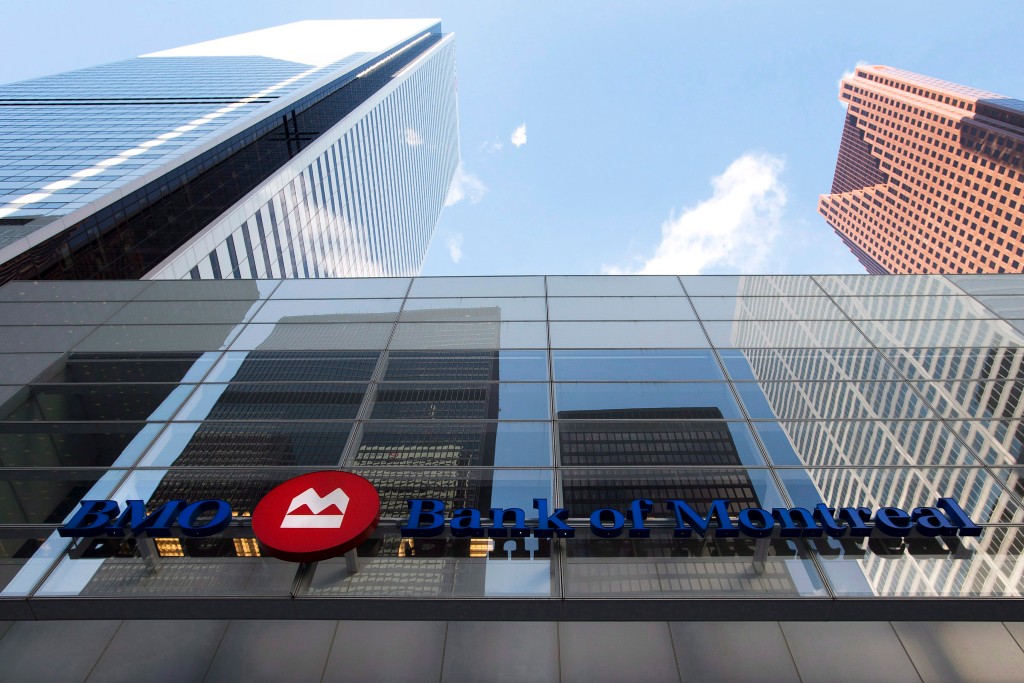
BMO saw the largest earnings growth of the Big Six, with executives expressing optimism about their ability to weather potential tariffs. Photo: The Canadian Press/Nathan Denette
Canada’s Big Six banks all beat first-quarter analyst expectations this week, with chief executives assuring shareholders they are well-positioned to tackle uncertainty south of the border.
BMO notched the highest earnings growth, up 65.5 per cent to $2.1 billion from the same quarter last year. RBC followed, with net profit up 43.2 per cent year-on-year to $5.1 billion.
Talking Points
- Canada’s biggest banks exceeded first-quarter analyst expectations, but most banks set more aside for potential credit losses ahead
- Chief executives relayed optimism—like CIBC’s chief executive Victor Dodig, who told investors he’s banking on the “great Canadian comeback”
However, both Toronto-Dominion Bank and Scotiabank’s profits fell, reporting net income down 1.1 per cent to $2.8 billion and 54.8 per cent to $993 million, respectively.
Here’s what you need to know.
The vibes are off: With U.S. President Donald Trump’s deadline due to kick in on March 4, Canada’s lenders are running up against imminent tariffs. CEOs, however, remain mostly optimistic.
“We’ve just got to engineer the great Canadian comeback,” CIBC’s chief executive Victor Dodig said on a call with shareholders, noting the bank has lower-than-usual exposure to industries that will be heavily affected by tariffs, like auto parts, forestry, agriculture, aluminum and steel.
“The world’s not going to collapse overnight,” RBC’s chief executive Dave McKay told investors Thursday morning. The tariff scenario will take a bit of time to play out, he said, predicting it’ll be more “manageable” than the COVID-19 pandemic.
Related Articles


Uncertainty around how tariffs will play out is nonetheless pushing up “anxiety levels” in Canada, BMO’s Darryl White said on the company’s Tuesday earnings call. “Some clients effectively hit the pause button on some of their commercial activity, [and are] waiting for clarity,” he added.
Bay Street analysts reckon BMO’s presence in the U.S. will boost the bank’s ability to navigate tariff uncertainty relative to its competitors. BMO’s American operations, strong capital levels and capital market exposure paint a “rosy picture,” TD Cowen’s Mario Mendonca wrote, while Scotia Capital analyst Meny Grauman noted that the bank is well-positioned for a “worst-case scenario.”
On the contrary, outsized exposures to Canada and Mexico may “weigh on” Scotiabank’s stock, National Bank analyst Gabriel Dechaine wrote. Nevertheless, Scotiabank’s CEO reassured investors that there is ”tremendous” client activity across all segments, despite geopolitical hurdles.
National Bank’s chief executive Laurent Ferreira pointed to Canada’s lagging economic performance and “excessive” regulation as its Achilles heel compared to the U.S. administration’s “pro-business” agenda.
Higher provisions for all but one: All the banks aside from CIBC increased provisions for credit losses over the last year to this quarter, citing a combination of a prolonged high rate environment, rising unemployment, tariff uncertainty and continued inflationary pressure. Increases in money set aside for loans that may go bad typically erode profitability, but net income has been growing steadily even for those with large provisions.
National Bank had the largest relative increase in provisions year-over-year, up 111.7 per cent to $254 million this quarter. Scotiabank set the most aside, with $1.2 billion in provisions for credit losses.
The takeover effect: RBC’s March 2024 acquisition of HSBC Canada made for an easier comparison, with the deal increasing net income by $214 million. It lost less in its corporate support segment—$8 million net loss for the current quarter, compared to a $247 million loss the previous quarter due to the after-tax impact of the HSBC deal.
TD Bank also faced lower acquisition costs for its 2023 Cowen takeover compared to the same quarter last year, racking up $52 million in charges, down from $117 million in last year’s first quarter.
Meanwhile, National Bank’s acquisition of Canadian Western Bank, which closed on Feb. 3, strengthened its capital position. The bank expects to see $175 million in cost savings over the next year, chief financial officer Marie Chantal Gingras said on Wednesday’s earnings call.
TD’s money-laundering woes: The Canadian lender’s U.S. retail performance was a drag on earnings, as profits in the segment fell 61 per cent over the year to $342 million this quarter. In October, TD pleaded guilty to U.S. money-laundering failures, and reported $927 million in balance-sheet restructuring costs this quarter.
It also raised $21 billion by selling off its 10.1 per cent stake in Schwab, which chief executive Raymond Chun plans to use to issue share buybacks and improve customer support.
As Scotia Capital analyst Grauman put it, TD’s quarter had “no red flags, but nothing exciting either.”
With files from Claire Brownell



Loading...
Thanks for sharing!
You have shared 5 articles this month and reached the maximum amount of shares available.
CloseThis account has reached its share limit.
If you would like to purchase a sharing license please contact The Logic support at [email protected].
CloseGift the full article!
You have gifted 0 article(s) this month and have 5 remaining.
Recipients will be able to read the full text of the article after submitting their email address. They will not have access to other articles or subscriber benefits.
Photo: The Canadian Press/Nathan Denette
Most Popular This Week




In-depth, agenda-setting reporting
Great journalism delivered straight to your inbox.
News
Brookfield’s new CEO flexes the firm’s soft power with its $50B Canadian bet
Briefing
Australia approached Canada about global coalition to curb online harms
With a $20M contract for NordSpace, Canada’s military backs a second domestic launch site
Events software firm Hive raises US$27M from Frontier Growth
Best business newsletter in Canada
Get up to speed in minutes with insights and analysis on the most important stories of the day, every weekday.
Exclusive events
See the bigger picture with reporters and industry experts in subscriber-exclusive events.
Membership in The Logic Council
Membership provides access to our popular Slack channel, participation in subscriber surveys and invitations to exclusive events with our journalists and special guests.





