Climate change and diversity policies are now less of a priority for Canadian venture capital firms, according to results of a BDC Capital survey published Wednesday.
Skip to content


News
Investors have started watering down climate and diversity commitments
Investors and their portfolio companies showed ‘persistently low’ climate policy adoption, while majority male and white teams remained the norm, according to a new report
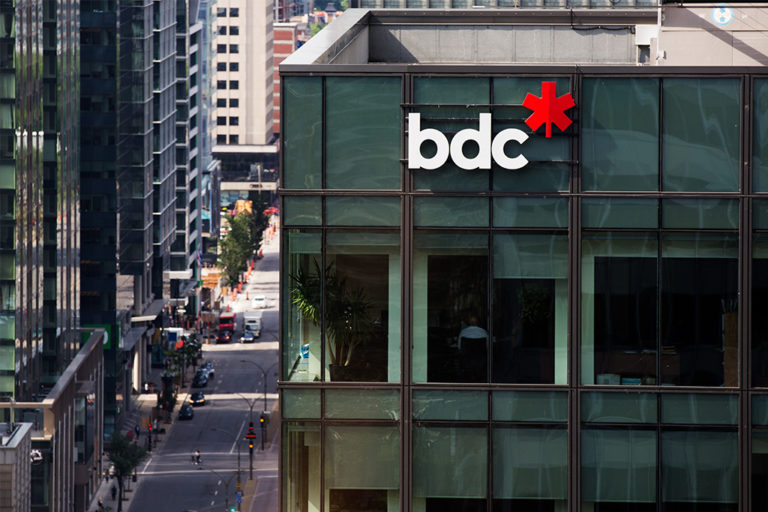
New BDC Capital survey, based on responses from 76 VC firms, reveals climate change and diversity initiatives are taking a backseat for Canadian venture capital firms. Photo: BDC | Handout
Climate change and diversity policies are now less of a priority for Canadian venture capital firms, according to results of a BDC Capital survey published Wednesday.
The findings—based on a survey of 76 VC firms and 1,231 of their portfolio companies—point to a waning interest in environmental, social and governance (ESG) measures among some investors, potentially threatening sustainability goals. Here’s what you need to know:
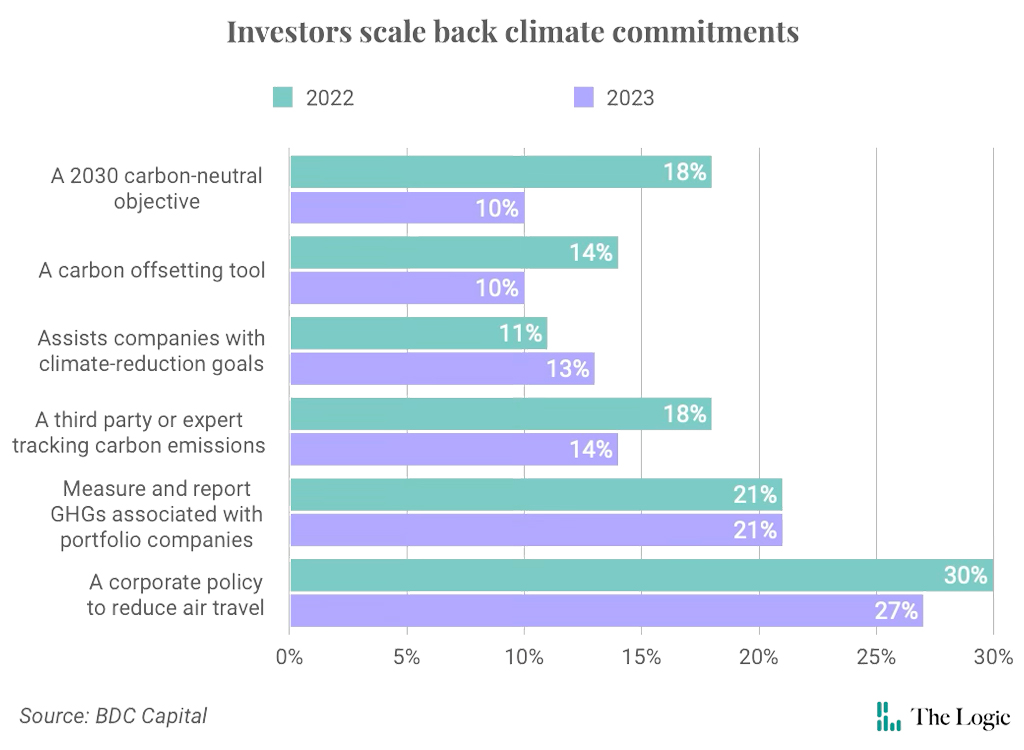
Climate change takes a back seat: In 2023, a smaller share of VC firms had policies in place to curb climate change than in 2022, the survey found. Nearly every question on the topic showed a decline in support for climate initiatives. For instance, 10 per cent of firms said they have objectives to be carbon neutral by 2030, down from 18 per cent a year earlier. Ten per cent of firms also said they have a carbon offsetting tool, down from 14 per cent, while 27 per cent of firms said they have a corporate policy to reduce air travel, down from 30 per cent in 2022.
Among the portfolio companies that VC firms backed, just four per cent had made a carbon neutral pledge, down from five per cent last year.
Kristina D’Amico, a director of fund investments at BDC Capital, attributed some of the year-over-year decline to having a larger number of respondents in the latest survey. However, sample size was not a factor in the decline in VCs with carbon-neutral goals, she said.
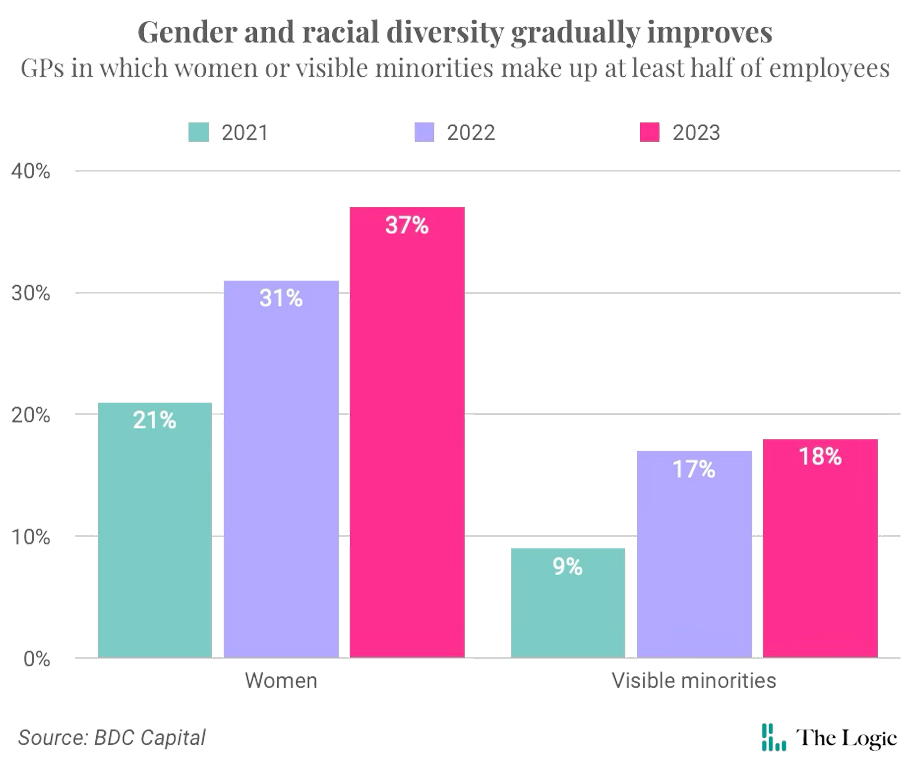
Incremental gains: Venture funds did make some improvements on DEI initiatives, the report found. For instance, women made up at least half of the staff at 37 per cent of venture funds, up from 31 per cent a year earlier. Racial diversity increased just one per cent, with 18 per cent of firms reporting at least half their employees were visible minorities in 2023.
BDC also found a gradual increase since 2021 in the share of VCs with policies to support diversity, although fewer investors in 2023 (33 per cent) had diversity targets for their portfolio companies than they did a year earlier (38 per cent).
Despite the overall improvements in share of diverse employees at Canada’s VC firms, gender and racial diversity declined in senior ranks. “We know that it’s going to take time for the industry to shift,” said Paula Cruickshank, senior vice-president of fund investments at BDC Capital. More diversity in junior roles could translate to better representation in senior positions over time, the report noted.
Related Articles

Gender diversity among the owners of VC firms also declined. Only five per cent of firms are owned entirely by women, compared to 55 per cent that are entirely owned by men. The number of entirely women-owned firms increased year over year by three percentage points, but that was outpaced by firms owned entirely by men, which grew by seven percentage points.
At the portfolio level, representation “needs work,” BDC found. “Majority-white and -men teams continue to be the prevailing model across the companies surveyed, with women and visible minorities less present in senior roles.”
Behind the numbers: BDC—Canada’s largest venture investor—cited the backlash against ESG in the U.S. as a potential reason why firms have deprioritized related initiatives. “Some criticize what they view as overly complex or poorly implemented policies that enable greenwashing and gaming of the system,” the report claims. “Others view ESG as an attempt to inject politics into decisions that should be driven by the bottom line.”
More recently, the adoption of artificial intelligence has thwarted some companies’ climate goals, with the technology adding significantly to their carbon footprint.
Hard to track: While more VC firms participated in the latest survey, response rates to DEI questions and quantitative ESG questions declined. “This tells us that [investors] need better tools to capture quantitative data, such as energy consumption and emissions,” the report reads.
BDC is trying to make it easier for firms in its network to do that. It recently launched a calculator to help companies measure and report their carbon emissions, and it has a DEI toolkit that gives companies templates for inclusive policies on things like interviewing and parental leave.
“It’s a steep learning curve,” said Cruickshank. The results, she said, encourage BDC to do more to help investors and portfolio firms improve their sustainability policies. Ultimately, she said, that will help their bottom line. “We’re trying to create a benchmark for the industry so that folks know what good looks like. We’re trying to mitigate risk,” she said. “It’s hard to not believe in those types of things.”
Correction: BDC surveyed 76 VC firms, but not all of them responded.



Loading...
Thanks for sharing!
You have shared 5 articles this month and reached the maximum amount of shares available.
CloseThis account has reached its share limit.
If you would like to purchase a sharing license please contact The Logic support at [email protected].
CloseGift the full article!
You have gifted 0 article(s) this month and have 5 remaining.
Recipients will be able to read the full text of the article after submitting their email address. They will not have access to other articles or subscriber benefits.
Photo: BDC | Handout
Most Popular This Week




In-depth, agenda-setting reporting
Great journalism delivered straight to your inbox.
Commentary
Carmichael: Being boxed in will help Canada focus on what matters
Briefing
Rio Tinto gets nearly $165M in additional federal funds for Quebec aluminum
U.S. to lift tariffs on some Canadian products crucial to Maine: Collins
Carney warns of tech dependence after Starlink disruptions in Ukraine
Best business newsletter in Canada
Get up to speed in minutes with insights and analysis on the most important stories of the day, every weekday.
Exclusive events
See the bigger picture with reporters and industry experts in subscriber-exclusive events.
Membership in The Logic Council
Membership provides access to our popular Slack channel, participation in subscriber surveys and invitations to exclusive events with our journalists and special guests.






