Canada’s big banks posted mixed results in their fourth quarter, with executives and analysts saying the lenders should prepare for 2025 with cautious optimism.
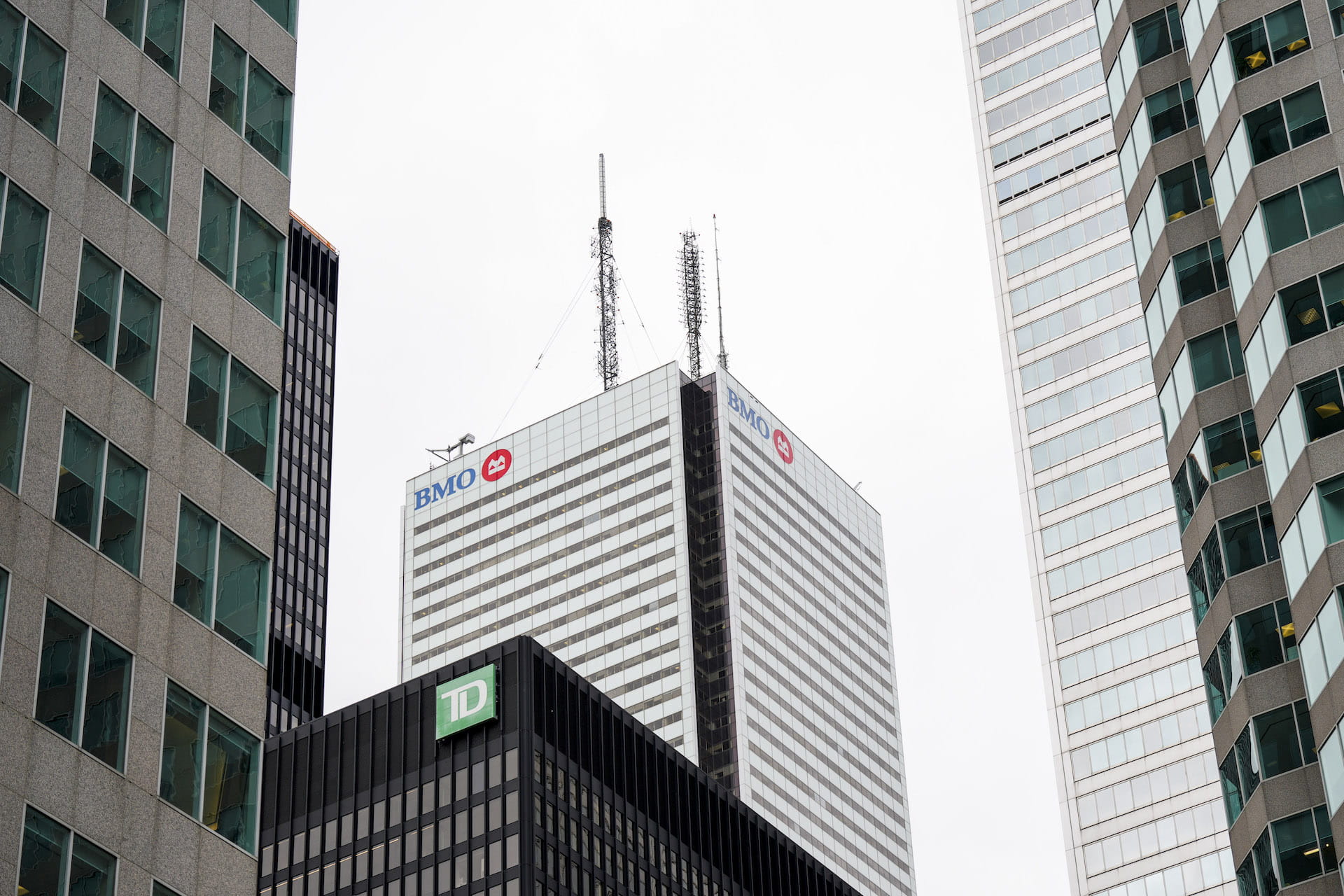
The country’s largest six banks were split on earnings beats and misses. CIBC, RBC and National Bank all topped analysts’ profit expectations, while TD Bank, BMO and Scotiabank disappointed.
Here’s what we learned about the Big Six this week:
Credit risk was a mixed bag: Most major lenders posted higher provisions for credit losses—the potential costs a bank may incur due to credit risk—in the fourth quarter compared to the same period last year. Only CIBC and Scotiabank set aside less for credit losses than in the fourth quarter last year.
BMO had the largest increase in their estimate of potential credit losses, from $446 million in the fourth quarter last year to $1.5 billion in the latest three-month period, higher than analyst expectations. Both TD Cowen and RBC Capital Markets flagged BMO’s higher provisions.
“We still do not fully understand the cause of BMO’s credit quality issues that sets it apart from peers,” RBC Capital Markets analyst Darko Mihelic wrote in a research note.
Among Canadian banks, there has been “some stabilization in credit trends, where we had been seeing deterioration earlier in the year,” Michael Miller, equities analyst at Morningstar, said in an email.
More trouble at TD: After being hit with a US$3-billion penalty for failing to ward off money laundering in the company’s U.S. retail banking unit, TD is undertaking a strategic review of its “opportunities and priorities,” the lender said in a release, adding it will suspend its medium-term financial targets.
“We are looking at our business mix, including profitability and risk-adjusted return on capital and where we need to invest and divest to improve. Everything is on the table,” said Raymond Chun, TD’s incoming CEO and current chief operating officer, in an earnings call Thursday.
Although TD’s profit grew overall, the lender missed estimates with higher provisions for credit losses. U.S. retail banking income fell 32 per cent compared to the same quarter a year ago.
It would be “wise” for TD to forecast elevated expenses for 2025 and 2026, Mihelic said in a note. “It has a long road ahead of remediation and strategic repositioning.”
On Trump’s tariff threat: In the wake of U.S. president-elect Donald Trump’s 25 per cent tariff threat last month, RBC CEO Dave McKay called for calm. On a conference call with analysts, McKay said “it’s important not to overreact,” and that it’ll be for politicians to sort out.
“This was a strong message that we have to improve certain aspects of our operations in Canada around our borders,” he said Wednesday.
What’s next: The Canadian banks may be poised for stronger loan growth, analysts said. Scotiabank’s corporate loans business will get a bump from lower interest rates in 2025, Mihelic wrote. Morningstar’s Miller also expects the continuation of the “decent” loan growth recently among Canadian banks.
“There is still some economic uncertainty facing the banks, but with interest rates falling and generally solid results in recent quarters, there is some room for cautious optimism heading into next year,” Miller wrote.