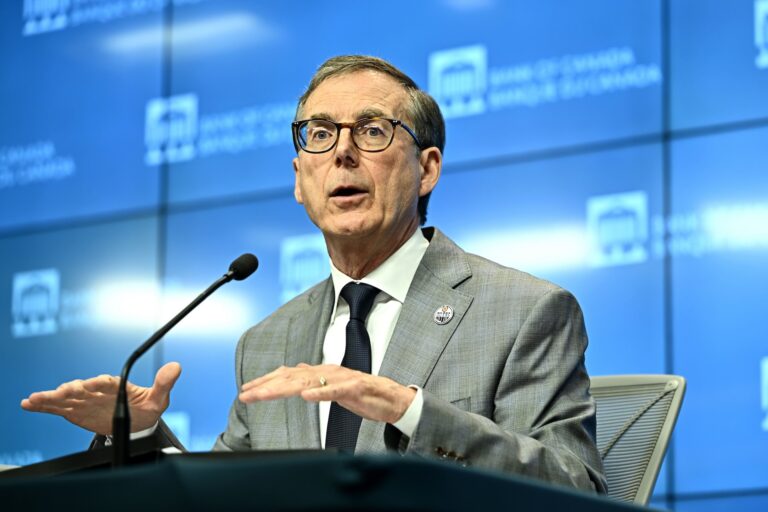
After a years-long battle to curb post-pandemic inflation, central banks in Canada and the U.S. are shifting their focus to a soft landing for the economy. The macroeconomic shift was a big theme in Canada’s Big Six banks’ earnings reports this week and last.
Here’s what the CEOs of the country’s largest lenders said during calls with analysts about the economy and what it means for consumers and businesses.
Shadow of the pandemic: BMO, Scotiabank and TD Bank all disclosed they set more money aside to cover potentially sour loans last quarter, which hurt their profits. BMO CEO Darryl White said the effects of the unprecedented monetary policy response to COVID-19 are still working their way through the economy. The “free money” in the form of government stimulus to businesses “covers up a lot of problems, which can then come back later,” he said. “In some cases, the impairments and the bankruptcies are just evidencing themselves while the conditions improve.”
Nervous would-be homebuyers: CIBC CEO Victor Dodig said “commercial clients are feeling more buoyant” after the Bank of Canada started cutting interest rates in June. Still, consumers “are feeling a little more tentative when it comes to borrowing,” Dodig said. He added it might take an additional two or three interest rate cuts to get mortgage rates to a level buyers are comfortable with, which would help the bank sell more of those loans.
Soft landing optimism: High borrowing costs are putting strain on homeowners and businesses who owe money to the banks and making it more difficult for firms to raise capital to expand. That creates an intentional drag on the economy, aimed at preventing inflation from overheating. If the economy gets dragged too far down, however, people will start losing their jobs at a time when they’re also dealing with higher mortgage payments, potentially sparking a vicious cycle leading to mortgage and business defaults and a recession.
Bill Bonnell, chief risk officer at National Bank, noted housing prices have remained high, which would act as a cushion against that scenario. “Many of the borrowers, even if the payment shock is significant, they still have a lot of options with significant equity in their homes,” Bonnell said.
RBC CEO David McKay said he thinks the Bank of Canada can avoid a recession by cutting rates now. Lower interest rates incentivize dealmaking and investment “that can stimulate a nice rebound in the economy and a soft landing,” he said.