Severe flooding in B.C. continues to crimp already-strained supply chains, snarling major roadways and rail lines that cut through the interior of the province and the Fraser Valley. The province declared a state of emergency Wednesday.
Skip to content

News
B.C. floods will have ‘widespread’ economic impact on strained supply chain, expert says
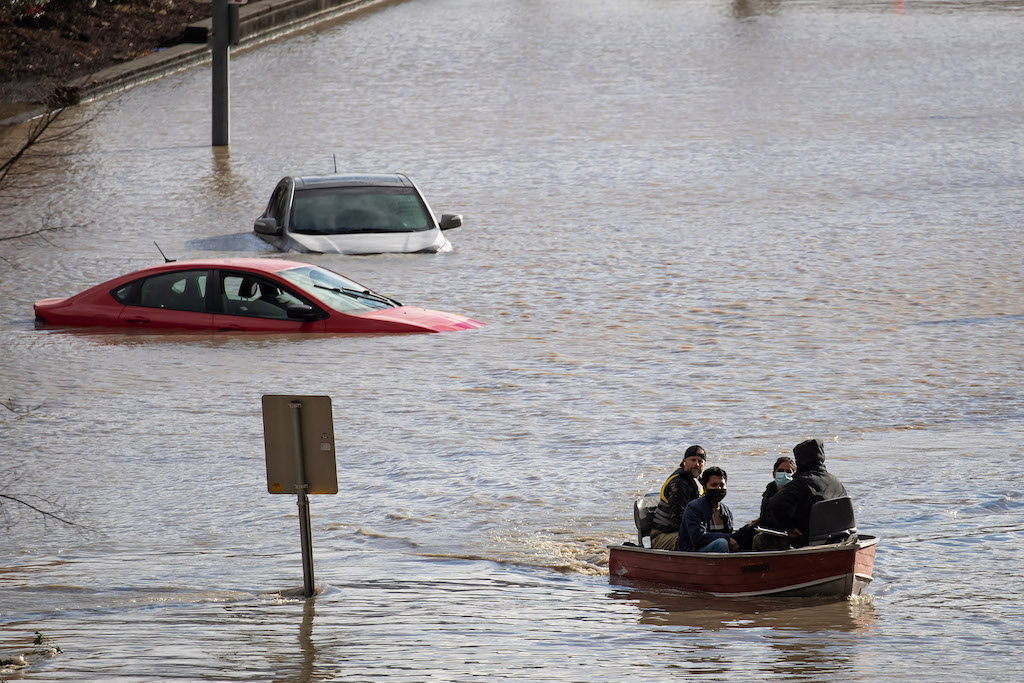
People who were stranded by high water due to flooding are rescued by a volunteer operating a boat in Abbotsford, B.C., in November 2021. Photo: The Canadian Press/Darryl Dyck
Severe flooding in B.C. continues to crimp already-strained supply chains, snarling major roadways and rail lines that cut through the interior of the province and the Fraser Valley. The province declared a state of emergency Wednesday.
Assessing the damage: Government officials are still trying to grasp the full cost of the extensive flooding, which comes after an atmospheric river storm battered the province over the weekend. While a complete tally isn’t yet known, it’s likely to carry a significant price tag: flooding in the Fraser Valley alone could cost anywhere between $19.3 billion and $32.7 billion, depending on severity, according to a 2016 report by the Fraser Basin Council.
Who will feel the impact? Bryan Yu, chief economist with Vancouver-based Central 1, said strangled supply lines will likely affect Canadian companies across the board, ensnaring everything from wineries in Kelowna, B.C., to potash producers in Saskatoon.
“This is going to be pretty widespread,” Yu said in an interview with The Logic. At least some of that shipping volume, he said, will be diverted to the Port of Prince Rupert, which already handles some of Canada’s bulk commodity exports, like lumber, grain and coal. Still, even a brief shutdown of supply chains can have longer-term reverberations that complicate shipping routes for weeks to come: “When you create these bottlenecks, they tend to build on each other,” Yu said.
Roads to nowhere: Some of the province’s main conduits are expected to remain out of commission for some time yet. On Tuesday, B.C. Public Safety Minister Mike Farnworth said the most severe road damage to the Coquihalla Highway could take “several weeks or months” to repair. Highway 3, which leads through southern B.C. and into Crowsnest Pass in the Rockies, could be open by the end of the weekend, while workers were expected to clear debris from Highway 7 sometime Wednesday.
Meanwhile, Canadian National Railway and Canadian Pacific Railway executives told investors Tuesday that they were “battling” to restore what are some of their busiest corridors in southern B.C. Both said at the time that their main lines should be back in operation in a matter of days, restoring a crucial connection between the Port of Vancouver and the rest of Canada. It’s the fourth-largest port in North America by volume, handling 3.5 million shipping containers in 2020, according to its latest annual report.
Flooding in B.C. comes just after the province was ravaged by a deadly heat wave and wildfires this summer, which burned 868,000 hectares of land, according to government data. The wildfire season was the third-worst on record, reinforcing concerns over increasingly volatile weather patterns due to climate change.



Loading...
Thanks for sharing!
You have shared 5 articles this month and reached the maximum amount of shares available.
CloseThis account has reached its share limit.
If you would like to purchase a sharing license please contact The Logic support at [email protected].
CloseGift the full article!
You have gifted 0 article(s) this month and have 5 remaining.
Recipients will be able to read the full text of the article after submitting their email address. They will not have access to other articles or subscriber benefits.
Photo: The Canadian Press/Darryl Dyck
Most Popular This Week




In-depth, agenda-setting reporting
Great journalism delivered straight to your inbox.
Commentary
Carmichael: Canadian ignorance about India is a strategic weakness
Briefing
Aritzia shares pop after earnings rise 204%
First Nation in Alberta goes to court over fast-tracked oil pipeline
Chinese EV maker Geely Auto Group to launch in Canadian market in 2027
Best business newsletter in Canada
Get up to speed in minutes with insights and analysis on the most important stories of the day, every weekday.
Exclusive events
See the bigger picture with reporters and industry experts in subscriber-exclusive events.
Membership in The Logic Council
Membership provides access to our popular Slack channel, participation in subscriber surveys and invitations to exclusive events with our journalists and special guests.





