Prices are on the rise in Canada, as more parts of the country plan to reopen. Consumer prices rose 3.4 per cent last month, the highest monthly increase in nearly a decade, Statistics Canada reported Wednesday. But while the headline inflation rate seems high, the agency said it would be temporary, with prices only appearing higher in comparison to a brief period of deflation last year.
Skip to content


News
Are Canada’s inflation fears inflated?
A gas pump in Surrey, B.C. in May 2019. Photo: The Canadian Press/Jonathan Hayward
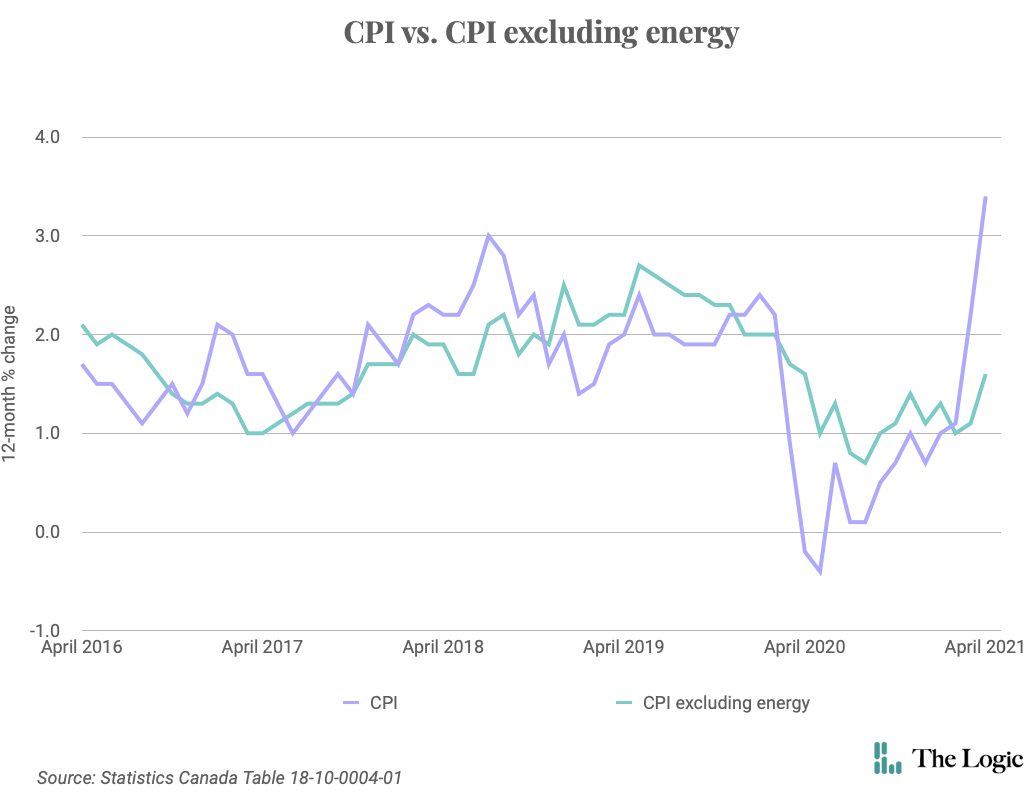
Prices are on the rise in Canada, as more parts of the country plan to reopen. Consumer prices rose 3.4 per cent last month, the highest monthly increase in nearly a decade, Statistics Canada reported Wednesday. But while the headline inflation rate seems high, the agency said it would be temporary, with prices only appearing higher in comparison to a brief period of deflation last year.
Some key takeaways from StatCan’s report:
- Prices rose in every major component that the agency tracks.
- Shelter prices were up 3.2 per cent in April after rising 2.4 per cent in March, partly due to a strong housing market and rising costs of inputs like lumber.
- Transportation prices increased 9.4 per cent, mainly because of higher gasoline prices.
‘Base-year effect’: Statistics Canada attributed the larger headline figure in part to a “base-year effect.” Since prices declined in April 2020 when the pandemic had just begun, last month’s increase in prices looks even larger. This effect is particularly noticeable in energy: gasoline prices were 62.5 per cent higher last month than in April 2020, when global oil markets crashed and futures briefly turned negative. If you take out energy, last month’s price increase is much smaller, at just 1.6 per cent.
What economists say: Avery Shenfeld, CIBC’s chief economist, told BNN Bloomberg that there was no reason to be alarmed about the headline inflation figure. “If you compare to where prices were two years ago, actually inflation looks quite modest,” Shenfeld said. Still, Andrew Husby, an economist for Bloomberg Economics, said it could push policymakers toward a rate hike.
Why it matters: Base-year effect or not, investors are watching inflation closely. In recent weeks, as concerns about rising prices have mounted, markets have been volatile in assets like tech stocks and cryptocurrencies, both of which have soared since the start of the pandemic. The price of Bitcoin crashed Wednesday, falling as low as $37,315 before recovering to around $47,000 later in the day.



Loading...
Thanks for sharing!
You have shared 5 articles this month and reached the maximum amount of shares available.
CloseThis account has reached its share limit.
If you would like to purchase a sharing license please contact The Logic support at [email protected].
CloseGift the full article!
You have gifted 0 article(s) this month and have 5 remaining.
Recipients will be able to read the full text of the article after submitting their email address. They will not have access to other articles or subscriber benefits.
Photo: The Canadian Press/Jonathan Hayward
Most Popular This Week




In-depth, agenda-setting reporting
Great journalism delivered straight to your inbox.
News
A tech firm born from post-Brexit trade chaos sets its sights on Canada
Briefing
Aritzia shares pop after earnings rise 204%
First Nation in Alberta goes to court over fast-tracked oil pipeline
Chinese EV maker Geely Auto Group to launch in Canadian market in 2027
Best business newsletter in Canada
Get up to speed in minutes with insights and analysis on the most important stories of the day, every weekday.
Exclusive events
See the bigger picture with reporters and industry experts in subscriber-exclusive events.
Membership in The Logic Council
Membership provides access to our popular Slack channel, participation in subscriber surveys and invitations to exclusive events with our journalists and special guests.





