Skip to content


Analysis
The TSX is competing for global mining capital like never before
A surge in blockbuster mining deals puts Canada’s main exchange in the spotlight as the Anglo-Teck merger hangs in the balance
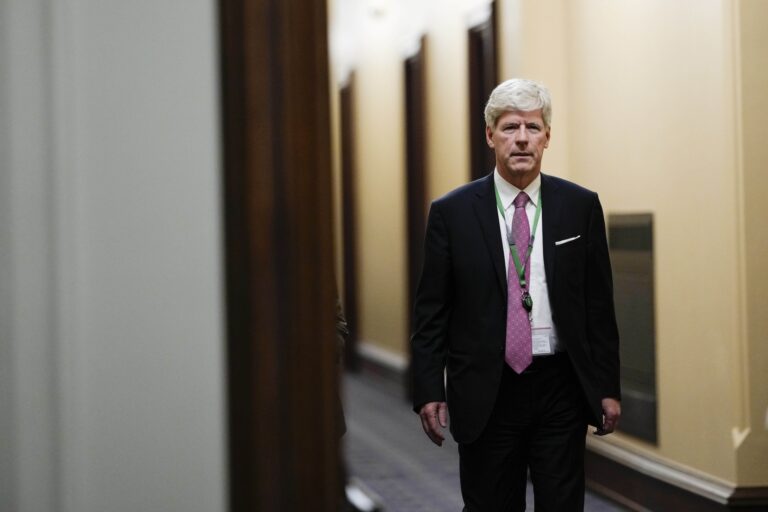
TMX Group CEO John McKenzie credits positive momentum in the mining industry for a 67 per cent jump in financing raised by TSXV companies in the first nine months of the year.
Megamergers and government interventions have shaken up the mining sector—and the Toronto Stock Exchange faces pressure to meet the moment.
The upheaval is testing Canada’s standing as a hub for mining finance. Anglo American’s proposed acquisition of Teck Resources—a US$53 billion deal that Teck shareholders will put to a vote on Tuesday—has sparked debate over how the company’s new legal domicile in the U.K. will affect Canada’s global financial power. Meanwhile, the U.S. government is buying equity stakes in Canadian mining companies, creating a wave of investor interest in mining stocks.
Talking Points
- Teck’s proposed US$53 billion merger with Anglo American, alongside a surge of government investments in mining stocks, is spurring activity on the mining-heavy Toronto Stock Exchange
- While Anglo Teck’s primary listing has been a point of political contention, TMX executives say they have a plan to capitalize on mining M&A
- The mining industry helped drive a 67 per cent jump in financing raised by TSXV companies in the first nine months of the year, pushing the combined market capitalization on the TSX and TSX Venture exchanges to record highs
At the centre of both issues are the TSX and TSX Venture (TSXV) exchanges—owned by parent company TMX Group—which together list about 40 per cent of global public mining companies. TMX Group CEO John McKenzie called the mining-heavy venture exchange a “crucial foundation” in a late October earnings call.
McKenzie credited positive momentum in the mining industry for a 67 per cent jump in financing raised by TSXV companies in the first nine months of the year, as the combined market capitalization on the TSX and TSX Venture exchanges hit an all-time high of over $6 trillion in the third quarter, led by the $1 trillion record-setting value of the mining sector.
Related Articles

“There’s going to be growing geopolitical interest” in the mining sector, TSX chief commercial officer Rob Peterman said in an interview. “Canada is going to have to take a different approach than it’s ever taken before, and we definitely want to capitalize on our position as the leading financing market for the sector.”
Still, the federal government has raised concerns ever since one of the country’s largest miners, Vancouver-based Teck, announced in September that it would combine in a “merger of equals” with U.K.-based Anglo American. Under the deal, Anglo American shareholders would own about 62.4 per cent of the company, with Teck shareholders getting a $4.19 per share dividend and the remaining stake. If approved, the deal would shift Teck’s primary listing and legal domicile to the London Stock Exchange, with additional listings in Johannesburg, Toronto and New York. Establishing Anglo Teck’s executives and headquarters in Canada would let them take advantage of Canada’s “deep mining expertise” while getting exposure to global capital markets, executives told analysts on a conference call.
The domicile debate isn’t just a matter of national pride, said Peter Haynes of TD Securities. Retail investors buy index funds, in part, for exposure to Canadian materials companies like Teck, while professional investors have been pushing S&P to keep Teck in the S&P/TSX Composite because it is used as a benchmark of their own performance.
The deal provoked months of federal scrutiny, though the government has reportedly backed down from its campaign to keep Anglo Teck’s legal domicile in Canada. Neither company agreed to comment on the matter to The Logic, but Teck said it continues to work with the Canadian government “constructively” and remains committed to pursuing approval for a TSX listing.
When London’s FTSE 100 index lost mining giant BHP’s listing in 2021, it rattled investors. The political drama in Canada hasn’t seemed to weigh heavily on the TSX Capped Materials index, which is up nearly eight per cent this quarter. Gold and copper prices have hovered near record highs. Meanwhile, the Canadian government said it will follow Washington’s lead in considering equity stakes in mining companies, while Indigenous investors are raising more capital to back mining ventures.
TSX’s Peterman did not comment directly on the Teck listing, saying he would leave the decision to the two companies, but said that “capital will flow to the jurisdictions where people see the opportunity and certainty.” He emphasized that M&A is “essential” for the mining sector, adding that smaller miners typically raise money to find mineral deposits, then sell or partner with larger miners to build the mines. The Toronto exchanges excel at supporting those smaller explorers, he said.
“There’s a lot of unintended consequences that will come from the government of Canada playing a heavy hand in all of this.”
Peterman said that Canada should use different principles to evaluate companies whose assets are inside Canada than those that primarily operate abroad, but TMX leaves those judgments to the federal government.
Heather Exner-Pirot, director of natural resources, energy, and environment at the Macdonald-Laurier Institute think tank, said she understands why Teck’s stock might be seen as an “anchor listing” and a symbol of Toronto’s “soft power” in the financial industry. But, she said, if the government had pushed too hard to block the Anglo-Teck deal, there would be downsides for an industry that’s reliant on mergers and acquisitions.
“There’s a lot of unintended consequences that will come from the government of Canada playing a heavy hand in all of this, and being seen to intervene in normal market functions.” She said that may be good for short-term growth, but end up dissuading companies from headquartering in the country. “The remedy is to make it more attractive to list in Canada.”
“This is the second largest mining deal ever,” corporate lawyer Leanne Krawchuk said in an interview, suggesting more companies will be hunting for takeover targets. “The race for exposure to these critical minerals is real.”
The TSX faces a major rival in the mining space: the Australian Securities Exchange, which has outpaced Toronto, New York and London for mining IPOs over the last 10 years by a wide margin.
“There was a period of time where there was a lot of capital available in Australia,” said Michael Li of Appian Capital Advisory, which specializes in mining M&A, finance and government advisory. “Today… it’s sort of swung back towards Toronto.”
Peterman said the TSX has its own boots on the ground in Australia to woo issuers, and is hoping that the Canadian government continues to streamline mining regulations to encourage investment, particularly in processors and refineries.
With China, the U.S. and Australia mobilizing government capital or pension funds to support the sector, “I think almost everyone would agree,” said Peterman,” that Canada needs to compete.”



Loading...
Thanks for sharing!
You have shared 5 articles this month and reached the maximum amount of shares available.
CloseThis account has reached its share limit.
If you would like to purchase a sharing license please contact The Logic support at [email protected].
CloseGift the full article!
You have gifted 0 article(s) this month and have 5 remaining.
Recipients will be able to read the full text of the article after submitting their email address. They will not have access to other articles or subscriber benefits.
Photo:
Most Popular This Week




In-depth, agenda-setting reporting
Great journalism delivered straight to your inbox.
News
A tech firm born from post-Brexit trade chaos sets its sights on Canada
Briefing
Dozens of Canadian researchers join chorus of scientists calling for a global AI oversight
TC Energy strikes deal with Indigenous groups for ownership stake in Coastal GasLink pipeline
Canada’s Tailscale taps Google Moonshot alum to lead sovereign AI push
Best business newsletter in Canada
Get up to speed in minutes with insights and analysis on the most important stories of the day, every weekday.
Exclusive events
See the bigger picture with reporters and industry experts in subscriber-exclusive events.
Membership in The Logic Council
Membership provides access to our popular Slack channel, participation in subscriber surveys and invitations to exclusive events with our journalists and special guests.





