Listen Now
0:00
While James Basnett sleeps, his wealth management team gets to work. By the time he wakes up, a bespoke financial market analysis is ready in his inbox, helping him find ways to optimize his stock portfolio. The analysis might be real, but the team that put it together isn’t—it’s the work of an AI assistant that Basnett created and prompted to fill the role.
“I’m actually trying to integrate it into just about every aspect of knowledge within my life,” said Basnett, co-founder of VO2 Health, an AI-powered healthtech startup. He’s also used AI to help with a legal issue and to talk him through home repairs.
Talking Points
- AI superusers are letting the technology take more control over every aspect of their work and personal lives
- For some, AI has become a stand-in doctor or lawyer, a life coach or a financial adviser
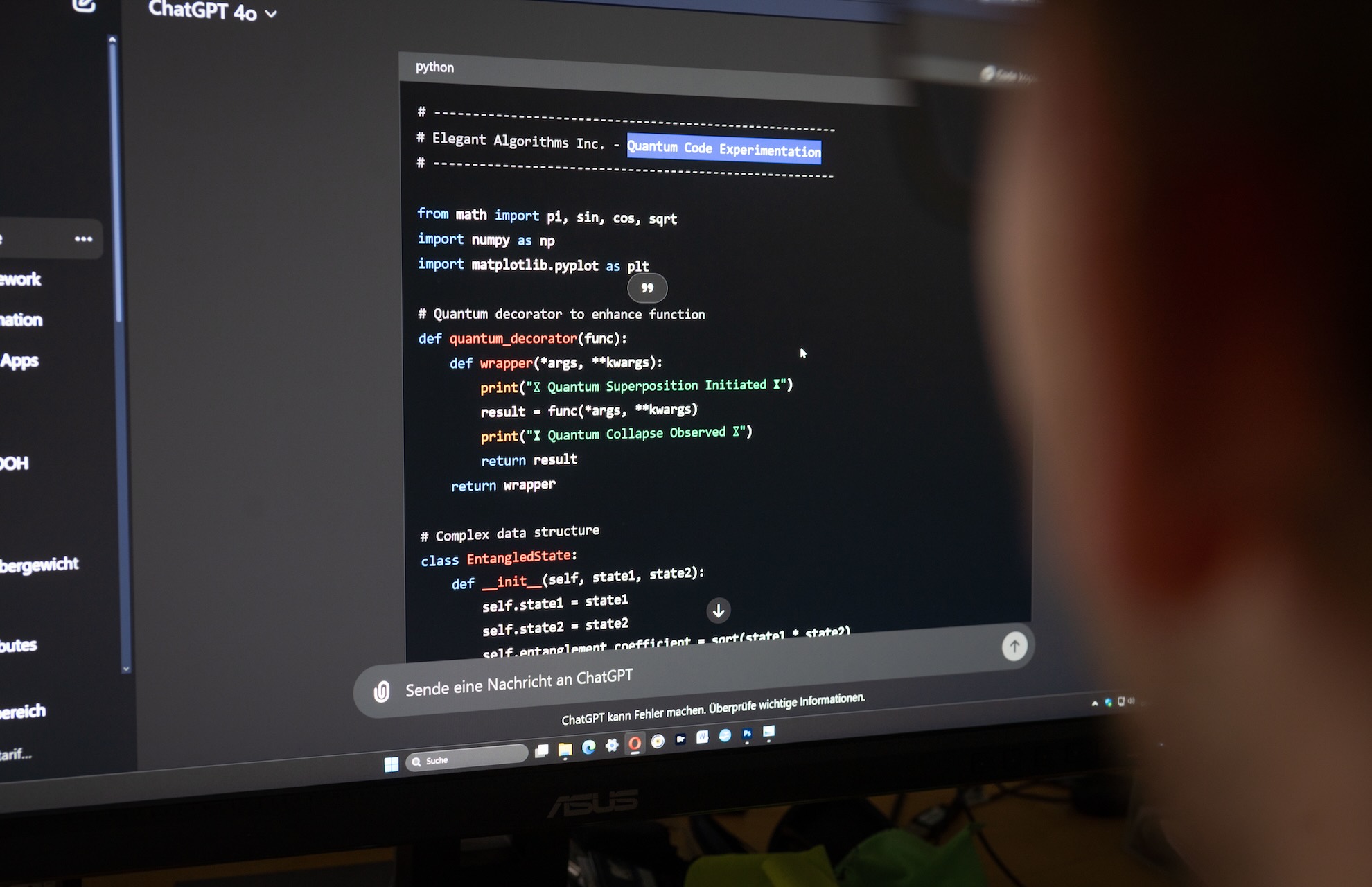
As generative AI systems become more capable, some people are giving the technology more control over large portions of both their work and personal lives. They’re using AI to help make sense of medical records, to give advice on parenting quandaries and to vibe code software to save money.
As well as for help with his finances, Basnett uses AI to track and optimize his health. Along with his partner, he’s spent years feeding results of medical tests into AI systems. In subsequent conversations, his AI assistant has suggested how he might get healthier. “I totally customized my supplement protocol and reduced my alcohol intake,” said Basnett, adding that his AI assistant has also helped overhaul his diet.
Shopify CEO Tobi Lütke, too, has seemingly been using AI to help him better understand his health. On X, Lütke has said he “reflexively” reached for AI after receiving the results of his annual MRI scan on a USB stick that required a specific software to view. “Ran Claude on the stick and asked it to make me a html based viewer tool,” he wrote, posting a screenshot of his spinal scan in the AI-created software, which he further prompted to analyze the results.
Related Articles

Basnett is also using AI to help with health questions from his immediate family. When his father wasn’t feeling well, Basnett didn’t hesitate to give his medical information to an AI agent and ask for advice. Despite the main symptom, itchy skin, seeming innocuous, the AI suggested seeing a doctor quickly as it foresaw several possible causes, including cancer. After the doctor’s visit, Basnett gave his bloodwork results to the AI and it told them to visit the emergency room. Basnett’s father is now receiving treatment for early-stage cancer. “It’s hard to say exactly what would have happened had we not,” said Basnett of using AI in tandem with the health-care system.
Marc Kuo, founder and CEO at Vancouver-based Routific, a route-optimization software provider, is using AI to help with coding software at work. After years of using various AI agents to code, he’s recently found that the software’s success rate has flipped from working 20 per cent of the time to working 80 per cent of the time.
Alongside AI, Kuo vibe coded software for Routific staff, saving the company hundreds of dollars a month. He’s been doing that a lot, finding that he can prompt AI to create software more specific to his company’s needs than what’s available externally. It’s more effective, he said, than asking the big providers for features Routific needs, when they tend to ignore such requests from “small potatoes” companies.
At home, too, both he and his partner rely heavily on AI for self-help. Kuo, who describes himself as an avid reader of leadership books, recalled one that particularly inspired him: Reboot by Jerry Colonna. The book focuses on what Colonna calls “radical self-inquiry,” an exploration of one’s “emotional baggage” that can help determine how to be a better leader.
Despite doing the corresponding journalling and other exercises, Kuo was underwhelmed by the results. “Nothing came up for me,” he said. Then, while relaxing in the bath one evening, Kuo decided to ask ChatGPT to help. He told it to pretend to be the book’s author and only engage by asking deep, probing questions. This time, things percolated to the surface. “It was quite revelatory.”
With two young kids at home, Kuo and his partner also rely on AI to help with parenting. They’ve read a lot of parenting literature, but found the suggested strategies can be difficult to implement in real life. Using AI to describe exactly what’s happening has resulted in more “concrete” advice, Kuo said, comparing it to a coach.
Eli Scott, an associate at Loblaw-linked Wittington Ventures, recently worked with a series of different AI products to create an album as a holiday gift for her partner. She put her lyrics to music, created videos for each track and pressed it onto vinyl. “He was pretty floored,” Scott said.
Beyond that, she’s using AI more in her work, treating it as a co-pilot or colleague. She recently used AI to help her work out which companies to meet at an industry conference, with the AI whittling thousands of companies down to a shortlist of about 50 in about an hour. “It’s not just that I wouldn’t have been able to do it in an hour before,” she said. “I wouldn’t have been able to do it at that level of breadth and depth at all in the amount of time I had.”
Scott, who has been experimenting with generative AI since 2020, said she still finds using the technology more natural in her professional life than in her personal life. She incorporates it into her art and will use it to help her stay organized, but hasn’t created a home-life persona for AI in the same way she has at work.
Kuo, too, is still sometimes hesitant with his AI use. He’s giving it more access, including to his Google Calendar, but still struggles with the idea of completely handing over decision-making, citing viral horror stories of AI agents deleting entire email inboxes as one reason for his reticence. Still, advances in what AI can do have made it tempting to give it more control. Kuo recently started work on another internal coding project and, rather than babysitting the AI through the process, he told it to work by itself for hours. One minute later, worried it might wipe out an entire database or something similarly disastrous, he restarted the project and watched it manually.
That’s not to say Kuo won’t take the leap eventually. He said he might set up an old computer, without access to critical accounts, and experiment with letting the AI run wild. Beyond that, he might also play around with letting AI make purchases or other decisions without oversight. “With the pace things are going my trust in AI has gone way, way, way up already over the last 12 months,” he said.













