Skip to content

Canada's Business and Tech Newsroom

  • Professional Subscription
  • Partnerships & Advertising
  • Licensing & Syndication
Log In Subscribe
Welcome,
  • My Account
  • Log Out
  • Business
  • Tech
  • National
  • The Big Read
  • Briefings
  • Commentary
Search
Log In Subscribe
Welcome,
  • My Account
  • Log Out
Subscriber Survey

The vast majority of you think AI chatbot firms should report suspected violence

Listen Now
0:00
Subscriber Survey

The vast majority of you think AI chatbot firms should report suspected violence

Respondents to The Logic’s latest subscriber survey expressed distrust in major U.S. tech firms, and support for legislation that could hold them accountable

By Leila El Shennawy
Sam Altman sits on a chair onstage in a navy blue suit and red tie. He has ruffled grey-brown hair and looks pensively at the ground.
OpenAI CEO Sam Altman at a conference in Washington, D.C., in March 2026. His company was scrutinized in the wake of February’s mass shooting in Tumbler Ridge, B.C., as the ChatGPT maker chose not to report disturbing conversations its chatbot had with the shooter prior to the killings. Photo: Anna Moneymaker/Getty Images
Apr 10, 2026
A A
A Small A Medium A Large
Share

Gift

Share

Listen Now
0:00

Seventy-seven per cent of respondents to The Logic’s latest subscriber survey said they support requiring chatbot companies to report suspected imminent violence to authorities, even though nearly all respondents expressed reservations about trusting those companies to safeguard their privacy. 

Following February’s mass shooting in Tumbler Ridge, B.C., the federal government reconvened a Trudeau-era expert advisory panel on online safety. The panel is expected to advise the government on whether it should include chatbots and other AI technologies in its upcoming online harms bill, a revamp of the previous Liberal government’s Bill C-63, which was introduced in 2024 but never made it into law. 

As part of the legislation, expected to be tabled this year, the government may require AI companies to report suspected imminent violence to authorities, after ChatGPT owner OpenAI chose not to report disturbing conversations the chatbot had with the B.C. shooter months before the killings. 

Related Articles
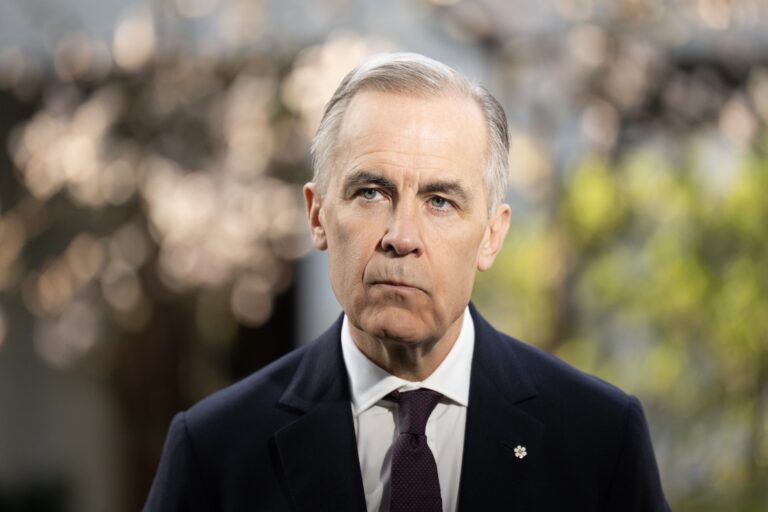
Prime Minister Mark Carney wears a dark suit and tie, with a serious facial expression.

Privacy experts sound the alarm as Canada mulls teen social media ban

By Laura Osman
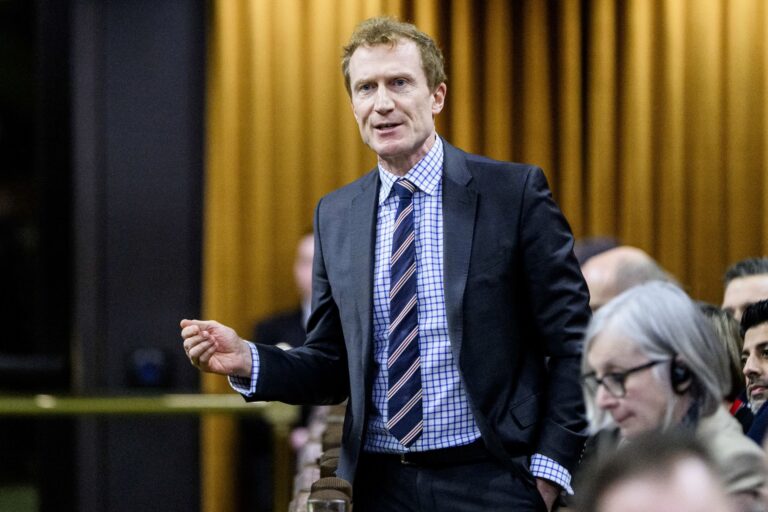
Minister Marc Miller wears a blue suit and tie. He stands while speaking and gesturing.

Ottawa mulls workaround to pass online harms bill without tackling AI

By Martin Patriquin and Laura Osman

Most readers said chatbot owners should be required to bring concerning conversations to the attention of authorities, which could “at the very least… identify people in need of psychological intervention,” according to one reader. 

Other subscribers expressed concerns about protecting privacy and freedom of expression. One reader said they are “uneasy” about “what chatbot companies decide are ‘suspected imminent threats of violence.’” 

Some respondents questioned whether there are sufficient policing and governmental resources to properly assess conversations flagged to authorities. “I do not believe the federal government has the technical capacity or resources to handle the potential onslaught of complaints and concerns,” one subscriber wrote. 
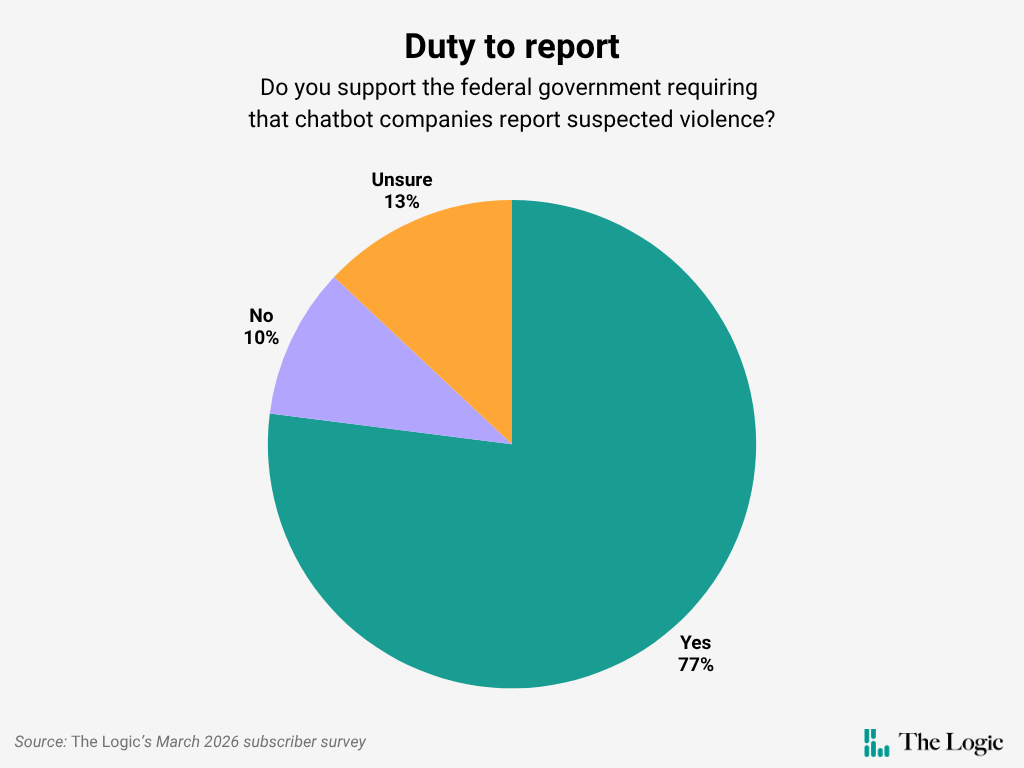
A green, orange and purple pie chart with the words "Duty to report" and below it, "Do you support the federal government requiring that chatbot companies report suspected violence?" The results show that 77% of respondents said yes, 10% said no and 13% said they were unsure.

The government is also considering a ban on social media for children aged 14 and under as part of the bill—akin to the under-16 ban adopted by Australia, with similar restrictive measures also being considered in other countries. 

Sixty-four per cent of readers said they support a 14-and-under ban, citing the harms of social media to underage users and the benefits of removing social pressures. “Individual parental restrictions on child access to social media isolate individual children and damage their social circles, versus everyone being subject to the same restrictions,” one subscriber said. 

Many respondents who said they do not support a ban cited privacy concerns around age-verification technology as the reason. Other subscribers said that while they support a ban, they did not agree with the use of such technology to enforce it.
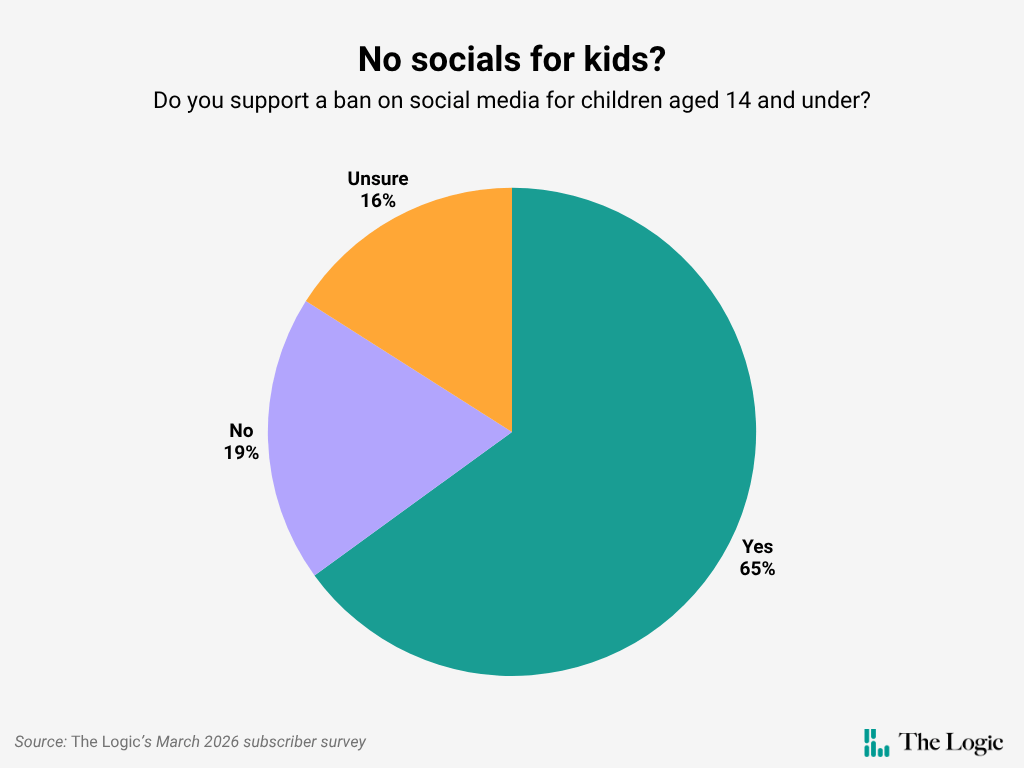
A green, orange and purple pie chart with the words "No socials for kids?" and below it, "Do you support a ban on social media for children aged 14 and under?" The results show that 65% of respondents said yes, 19% said no and 16% said they were unsure.

Most respondents signalled they do not trust tech giants or social media companies to protect their data. Less than one per cent of subscribers said they “greatly” trust such companies to safeguard their personal information, while the rest said that they only do “somewhat” or “not at all.” In response to the question, one reader asked, “Are you kidding?” 

Others pointed out that giving tech giants access to sensitive biometric data, including through age-verification technology, would introduce another potential security vulnerability. “Hackers and bad actors are becoming increasingly sophisticated,” they said, adding that a data breach would be “a matter of when, not if.”
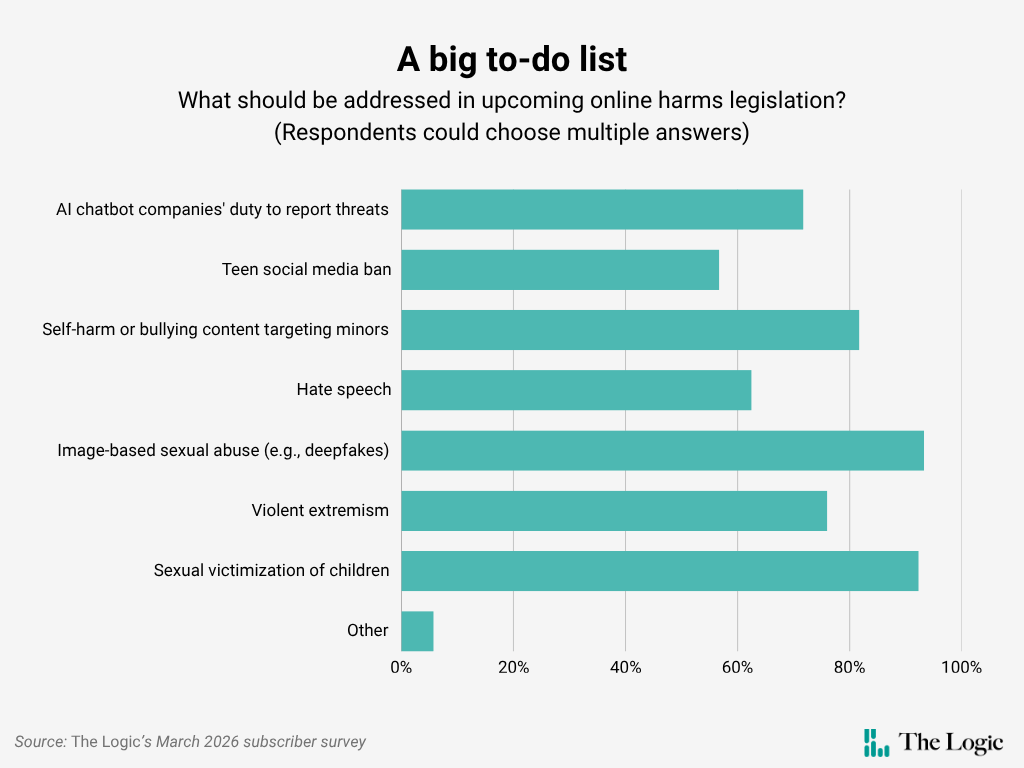
A green row chart with the words, "A big to-do list: What should be addressed in upcoming online harms legislation? Respondents could choose multiple answers." The options are: AI chatbot companies' duty to report threats (72%); teen social media ban (57%); self-harm or bullying content targeting minors (82%); hate speech (63%); image-based sexual abuse, e.g., deepfakes (93%); violent extremism (76%); sexual victimization of children (92%); and other (6%).

Despite privacy concerns, many readers acknowledged the potential harms of social media for minors and said they supported online harms regulations. Tech companies “already don’t protect our data and yet we provide it to them consistently,” one subscriber wrote. “Now they will use that failure to prevent a social media ban, and ‘privacy experts’ will support them.” 

More than 90 per cent of readers agreed that sexual victimization of children and image-based sexual abuse content should also be included in the upcoming bill. Other subjects respondents wanted to see addressed in the bill included violent extremism (76 per cent), hate speech (62 per cent), and self-harm or bullying content targeting minors (82 per cent). 

While many supported the inclusion of other issues in the bill, some subscribers pointed out that the real challenge lies in enforcement.

Gift the full article

“We can’t regulate all the risks away,” one reader wrote. Another added that “history shows that kids will always find a way to access what is ‘banned.’” 

“We need to balance freedom and responsibility,” one respondent said. “Where there is imminent risk of violence, responsibility must prevail.”


#AI #chatbots #National #online harms #privacy #social media #Subscriber Survey

Loading...

Thanks for sharing!

You have shared 5 articles this month and reached the maximum amount of shares available.

Close
This account has reached its share limit.

If you would like to purchase a sharing license please contact The Logic support at [email protected].

Close
Want to share this article?

Upgrade to all-access now

Close
Gift the full article!

You have gifted 0 article(s) this month and have 5 remaining.

Copy link and gift
Copy Link
Email to a friend
Send Email
Gift on Social Media

Recipients will be able to read the full text of the article after submitting their email address. They will not have access to other articles or subscriber benefits.

Sam Altman sits on a chair onstage in a navy blue suit and red tie. He has ruffled grey-brown hair and looks pensively at the ground.

Photo: Anna Moneymaker/Getty Images

A green, orange and purple pie chart with the words "Duty to report" and below it, "Do you support the federal government requiring that chatbot companies report suspected violence?" The results show that 77% of respondents said yes, 10% said no and 13% said they were unsure.

A green, orange and purple pie chart with the words "No socials for kids?" and below it, "Do you support a ban on social media for children aged 14 and under?" The results show that 65% of respondents said yes, 19% said no and 16% said they were unsure.

A green row chart with the words, "A big to-do list: What should be addressed in upcoming online harms legislation? Respondents could choose multiple answers." The options are: AI chatbot companies' duty to report threats (72%); teen social media ban (57%); self-harm or bullying content targeting minors (82%); hate speech (63%); image-based sexual abuse, e.g., deepfakes (93%); violent extremism (76%); sexual victimization of children (92%); and other (6%).

Most Popular This Week

A yellow ambulance is pictured outside of a hospital in Montreal. A red sign in the foreground reads, “Urgence / Emergency.”
Commentary: Quebec Ink

Quebec just found out what not having digital sovereignty really means

By Martin Patriquin
News

Tech leaders welcome new AI funding but warn against government overreach

By Catherine McIntyre
An image of Mark Carney standing in front of a red podium with the words "AI for All / L'IA pour tous." He is wearing a suit and tie. In the background, people wearing scrubs and white coats are visible.
Special Report

Canada’s new AI strategy sets lofty goals for adoption and growth

By Murad Hemmadi and Laura Osman
Exclusive

Canada’s new AI strategy includes $500M fund to back key firms

By Murad Hemmadi and Catherine McIntyre

In-depth, agenda-setting reporting

Great journalism delivered straight to your inbox.

A close-up of the TikTok logo on the side of a concrete structure.
News

Big Tech says it will work with Ottawa on plan to ban kids from social media

By Martin Patriquin and Laura Osman

Briefing

Grok-generated sexual deepfakes violate Canadian law, privacy commissioner finds

By Laura Osman   |   Jun 11, 2026 | 3:58 PM ET

Climate standards-setter unveils more lenient rules for companies

By Catherine McIntyre   |   Jun 11, 2026 | 3:17 PM ET

HOOPP CEO says investors may be more exposed to AI than they realize

By Chaimae Chouiekh   |   Jun 11, 2026 | 3:13 PM ET

Best business newsletter in Canada

Get up to speed in minutes with insights and analysis on the most important stories of the day, every weekday.

Exclusive events

See the bigger picture with reporters and industry experts in subscriber-exclusive events.

Membership in The Logic Council

Membership provides access to our popular Slack channel, participation in subscriber surveys and invitations to exclusive events with our journalists and special guests.

Recent Popular Stories

Commentary: Quebec Ink

Quebec just found out what not having digital sovereignty really means

By Martin Patriquin   |   Jun 8, 2026
A yellow ambulance is pictured outside of a hospital in Montreal. A red sign in the foreground reads, “Urgence / Emergency.”
Exclusive

Canada’s new AI strategy includes $500M fund to back key firms

By Murad Hemmadi and Catherine McIntyre   |   Jun 3, 2026
News

Canada’s surprise plan to buy Saab command jets leaves competitors seeking answers

By David Reevely   |   May 29, 2026
A closeup of a scale model of a jet covered in pixellated camouflage, with sensor equipment attached to the top of its fuselage. There are civilians and uniformed military personnel milling in the background.
The Big Read

We found every data centre in Canada

By Murad Hemmadi, David Reevely, Aleksandra Sagan, Chaimae Chouiekh, Martin Patriquin and Catherine McIntyre   |   Apr 8, 2026
Four vertical slices of aerial view photos. From left, a building in downtown Toronto housing several data centres, a picture of the Albertan wilderness where the proposed Wonder Valley data centre would go, a lit-up QScale data centre in Quebec, and a data centre at a Hydro-Quebec dam.
The Big Read

ApplyBoard faces a reckoning as Canada’s immigration boom turns into a bust

By Claire Brownell and David Reevely   |   May 27, 2026
News

A Canadian leader in nuclear fusion comes home—with big plans to make power

By David Reevely   |   Jun 4, 2026
A selfie taken by Spencer Pitcher inside a nuclear fusion facility. He is wearing a blue hardhat with the ITER logo on it, and is standing in front of a cavernous chamber full of fusion reactor equipment.

Canada's most influential executives and policymakers are reading The Logic

  • CPP Investments
  • Sun Life Financial
  • C100
  • Amazon
  • Telus
  • Mastercard
  • bdc
  • Shopify
  • Rogers
  • RBC
  • General Motors
  • MaRS
  • Government of Canada
  • Uber
  • Loblaw Companies Limited
logic-logo

Canada's Business and Tech Newsroom

100% human-crafted journalism

Newsroom

  • News Tips
  • AI Policy
  • Editorial Disclosures
  • Story Pitches

Company

  • About Us
  • Terms of Service
  • Privacy Statement
  • Corporate Information

Contact

  • Contact Us
  • Advertise
  • FAQs
  • Work at The Logic

© 2026 The Logic Inc. All Rights Reserved.

Trusted by leaders

Error

Account creation failed.

Please email us at [email protected].

Create Account

[wppb-register form_name=”cozmo-registration-form-for-modal”]

I do have an account
Login
or

[wppb-login]

I don’t have an account