MONTREAL — Quebec’s natural-gas utility wants its clients to buy less of what it sells. A lot less.
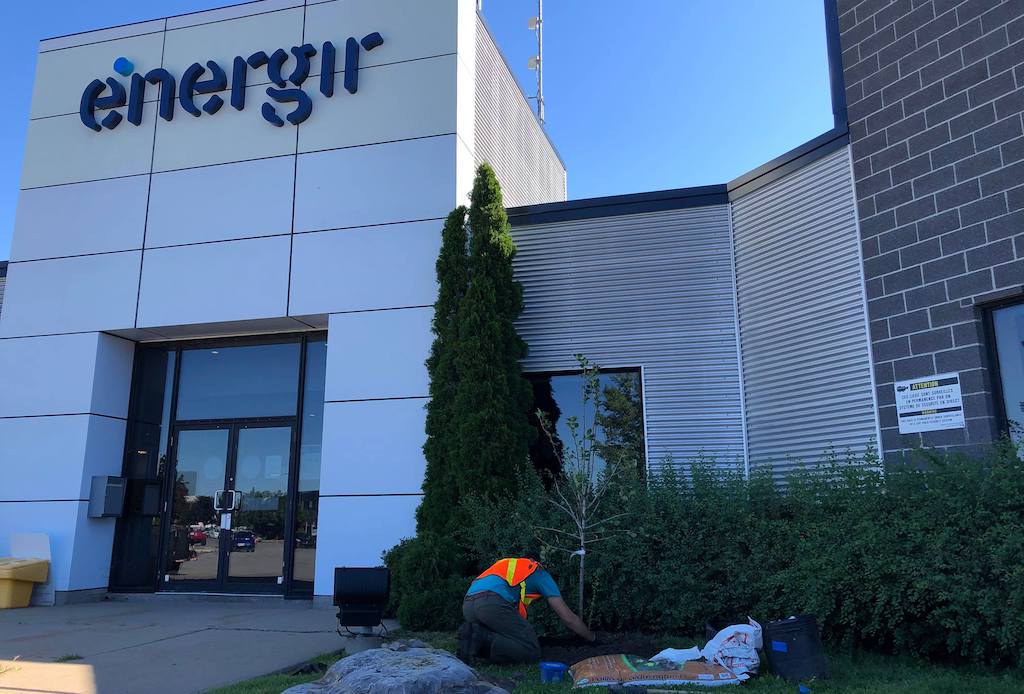
Since 1957, Énergir has reliably delivered natural gas to homes and businesses throughout its network, which today counts just over 11,000 kilometres of pipe and 205,000 clients in the province. And yet the company, which has over $8 billion in assets, is aiming to sell 70 per cent less of its product to the homes and buildings on its network by 2037, and hopes to be out of the excavated-natural-gas game completely by 2050. The reason: natural gas—long sold as the go-to clean, environmentally friendly fuel—is fast becoming a dirty word.
Talking Point
As part of its carbon neutrality plan, Quebec natural gas utility Énergir is weaning itself off the stuff. It’s indicative of natural gas’s plight. Long thought of as the go-to clean, environmentally friendly fuel, natural gas is fast becoming a dirty word.
At Énergir, known as Gaz Métro until 2017, there is an almost wistful view of the stuff coursing through its pipes. “We saw big environmental gains with natural gas over the years, but now we see that it’s the next energy that needs to be reduced,” Énergir spokesperson Catherine Houde told me recently. “We’re voluntarily reducing because we want to exist in 30 years.”
Natural gas, the natural-gas industry assures us, is clean and environmentally friendly. And the industry is right, at least compared to other hydrocarbons. When combusted, it creates about half the carbon-dioxide emissions and a tenth of the air pollutants of coal. It also burns cleaner than gasoline, propane, diesel fuel and heating oil. And thanks to the boom in fracking, which has seen the tapping of hitherto untappable reserves in the U.S. and Canada, it is almost absurdly cheap to do so.
Yet if the natural-gas boom faces a reckoning, it resides in California. Forty-two municipalities in the Golden State have adopted legislation either constraining or outright banning as of January the construction of new natural-gas infrastructures within their borders. Berkeley, home to a storied University of California campus and a reputation for unbowed liberalism, was the first American municipality to strike. Since Jan.1, 2020, natural-gas pipes in new buildings have been prohibited throughout its 27 square kilometres, meaning all new construction must be heated and cooled with electricity, not the remains of dinosaurs.
I called Kate Harrison, the councilmember who put forward the measure, to ask her when natural gas became verboten for her. “When we looked at new buildings, we saw we could make a significant dent in our greenhouse gas emissions everytime a new building went up, so we decided to pursue it,” she told me. “And in the middle of this whole thing, my heater broke down. I went downstairs and the flames were eating through the place; it could have set the whole house on fire. And it’s at that moment that I realized that we’re shipping a dangerous gas across the country, releasing methane as we go along, under an earthquake fault and into people’s homes.”
That California produces much of its electricity from natural gas is what Al Gore might call an inconvenient truth. Yet Harrison says it’s demonstrably safer to burn it at, say, an electricity-generating plant than in the basements of Berkeley. And it was surprisingly easy to wean the city off gas. “Pacific Gas and Electric, our utility, wants to get off gas, because gas is dead, so they were very supportive of this,” Harrison said. “Some restaurant owners complained about having to cook on an electric stove. So we did a little demonstration at the council meeting. I had my staff make chocolate fondue with strawberries on this little induction burner I have, so we were sort of able to overcome that.”
It’s a similar sentiment about 80 kilometres south in Mountain View. Since January 2020, the childhood home of Steve Jobs and current Google stomping grounds has prohibited natural gas for new builds—and has also compelled owners to retrofit their houses when making significant renovations. And as in Berkeley, Mountain View’s cold-turkey take on natural gas was relatively easy. Though Google was less than enthused with the law, it hasn’t stopped the resolutely cheery behemoth from its plan to build several million square feet of new office space and 9,000 housing units to house all those worker bees. “The retrofitting of existing buildings is going to be a much heavier lift. It’s not mandated yet, but I have a feeling the state will probably go there,” councilmember Margaret Abe-Koga told me.
If that natural gas boom faces an existential threat, it resides in the White House. Among Joe Biden’s first actions as U.S. president, along with signing the Keystone pipeline project into oblivion, was to suspend new oil and gas leases in the country and review existing fossil-fuel permits.
This review will likely again lay bare the clean-burning fuel’s dirty secret: compelling the stuff from the ground and piping it to points beyond inevitably causes leaks of methane, which is about 90 times more effective at trapping heat in the atmosphere than carbon dioxide. Quebec’s environmental oversight board recently underscored the adverse environmental effects of natural gas in a report on Énergie Saguenay, a proposed $9-billion LNG gas plant located about 230 kilometres northeast of Quebec City. According to its report, the GHG emissions associated with the entire life cycle of the Énergie Saguenay project would be 45.5 megatonnes a year—the rough equivalent of the yearly fossil fuel emissions of Libya, a country of 6.8 million people, according to the Global Carbon Atlas.
The anti-gas movement has been comparatively tame north of the border. As far as I can tell, only the left-coast redoubt of Vancouver has dared legislate against natural gas, banning its use for heating and cooling in low-rise buildings as of January 2022. Meanwhile, the Canadian Association of Petroleum Producers (CAPP) says the decrease in stateside drilling will be a boon to roughnecks on this side of the border. “Canada is well positioned to provide the supply required to make up that shortfall,” CAPP president Tim McMillan said in an email. And there will likely be shortfalls. For all of California’s legislative noise, natural gas remains a growing concern, with global demand expected to rise by 30 per cent by 2040.
Énergir insists it wants no part of this demand. In fact, it says more than half its assets are unrelated to its best-known product. In 2007, the company acquired Green Mountain Power, a utility in New England that owns 36 hydroelectric dams and an array of solar- and wind-power assets in Vermont. Five years later, it gobbled up the Central Vermont Public Service Corporation.
On its own turf, the company actively encourages its clients to switch to bi-energy heat pumps and the like, which use Hydro-Québec’s electricity the vast majority of the time. “We want clients to use natural gas for about 100 to 400 hours a year, during peak times only, which will help free up electrical capacity,” Houde told me. “The principle is to use less of the product we sell.” (In an email, a spokesperson for Calgary-based pipeline company Enbridge, which owns 28 per cent of Énergir, said Énergir’s carbon-reduction plan “aligns with Enbridge’s commitment to achieve net zero GHG emissions by 2050.”)
Énergir also aims to be carbon neutral by 2050. It says it will do so by harnessing wind, sun and water, as well as by pumping an array of fuels—hydrogen, “renewable” natural gas harvested from organic waste—through its network. The erstwhile natural-gas utility wants everything, it seems, except for natural gas.
Martin Patriquin is The Logic’s Quebec correspondent. He joined in 2019 after 10 years as Quebec bureau chief for Maclean’s. A National Magazine Award winner, he has written for The New York Times, The Guardian, The Walrus, Vice, BuzzFeed and The Globe and Mail, among others. He is also a panelist on CBC’s “Power & Politics.” @MartinPatriquin