Skip to content


Commentary: Quebec Ink
Newfoundland and Labrador just became a major headache for Hydro-Québec
The Progressive Conservative Party’s election win casts doubt on a hydroelectricity deal that has long been a boon for neighbouring Quebec
Newfoundland and Labrador premier-designate Tony Wakeham at an event on Oct. 14. Wakeham campaigned on reviewing a controversial hydroelectricity agreement with Quebec. Photo: The Canadian Press/Gerri Lynn Mackey/VOCM News
MONTREAL — For the better part of six decades, Hydro-Québec has churned Newfoundland and Labrador’s water into made-for-Quebec power for next to nothing, sold it for exponentially more, enriched Quebec’s coffers and helped turn the public utility into one of the continent’s biggest energy brokers.
The Churchill Falls power contract, the agreement allowing this to happen, has served as a kind of contractualized shame visited upon succeeding generations of Newfoundlanders and Labradorians, who have likened it to legalized robbery and interprovincial colonialism. And Danny Williams thinks it’s going to change one way or another.
Williams, Newfoundland and Labrador’s premier from 2003 to 2010, is in a great mood these days. Not only did his Progressive Conservative Party win last week’s provincial election, with Tony Wakeham elected as the province’s new premier-designate, but it did so by running against the previous Liberal government’s new hydro deal with Quebec, agreed in principle less than a year ago.
Related Articles
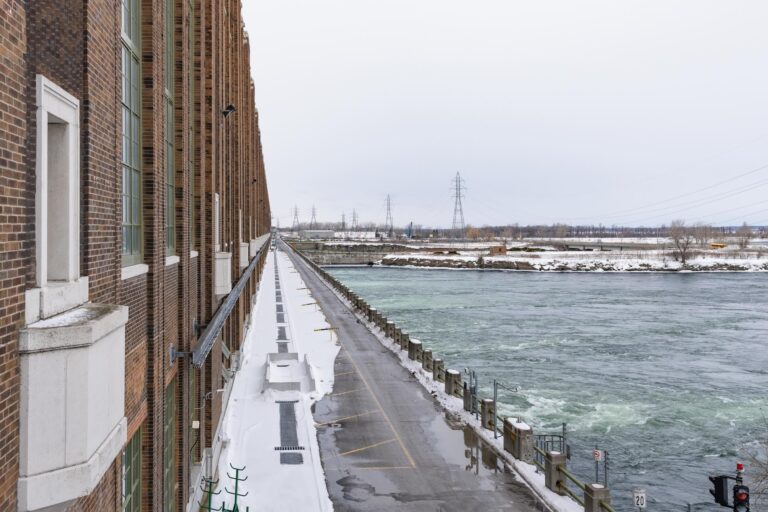

This proposed deal includes an exponential increase in the price Hydro-Québec pays for power and a series of off-ramps allowing Newfoundland and Labrador to opt out before the end of its 50-year term. Its proponents say it will mean as much as $225 billion in revenue for Newfoundland and Labrador, as well as new dams for the province.
Williams sees it differently. For him, the new deal is a déja-vu fleecing of his home province—and he is sure his new government can extract far more out of its oft-petulant neighbour. “The tone of the deal is about to change dramatically with Hydro-Québec,” Williams told me.
Talking to Williams reminded me how difficult it is to underestimate the extent to which Churchill Falls weighs on the psyche of Newfoundlanders and Labradorians. Signed in 1969, the deal was a reflection of dire times in the province, addled as it was with high debt and low employment. Newfoundland and Labrador had untapped waterways it needed to sell, and Quebec was only happy to buy.
Quebecers drank their milkshake as a result. In fact, the province continues to drink it to this day. Under the 1969 deal, which is set to expire in 2041, Quebec pays Newfoundland and Labrador a fixed rate of 0.2 cents per kilowatt hour. It sells that same power to U.S. markets for, on average, 24 times more. The lopsidedness is frankly embarrassing, with Hydro-Québec wringing out $28 billion from the deal as of 2019—14 times more than Newfoundland and Labrador. To add to the latter’s shame, the deal has withstood various legal challenges, including at the Supreme Court in 2018.
Williams talks a lot about this history, and how the most recent proposed deal is effectively a slightly more danceable repetition of the 1969 version, with Hydro-Québec again paying below-market rates for power. Mostly, though, he talks about leverage. As in, Newfoundland and Labrador has far more of it against Quebec than ever, and it will only garner more as time passes.
That’s because, Williams argues, Hydro-Québec is stretched thin. The utility saw a nosedive in electricity production and profits in 2024, largely due to low rainfall, even as demand for power continues to rise. Its electricity surpluses, bountiful just over a decade ago, are expected to end in 2027. Cheap power, a birthright in Quebec, has turned Quebecers into wastrels who consume nearly 30 per cent more electricity than your average Norwegian. Meanwhile, new dams on Quebec soil are years away, at least—if they get built at all. “We’ve looked at the numbers, we’ve done analysis, and from what we have in the public domain, we realize that Quebec is in dire, dire need of this power,” Williams told me.
Williams wants many things from Quebec: a higher price for Churchill Falls power, better review and escalation clauses should the market value of electricity continue its skyward trajectory and the ability for the province to sell its own power to markets abroad, which necessarily means sending it through Quebec. Failing all this, Williams said it’s worth riding out the contract until 2041, when ownership of Churchill Falls reverts to Newfoundland and Labrador. “The reward here, at the end of the day, is getting control back,” he said.
Doing so is a hell of a gamble. Not signing Quebec’s new deal means suffering through 16 more years of shamefully low electricity rates, effectively leaving billions on the table. This, just as Newfoundland and Labrador muddles through the highest unemployment rate and per-capita debt load in Canada. Call it an expensive game of chicken pitting two restive neighbours against each other. Williams, for one, is raring to play.
Martin Patriquin is The Logic’s Quebec correspondent. He joined in 2019 after 10 years as Quebec bureau chief for Maclean’s. A National Magazine Award and SABEW winner, he has written for The New York Times, The Guardian, The Walrus, Vice, BuzzFeed and The Globe and Mail, among others. He is also a panellist on CBC’s “Power & Politics.”



Loading...
Thanks for sharing!
You have shared 5 articles this month and reached the maximum amount of shares available.
CloseThis account has reached its share limit.
If you would like to purchase a sharing license please contact The Logic support at [email protected].
CloseGift the full article!
You have gifted 0 article(s) this month and have 5 remaining.
Recipients will be able to read the full text of the article after submitting their email address. They will not have access to other articles or subscriber benefits.
Photo: The Canadian Press/Gerri Lynn Mackey/VOCM News
Most Popular This Week



In-depth, agenda-setting reporting
Great journalism delivered straight to your inbox.
News
Canada and EU announce ‘ever-closer association’ to bolster economic security
Briefing
Canadian investors can’t let foreign capital crowd them out of infrastructure deals, Weston says
Cohere outlines plans to spend $4B on R&D and AI infrastructure in Canada
Binance starts recovering frozen assets following US$6.3B hack
Best business newsletter in Canada
Get up to speed in minutes with insights and analysis on the most important stories of the day, every weekday.
Exclusive events
See the bigger picture with reporters and industry experts in subscriber-exclusive events.
Membership in The Logic Council
Membership provides access to our popular Slack channel, participation in subscriber surveys and invitations to exclusive events with our journalists and special guests.