Listen Now
0:00
Thomas Edison spent the final years of his life in the weeds. Literally. The bringer of electric light and recorded music claimed to have tested some 15,000 plants while on a quest to create a domestic U.S. supply of rubber, which at that time was perhaps the world’s most strategic commodity.
Edison was encouraged by his friends Harvey Firestone and Henry Ford, who would eventually back the Edison Botanic Research Corporation in 1927. The strategic importance of rubber had become apparent in the First World War, when Germany’s advance on Western Europe was hobbled when its supply chains were cut.
The country that cut those supply chains was also responsible for panicking Firestone and other American industrialists.
Related Articles
In October 1922, the British Colonial Office announced that it would be restricting the supply of rubber from Malaya and Ceylon. The U.K. was struggling to pay its war debts and the price of a valuable commodity that was mostly under its control had collapsed amid a post-war glut. Prices tripled, yet the U.K. indicated that it wanted them to rise higher still. It wasn’t the first time a hegemonic state put its own interests ahead of those of its allies and trading partners. Nor would it be the last.
It feels like a good time to share the climax of the story of rubber. We don’t think about it anymore because scientific ambition, industrial foresight and government influence combined to overcome the world’s dependence on an easily cornered commodity. Our vulnerability to chokepoints in the Middle East and the panic at G7 summits and elsewhere over China’s stranglehold on critical minerals suggests that somewhere along the way we forgot the lessons from rubber. It’s correct to lament that circumstance, but we needn’t succumb to despair. We’ve been here before. We’ve established that the way out is through.
Edison turned 80 on Feb. 11, 1927. “Everything turned to rubber in the family,” according to his second wife, Mina. “We talked rubber, thought rubber and dreamed rubber.” He would settle on a type of goldenrod as his favourite. Firestone sent Edison a set of goldenrod tires for his Model T Ford to show it could work.
Those tires never made it to mass production. The U.K. ultimately failed to control supply because Dutch colonies continued producing, keeping rubber prices down. The Great Depression and the collapse of the stock market in October of 1929 became a distraction. Ford and Firestone kept the project going after Edison’s death in 1931, but gave up after five years. Breakthroughs in synthetic rubber showed more promise than trying to turn North America’s abundant supply of milky weeds into a cash crop that could fill strategic reserves of natural rubber.
History is shaped by contingencies. Had Edison lived longer, or started his quest sooner, perhaps his legendary will would have turned goldenrod into a reasonable alternative to faraway rubber trees. Firestone’s dread over the U.K.’s ability to protect the rubber supply in an unstable world was justified.
In North America we remember Dec. 7, 1941, for the attack on Pearl Harbor. But Japan also unleashed a series of attacks throughout Asia that humbled Commonwealth forces as it took control of the Indian Ocean, Singapore, and British and Dutch rubber plantations. The Allies suddenly were facing the fate that befell Germany in the Great War.
This is where Canada entered the story. The Second World War had inspired William Lyon Mackenize King’s government to use the power of the state to jumpstart Canada’s industrial evolution. Two decades after Edison started down the path that led him to goldenrod, the Agriculture Department put its network of experimental farms to work looking for a domestic source of rubber. But as America’s great industrialists had already learned, botany takes time, and the Allies didn’t have any. “This is a problem of historic proportions,” said King’s minister of munitions and supply, C.D. Howe.
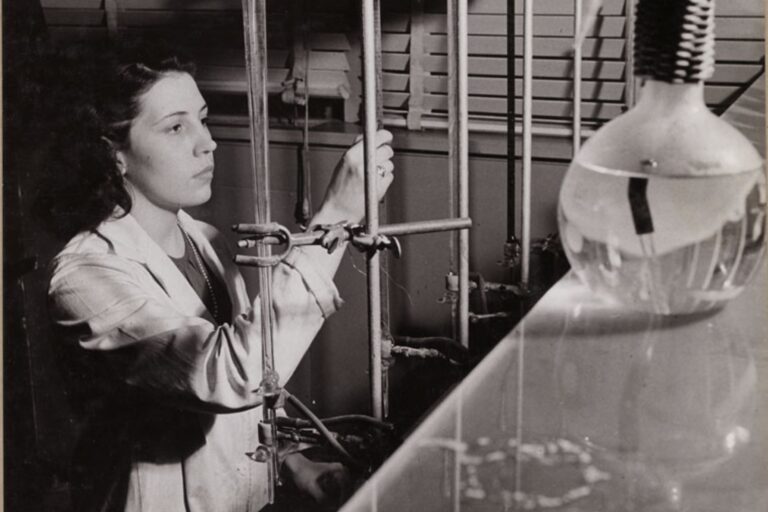
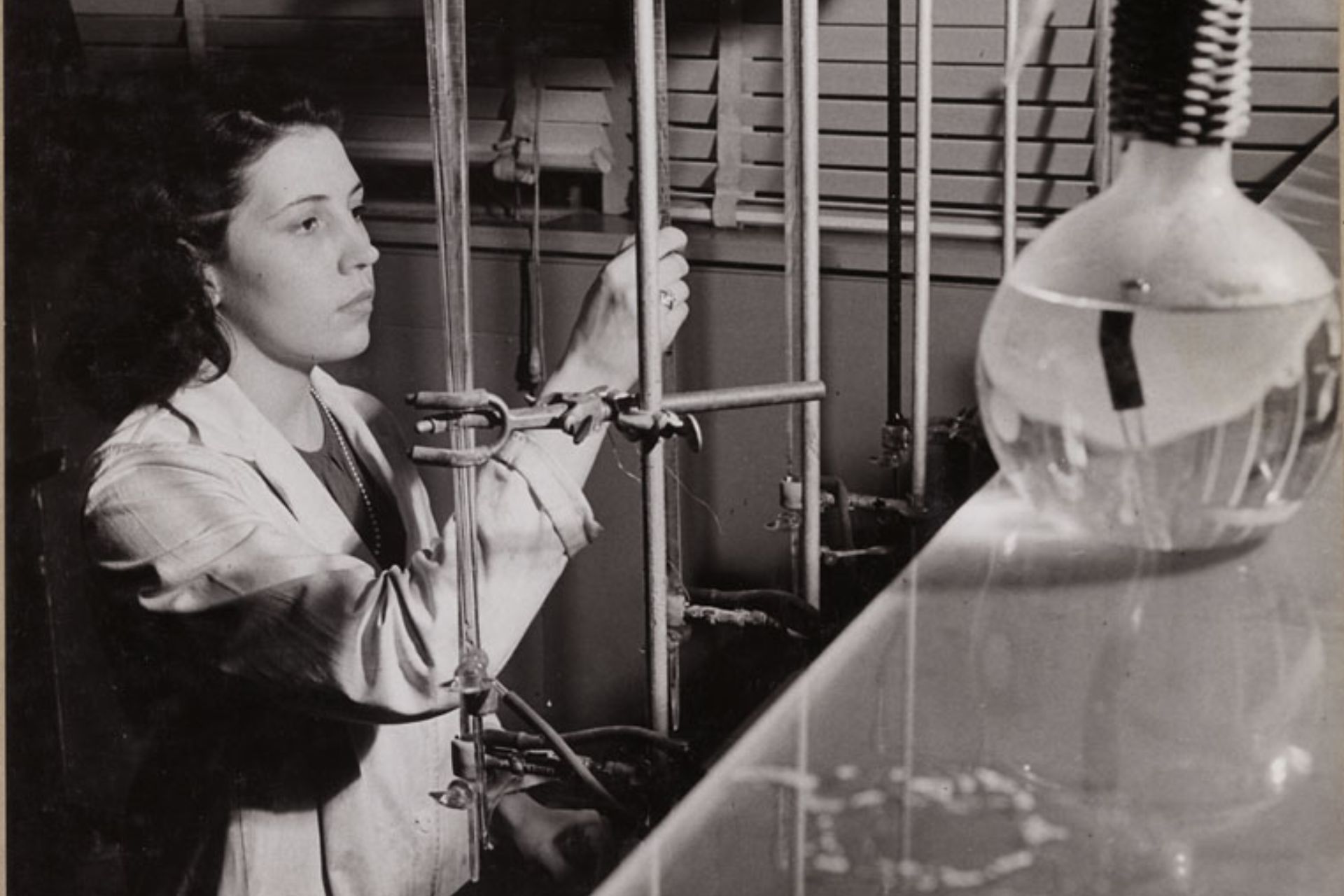
Fortunately, industrial chemistry can work miracles at pace. The Allies weren’t caught entirely flat-footed when Japan cut off their supply of rubber. In late December 1941, Howe, a graduate of the Massachusetts Institute of Technology, traveled to Washington, D.C to discuss the problem with his American and British counterparts. They decided that their best chance was to orchestrate something that the Fords and Firestones of the world hadn’t found the courage to try: producing synthetic rubber at scale.
Prime Minister Mark Carney’s rhetoric often laments a time when Canada stood up big industrial projects as a matter of course. None were bigger than the British Empire’s first fully integrated synthetic rubber plant in Sarnia, Ont.
Six weeks after Pearl Harbor, Howe created Polymer Corporation to build and run the facility. The objective was to build an industrial village that would create the equivalent of 14.4 million natural rubber trees each month, enough to cover Canada’s wartime needs. Ten factories would produce the raw materials needed to create two types of rubber. Howe committed $50 million, the biggest expenditure of the war, for what was essentially an experiment.
You might also have heard Carney say that fortune favours the bold. The Polymer bet was such a success that a rendering of the facility was featured on the back of a series of $10 bills issued in 1971. The Sarnia complex was completed in two years and was so efficient that it began exporting excess production to the U.S. in the summer of 1944. “The best brains in science and business have been used at Polymer to transform an experimental dream into an industrial reality,” Howe said.
A push from the government and fear of the Nazis helped too, of course. Polymer Corporation would defy stereotypes about state capitalism, competing successfully for decades until it was privatized in 1988. I’m not here to say that privatization was a mistake. But I think Canada’s history with rubber offers some lessons for the moment in which we find ourselves. Maybe the most important one is that this country can do quite a lot when the “best brains in science and business” and the federal government work together instead of at cross purposes.
Kevin Carmichael is The Logic’s economics columnist and editor-at-large. He has spent more than two decades covering economics, business and finance for outlets including Bloomberg News, The Globe and Mail and the Financial Post, where he also served as editor-in-chief.