Americans might return an alleged fascist to the White House next week. Even if they don’t, the fact that on the eve of the election Donald Trump is a coin flip away from returning to power shows that the chaos of recent years could now be the norm. It’s fine to despair over what’s been lost, but let’s also get to work on becoming less fragile. That starts with a new approach to fiscal policy.
Skip to content
 Former prime minister Jean Chretien and finance minister Paul Martin in Ottawa after delivering the 1998 federal budget. Photo: The Canadian Press/Tom Hanson
Commentary
Carmichael: How to build an anti-fragile economy
The chaos of recent years could now be the norm. Canada needs a new approach
Conservative leader Pierre Poilievre in Ottawa in Oct. 2024. Photo: The Canadian Press/Patrick Doyle
Americans might return an alleged fascist to the White House next week. Even if they don’t, the fact that on the eve of the election Donald Trump is a coin flip away from returning to power shows that the chaos of recent years could now be the norm. It’s fine to despair over what’s been lost, but let’s also get to work on becoming less fragile. That starts with a new approach to fiscal policy.
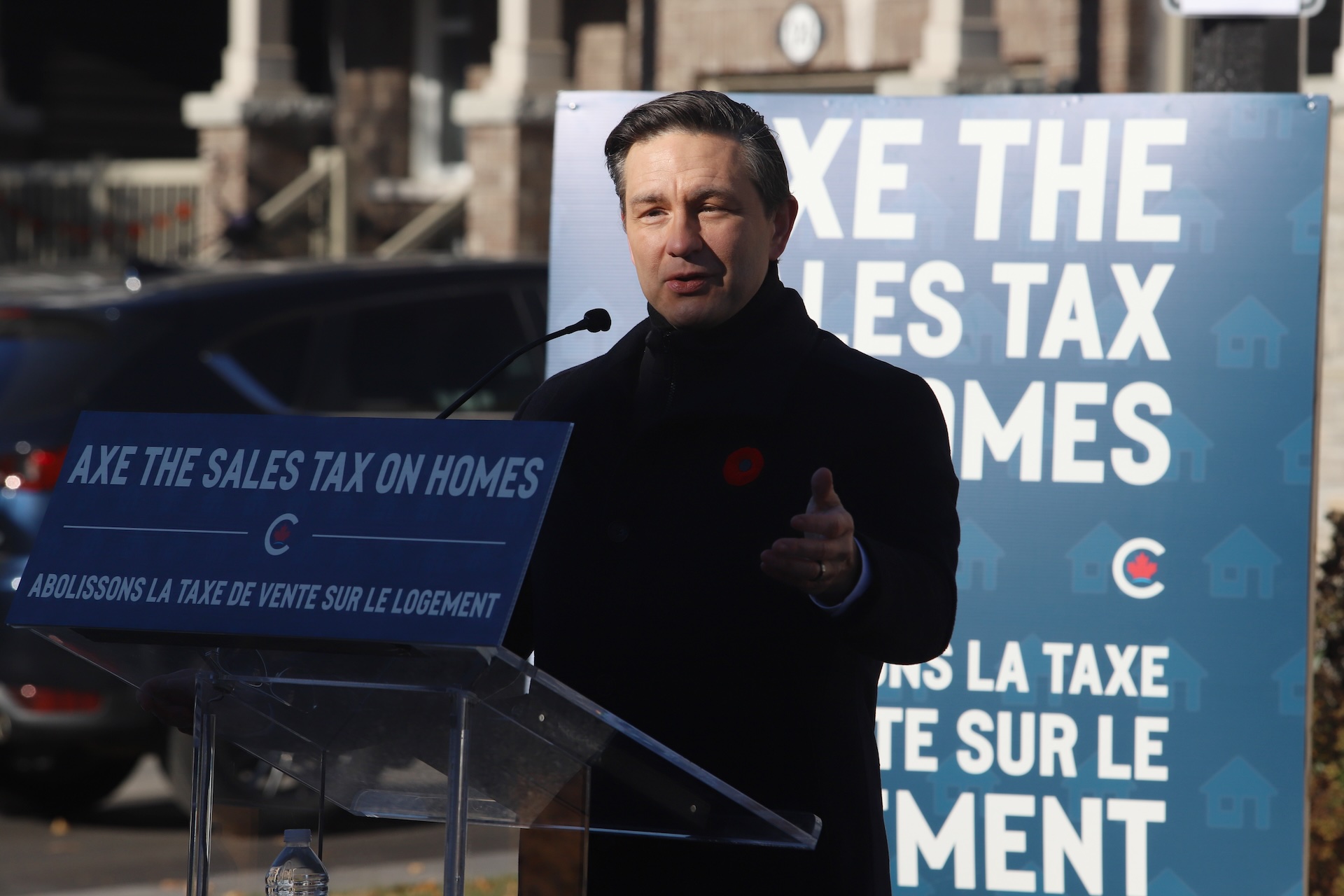
One of Pierre Poilievre’s mantras is that he will “fix the budget.” He hasn’t said much about what needs fixing. He would “axe” the carbon tax and the GST on new homes sold for less than $1 million. Poilievre’s Conservatives backed a motion that would increase old-age benefits by an estimated $3 billion per year over five years, and opposed the Liberal government’s increase in capital gains taxes.
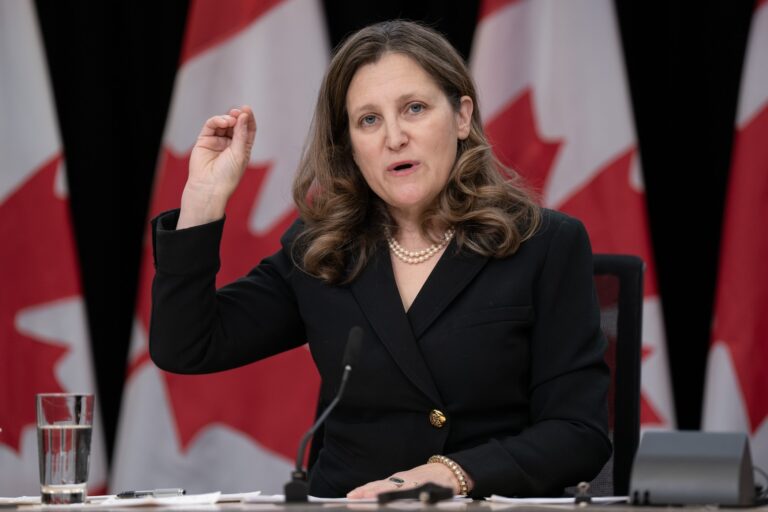
Finance Minister Chrystia Freeland also intends to fix the budget. A year ago, she used the fall economic statement to introduce spending guardrails, including a pledge to keep the debt-to-GDP ratio on a downward track and to narrow the deficit to one per cent of GDP by 2027. A low bar, perhaps, but one she cleared in this year’s budget, albeit by raising taxes. “I really believe that a sound macroeconomic framework, with fiscally sustainable government policies, is the foundation of growth and private sector investment,” Freeland said last week at an event hosted by the Council on Foreign Relations in Washington, D.C.
Related Articles

Program expenses were 15.8 per cent of GDP in the fiscal year that ended March 31, 2023, the highest since 1994, excluding pandemic-related spending in 2021 and 2022. Still, Canada’s budget isn’t as broken as Poilievre appears to think it is. “By and large, Canada looks good,” Vítor Gaspar, the head of the International Monetary Fund’s fiscal affairs department, said in an interview.
The one time Poilievre was in government, as employment and social development minister for the final nine months of Stephen Harper’s nine-year tenure as prime minister, the main objective was to balance the budget. Harper ran a deficit to fight the Great Recession, but insisted on getting back to balance as quickly as possible thereafter. He stayed on that course despite a weak economic recovery that was exacerbated by a collapse in oil prices in 2014. Harper’s final budget achieved a surplus in 2015, but he lost that year’s election to Justin Trudeau’s Liberals, who pledged to run deficits to spark stronger economic growth.
A rigid philosophy about debt and deficits fit with the economic imperative of the late 1980s and 1990s. Interest payments on Canada’s debt were limiting the government’s room to manoeuvre effectively and plan for the future.
That doesn’t mean a balanced budget is always optimal. Former finance minister Paul Martin eliminated the deficit in the 1990s because Canada had lost credibility with investors. To get interest rates down, he had to overdo it to show that anyone who invested in Canadian bonds would get their money back.
That’s not the case today. The yield on a Canadian 10-year bond is about 3.25 per cent, a percentage point lower than the comparable U.S. benchmark. Canada isn’t the sovereign that traders worry about these days.
The bigger threat is getting ready to face a highly uncertain future. The cost of reversing climate change, paying benefits owed to an aging population and girding for the security threats posed by China and Russia will be immense.
Reconciliation with Indigenous peoples, narrowing income inequality and managing artificial intelligence will also be expensive. The best thing governments can do today is make sure they have optionality. That means keeping debt under control, but not by hacking away at spending arbitrarily. Public investment will be an important element of the energy transition and meeting Canada’s commitments to global security. Responsible politicians will begin to condition voters to anticipate higher taxes.
“Thinking about macroeconomic policy is changing all the time,” said Gaspar, a former Portuguese finance minister who also served the European Commission and the European Central Bank. “We observe. We learn. We try to fine tune best practices to the challenges of today. Clearly, at this point in time, the challenges that face economies around the world demand an emphasis on sustainable growth. That suggests the importance of not only taking into account the quantity but the quality of public spending.”
In 1989, Brian Mulroney’s Progressive Conservative government cancelled the purchase of nuclear submarines and slashed Via Rail’s budget. Those probably looked like reasonable choices given the circumstances. Today, Canada’s ability to remain a top-tier partner to the U.S. and our NATO allies is compromised by its lack of suitable military hardware, and the absence of a quality passenger train service makes it harder to fight climate change.
The lesson from the 1980s is that high debt exerts a cost extending beyond interest payments. Gaspar’s advice to countries such as Canada is to take advantage of their relatively strong positions and trim as much unnecessary spending as they can, and to do so systematically over an extended period of time to avoid hurting growth.
They will need all the fiscal room they can spare to cope with what’s coming.
Kevin Carmichael is The Logic’s economics columnist and editor-at-large. He has spent more than two decades covering economics, business and finance for outlets including Bloomberg News, The Globe and Mail and the Financial Post, where he also served as editor-in-chief.



Loading...
Thanks for sharing!
You have shared 5 articles this month and reached the maximum amount of shares available.
CloseThis account has reached its share limit.
If you would like to purchase a sharing license please contact The Logic support at [email protected].
CloseGift the full article!
You have gifted 0 article(s) this month and have 5 remaining.
Recipients will be able to read the full text of the article after submitting their email address. They will not have access to other articles or subscriber benefits.
Photo: The Canadian Press/Patrick Doyle
Former prime minister Jean Chretien and finance minister Paul Martin in Ottawa after delivering the 1998 federal budget.
Most Popular This Week




In-depth, agenda-setting reporting
Great journalism delivered straight to your inbox.
News
Canada faces a satellite-launch crunch as SpaceX retires its workhorse rocket
Briefing
Cohere says it caught an Alibaba model trying to send data to a server in China
Feds and First Nations to work on sharing resource revenue, with a sovereign wealth fund one option
Zafin buys U.S. fintech Naehas in nine-figure deal
Best business newsletter in Canada
Get up to speed in minutes with insights and analysis on the most important stories of the day, every weekday.
Exclusive events
See the bigger picture with reporters and industry experts in subscriber-exclusive events.
Membership in The Logic Council
Membership provides access to our popular Slack channel, participation in subscriber surveys and invitations to exclusive events with our journalists and special guests.