Skip to content

Canada's Business and Tech Newsroom

  • Professional Subscription
  • Partnerships & Advertising
  • Licensing & Syndication
Log In Subscribe
Welcome,
  • My Account
  • Log Out
  • Business
  • Tech
  • National
  • The Big Read
  • Briefings
  • Commentary
Search
Log In Subscribe
Welcome,
  • My Account
  • Log Out
Commentary

Carmichael: The $100B ‘Indigenomics’ opportunity

I know a sovereign-debt analyst who calls Canada her “AAA-rated emerging market.” 

Don’t take offence. It’s a joke based on the countries this person covers, a portfolio made up primarily of emerging markets such as Mexico and Brazil. Those places are more chaotic, and therefore require more work, but the potential gains are worth the effort. Canada is where you hedge against the risk of chasing that growth.   

Commentary

Carmichael: The $100B ‘Indigenomics’ opportunity

First Nations’ growing economic clout offers the upside of an emerging market

By Kevin Carmichael
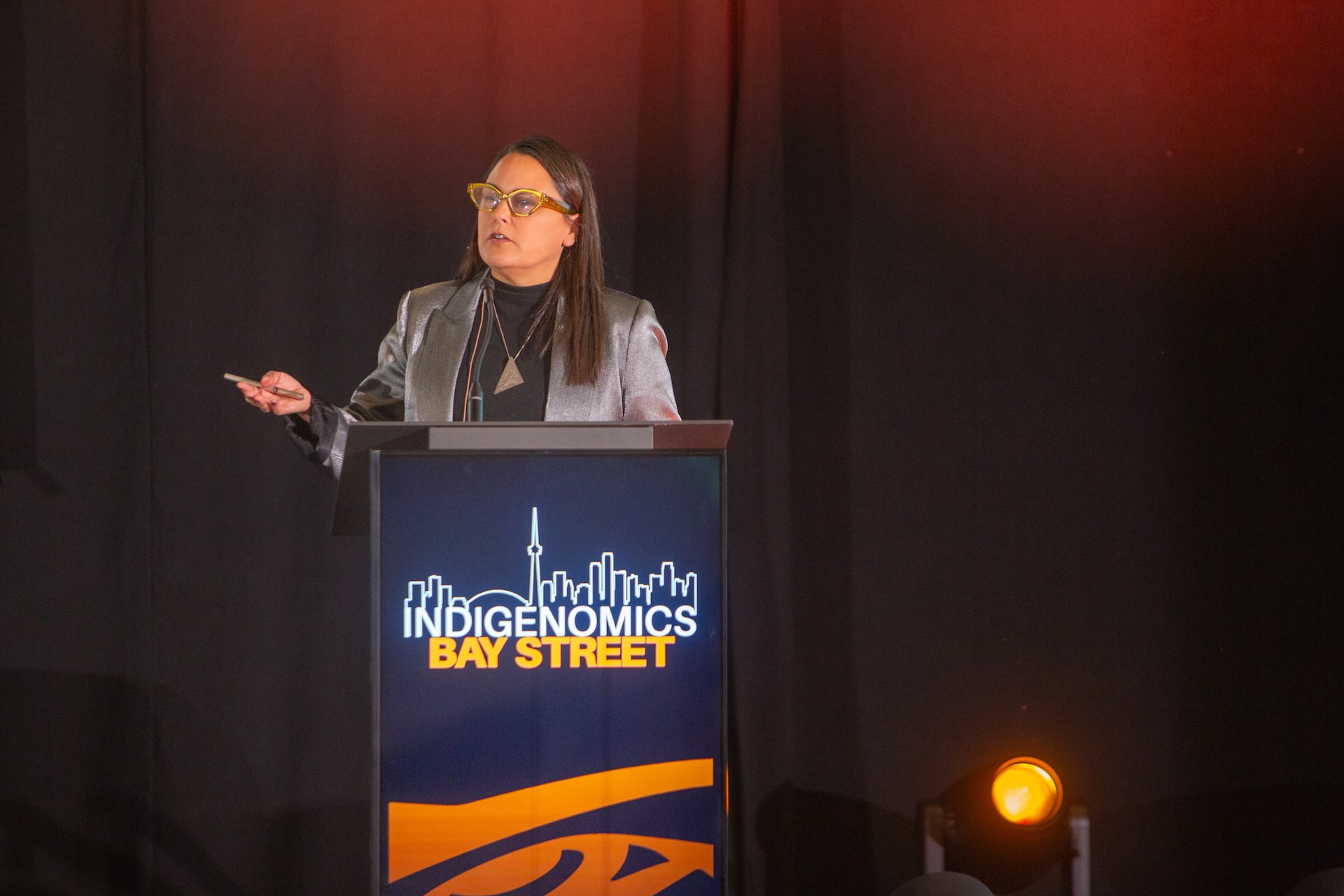
Carol Anne Hilton, CEO and founder of the Indigenomics Institute, speaking at the Indigenomics Bay Street conference in Toronto on Oct. 18, 2024. Photo: Handout/Indigenomics Institute/Kris Krüg
Oct 19, 2024
A A
A Small A Medium A Large
Share

Gift

Share

I know a sovereign-debt analyst who calls Canada her “AAA-rated emerging market.” 

Don’t take offence. It’s a joke based on the countries this person covers, a portfolio made up primarily of emerging markets such as Mexico and Brazil. Those places are more chaotic, and therefore require more work, but the potential gains are worth the effort. Canada is where you hedge against the risk of chasing that growth.   

A thought experiment: What if Canada really is a AAA-rated emerging market, a unicorn in the investing world that offers both the protection of the rule of law and the comfort of political stability, while also providing opportunities to bet on outsized levels of future growth? It’s possible, especially if the guardians of that AAA rating keep it together. 

Let’s first de-stigmatize what it means to be an emerging market. It’s unclear G7 countries have anything to teach emerging markets about governing: Brazil under former president Jair Bolsonaro was a lot like the U.S. under former president Donald Trump. Central banks in rich countries balked at raising interest rates when global inflation burst, but their counterparts in emerging markets moved with authority. That prompted the International Monetary Fund to state that monetary policy in emerging markets had become a source of stability. 

Investors like emerging markets because of where they sit on the development curve. Such places are playing catch-up, so there’s lots of opportunity to capture long-term returns. Canada offers that kind of upside via First Nations, which are shaking off the constraints of the Indian Act and beginning to leverage capital markets to develop their communities on their own terms. 

Related Articles

A group of people, including a man wearing a Native American headdress, gather to cut a red ribbon in a ribbon-cutting ceremony.

Carmichael: First Nations Bank set to unleash billions

By Kevin Carmichael
Three pumpjacks pumping crude oil on a field on a cloudy day.

Federal budget features $5B Indigenous loan guarantee program amid concerns over major project delays

By Jesse Snyder

I spent a little time at the Indigenomics Institute’s annual Bay Street conference in Toronto this week. The Indigenomics Institute is the creation of Carol Anne Hilton, author of Indigenomics: Taking a Seat at the Economic Table, in which she argues that if the federal government stopped actively resisting treaty settlements, it would lead to a $100-billion Indigenous-led economy—a figure that’s roughly the equivalent of the gross domestic product of Sri Lanka.  

Hilton published her book in 2021. At this week’s conference, participants were already talking about the next $100 billion. It’s a reasonable goal considering the federal government has set aside $76 billion for treaty settlements. Already there have been glimpses of what First Nations will do with the money. The $1-billion purchase of Halifax-based Clearwater Seafoods by a consortium led by Membertou First Nation is one example. The Haisla Nation’s Cedar liquefied natural gas project in Kitimat, B.C., and the Jericho Lands housing development on 36.4 hectares on Vancouver’s West Side are others. 

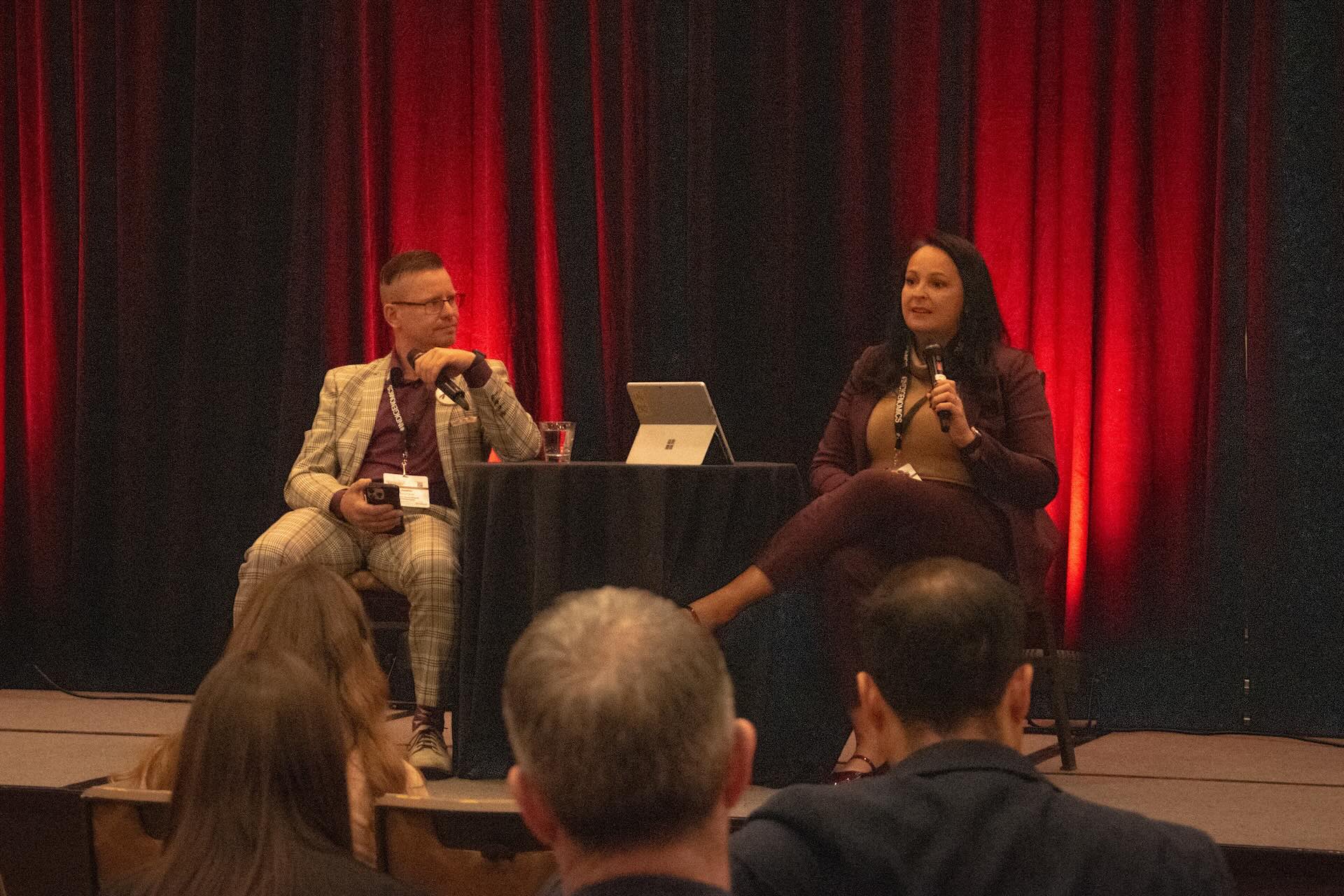
Justin Bourque, president of Athabasca Indigenous Investments, and Jody Anderson, strategy and partnership adviser at the First Nations Finance Authority, at the Indigenomics Bay Street conference in Toronto on Oct. 18, 2024. Photo: Handout/Indigenomics Institute/Kiran Pillay

Jody Anderson, strategy and partnership adviser at the First Nations Finance Authority, a federal agency that provides Indigenous communities with financial backing and investment advice, told an audience at the conference that 20 years ago, economic development on reserves meant building a gas station. Gas stations are still important, she said, but a combination of money and ambition has propelled First Nations into the big leagues. 

Takeovers such as Clearwater and projects such as Cedar and Jericho are complicated, but potential deals of that kind are “plentiful,” said Jaimie Lickers, head of Indigenous trust services and Indigenous commercial banking at CIBC. The wealth appears to be spreading across communities. Bill Lomax, the former Goldman Sachs banker who now leads Saskatoon-based First Nations Bank of Canada, told me earlier this year that his loan book is on track to balloon to as much as $5 billion within a decade, from less than $1 billion currently.

“The revolution won’t be government-funded,” said Frank Busch, who leads Kelso Technologies, a West Kelowna, B.C.-based maker of rail and automotive parts, echoing a widespread desire to break free of the constraints of the Indian Act by using treaty settlements to leverage development funding from capital markets. 

The next $100 billion will come harder than the first. Indigenous communities themselves could decide to pump the brakes, as many of their members attach a greater value to nature and culture than eager dealmakers may realize. 

Patience might be wise. History has made First Nations wary of exploitation, and the ranks of Indigenous bankers, accountants and lawyers are thin. That will change over time, but in the short term many point to this skills shortage as a vulnerability. “For every good deal there could be 20 bad deals,” said Anderson. 

The notion that First Nations are risky bets is dated. Anderson said the default rate on $3 billion in debt backed by the First Nations Finance Authority is zero, and no Nation has declared bankruptcy since the 1970s. Yet Bay Street continues to treat First Nations differently than other sovereigns. “A paradigm shift needs to happen,” she said. 

Indeed, the wobbly part of this “AAA-rated emerging market” thought experiment could be the colonial governments. The federal government’s budgeting has been undermined twice in two weeks: the C.D. Howe Institute published a report that argues Finance Minister Chrystia Freeland overstated future revenue from higher capital-gains taxes by about $5 billion, and the parliamentary budget officer challenged Freeland’s assertion that she will keep the deficit below $40 billion. 

Before the Liberals’ re-election in 2019, no party had attempted to govern with less than 36 per cent of the popular vote—and the one that did, Joe Clark’s Progressive Conservatives, lasted only nine months. Justin Trudeau’s Liberals won 33.1 per cent of the popular vote in 2019 and 32.6 per cent in 2021, coming second to the Conservatives both times, while nonetheless collecting enough seats to cling to power. 

Gift the full article

The middle ground of Canadian politics has eroded, raising questions about governability. The unseen analysts who assess Canada’s creditworthiness will have taken note. Fortunately, there’s an emerging engine of growth to offset political uncertainty in Ottawa and the provinces. Indigenomics might be the best thing Canada has going for it. 

Kevin Carmichael is The Logic’s economics columnist and editor-at-large. He has spent more than two decades covering economics, business and finance for outlets including Bloomberg News, The Globe and Mail and the Financial Post, where he also served as editor-in-chief. 
#Carol Anne Hilton #commentary #economy #First Nations #Indigenomics Institute

Loading...

Thanks for sharing!

You have shared 5 articles this month and reached the maximum amount of shares available.

Close
This account has reached its share limit.

If you would like to purchase a sharing license please contact The Logic support at [email protected].

Close
Want to share this article?

Upgrade to all-access now

Close
Gift the full article!

You have gifted 0 article(s) this month and have 5 remaining.

Copy link and gift
Copy Link
Email to a friend
Send Email
Gift on Social Media

Recipients will be able to read the full text of the article after submitting their email address. They will not have access to other articles or subscriber benefits.

Photo: Handout/Indigenomics Institute/Kris Krüg

Justin Bourque, president of Athabasca Indigenous Investments, and Jody Anderson, strategy and partnership adviser at the First Nations Finance Authority, at the Indigenomics Bay Street conference in Toronto on Oct. 18, 2024.

Most Popular This Week

A yellow ambulance is pictured outside of a hospital in Montreal. A red sign in the foreground reads, “Urgence / Emergency.”
Commentary: Quebec Ink

Quebec just found out what not having digital sovereignty really means

By Martin Patriquin
An image of Mark Carney standing in front of a red podium with the words "AI for All / L'IA pour tous." He is wearing a suit and tie. In the background, people wearing scrubs and white coats are visible.
Special Report

Canada’s new AI strategy sets lofty goals for adoption and growth

By Murad Hemmadi and Laura Osman
Exclusive

Canada’s new AI strategy includes $500M fund to back key firms

By Murad Hemmadi and Catherine McIntyre
The Big Read

Canada’s AI boom is about to collide with a major labour shortage

By Catherine McIntyre

In-depth, agenda-setting reporting

Great journalism delivered straight to your inbox.

News

Nations Royalty was Canada’s first majority-Indigenous-owned public company. It doesn’t want to be the exception

By Anita Balakrishnan

Briefing

Kneat.com to leave TSX in $650M Thoma Bravo takeover

By Chaimae Chouiekh   |   Jun 9, 2026 | 4:06 PM ET

Teachers’-backed Databricks in fundraising talks that could lift its valuation above US$165B

By Catherine McIntyre   |   Jun 9, 2026 | 3:40 PM ET

New Windsor-Detroit bridge to ‘open at the end of the week,’ Carney says

By Joanna Smith   |   Jun 9, 2026 | 3:04 PM ET

Best business newsletter in Canada

Get up to speed in minutes with insights and analysis on the most important stories of the day, every weekday.

Exclusive events

See the bigger picture with reporters and industry experts in subscriber-exclusive events.

Membership in The Logic Council

Membership provides access to our popular Slack channel, participation in subscriber surveys and invitations to exclusive events with our journalists and special guests.

Recent Popular Stories

News

Canada’s surprise plan to buy Saab command jets leaves competitors seeking answers

By David Reevely   |   May 29, 2026
A closeup of a scale model of a jet covered in pixellated camouflage, with sensor equipment attached to the top of its fuselage. There are civilians and uniformed military personnel milling in the background.
Commentary: Quebec Ink

Quebec just found out what not having digital sovereignty really means

By Martin Patriquin   |   Jun 8, 2026
A yellow ambulance is pictured outside of a hospital in Montreal. A red sign in the foreground reads, “Urgence / Emergency.”
Exclusive

Canada’s new AI strategy includes $500M fund to back key firms

By Murad Hemmadi and Catherine McIntyre   |   Jun 3, 2026
Analysis

Why Canada’s wait-and-see approach to U.S. trade talks just might work

By Joanna Smith   |   Jun 2, 2026
A low-angle shot of a truck carrying vehicles across the bridge at the Canada-U.S. border in Sarnia, Ont. The U.S. and Canadian flags are flying in the foreground.
The Big Read

ApplyBoard faces a reckoning as Canada’s immigration boom turns into a bust

By Claire Brownell and David Reevely   |   May 27, 2026
The Big Read

We found every data centre in Canada

By Murad Hemmadi, David Reevely, Aleksandra Sagan, Chaimae Chouiekh, Martin Patriquin and Catherine McIntyre   |   Apr 8, 2026
Four vertical slices of aerial view photos. From left, a building in downtown Toronto housing several data centres, a picture of the Albertan wilderness where the proposed Wonder Valley data centre would go, a lit-up QScale data centre in Quebec, and a data centre at a Hydro-Quebec dam.

Canada's most influential executives and policymakers are reading The Logic

  • CPP Investments
  • Sun Life Financial
  • C100
  • Amazon
  • Telus
  • Mastercard
  • bdc
  • Shopify
  • Rogers
  • RBC
  • General Motors
  • MaRS
  • Government of Canada
  • Uber
  • Loblaw Companies Limited
logic-logo

Canada's Business and Tech Newsroom

100% human-crafted journalism

Newsroom

  • News Tips
  • AI Policy
  • Editorial Disclosures
  • Story Pitches

Company

  • About Us
  • Terms of Service
  • Privacy Statement
  • Corporate Information

Contact

  • Contact Us
  • Advertise
  • FAQs
  • Work at The Logic

© 2026 The Logic Inc. All Rights Reserved.

Trusted by leaders

Error

Account creation failed.

Please email us at [email protected].

Create Account

[wppb-register form_name=”cozmo-registration-form-for-modal”]

I do have an account
Login
or

[wppb-login]

I don’t have an account