Say what you will about Tiff Macklem’s handling of the economy, but there’s no denying he backs up his words with action. When the Bank of Canada paused its interest-rate increases earlier this year, the governor was clear that he was ready to resume them if core inflation failed to ease. Prices stayed hot, and Macklem resumed raising interest rates, just like he said he would.
Skip to content

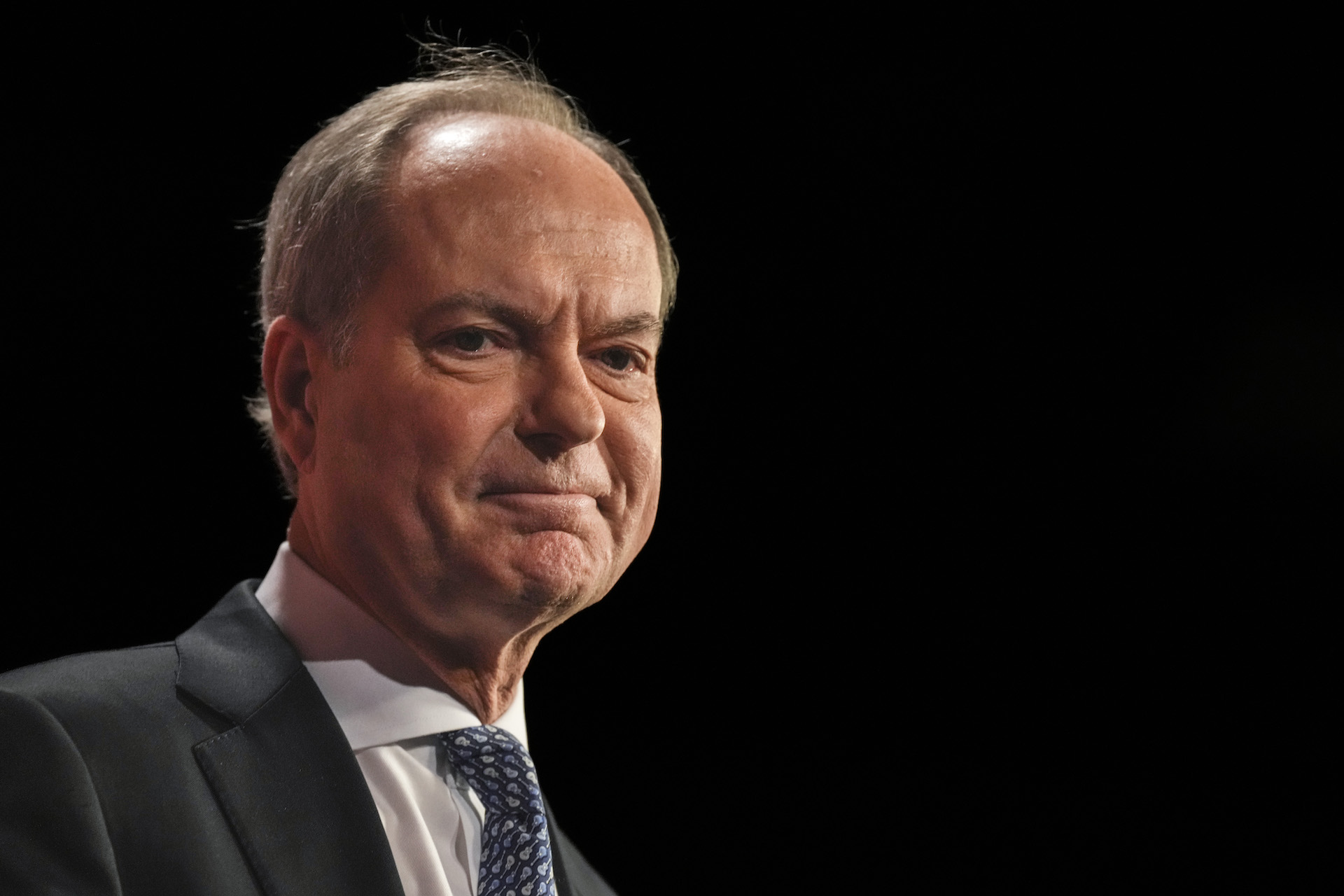 Ontario Finance Minister Peter Bethlenfalvy in Toronto in November 2023. Photo: The Canadian Press/Chris Young
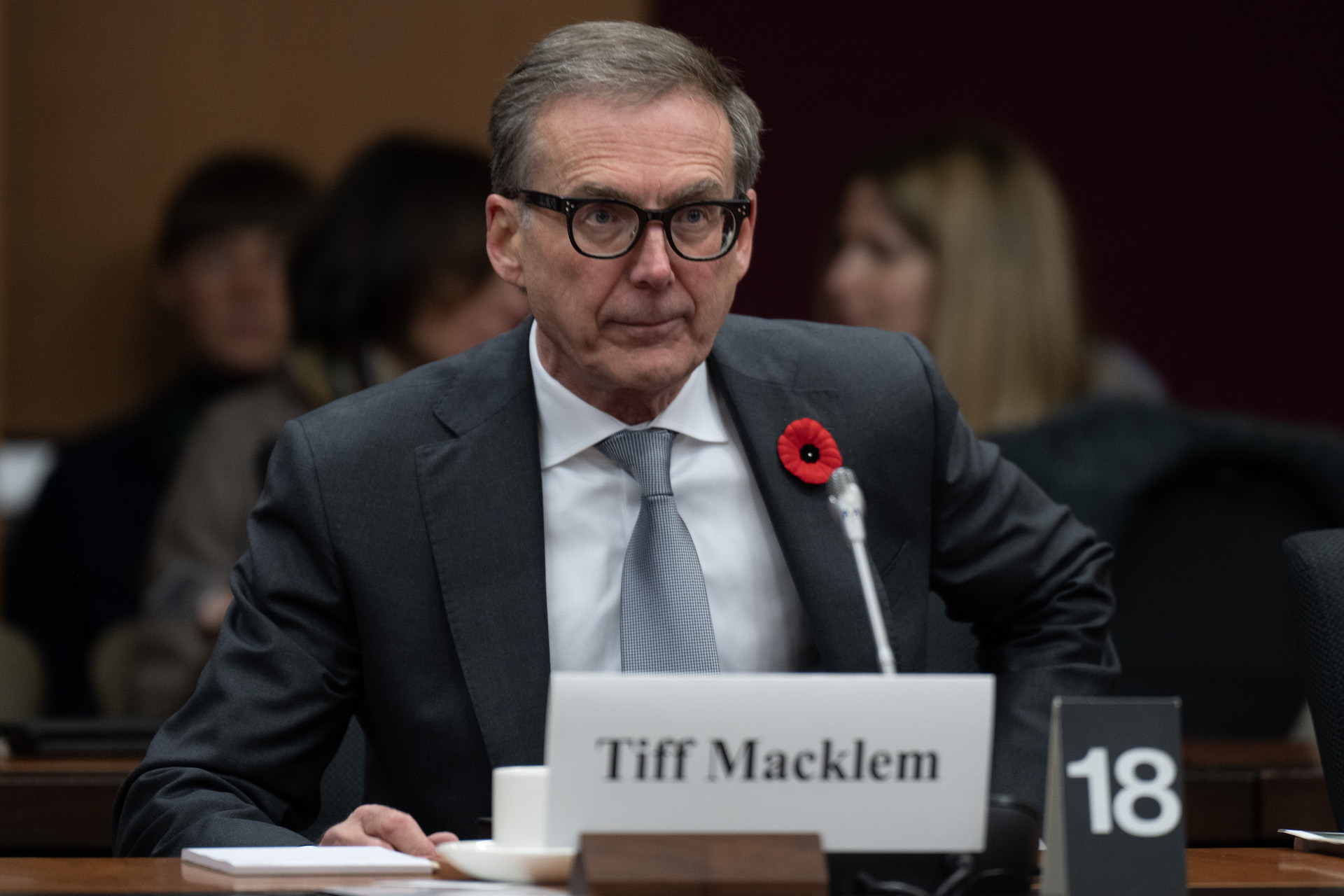 Bank of Canada governor Tiff Macklem waits to appear at the Senate banking committee in Ottawa in November 2023. Photo: The Canadian Press/Adrian Wyld
Commentary
Carmichael: If Canada is to avoid recession, politicians must make tough choices
Ontario’s fiscal update a missed opportunity for Ford to back up his words with actions
Ontario Premier Doug Ford at the meeting of the Council of the Federation in Halifax in November 2023. Photo: The Canadian Press/Kelly Clark
Say what you will about Tiff Macklem’s handling of the economy, but there’s no denying he backs up his words with action. When the Bank of Canada paused its interest-rate increases earlier this year, the governor was clear that he was ready to resume them if core inflation failed to ease. Prices stayed hot, and Macklem resumed raising interest rates, just like he said he would.
Ontario Premier Doug Ford, who has emerged as one of Macklem’s more vocal critics in recent months, can’t say the same.
Ford had a chance last week to show he was serious about finishing what the Bank of Canada started. Instead, he might have made things worse by opting against using Ontario’s fiscal update to make some difficult spending choices.
It’s a bad omen because it suggests monetary and fiscal policy in this country will continue to work at cross-purposes, increasing the risk of an extended recession. The only government with more influence on the Canadian economy than Ontario will update its finances later this month. Finance Minister Chrystia Freeland said at a press conference in Ottawa Tuesday that she will confront a “challenging global macroeconomic environment” the way “we have always done, which is work really hard to find a balance between the necessary and essential investments in Canadians” and “at the same time to maintain the fiscal responsibility, which is foundational for Canada and for the prosperity of all Canadians.”
Related Articles


Ontario’s premier says he’s upset with how the Bank of Canada is doing its job. He wrote to Macklem ahead of each of the last two interest-rate decisions; on Sept. 3, he said higher borrowing costs have made it “next to impossible” for younger people to buy a house, and on Oct. 22 he said there is “simply no excuse for increasing the already crushing pressure previous interest-rate hikes have placed on so many families and businesses.”
Each time, Ford has effectively told Macklem to back off and leave inflation to the federal and provincial governments. “I recognize that the tools you have to address inflation are limited, which is why I have also written to the prime minister asking him to work with all the premiers to address the root causes of inflation in a meaningful way,” he said in the October letter.
It all suggests that Ford is committed to doing something about inflation. His letters recognize that there’s an important role for fiscal policy in bringing about economic stability and longer-term growth. However, his commitment to fighting inflation lacks credibility because his ideas for how fiscal policy could be used align with items on which he’s already promised to spend money. And Ford’s list of “root causes” of inflation omits perhaps the most important one: government spending.
In his letter to Prime Minister Justin Trudeau, Ford said Ottawa and the provinces could offset inflationary pressures by improving infrastructure; making supply chains more resilient; attracting more skilled immigrants, while doing a better job at helping them find work; and either scrapping or pausing the carbon tax.
There are good debates to be had about the merits of Ford’s specific proposals. For example, removing the carbon tax would relieve some marginal price pressure immediately, while also killing a potential revenue source for a government that is going to need help paying off its COVID-19 debts and financing the shift to a greener economy.
But policies resembling those that Ford put on the table would help. In theory, better and more infrastructure could make the economy more productive. That matters, because a more productive economy can generate more output without stoking inflation.
Aligning immigration with job vacancies is both inflationary and disinflationary: more immigrants add to demand, which puts upward pressure on prices; more qualified job seekers loosen the labour market, offsetting upward pressure on wages. Anything that avoids the kinds of backlogs that drove up prices during the pandemic would help keep supply and demand in balance.
With the exception of making the carbon tax disappear, Ford’s suggestions would do little or nothing to ease inflation over the next couple of years, which is the period that most concerns the central bank. The Bank of Canada’s latest Market Participants Survey, a quarterly poll of Bay Street forecasters, turned up a median prediction for year-over-year increase in the consumer price index of 3.5 per cent this year and 2.2 per cent by the end of 2024, implying widespread doubt the central bank will hit its target of two per cent before 2025.
At this stage, the most significant “root cause” of near-term inflation is government spending. The Bank of Canada’s October Monetary Policy Report showed that higher interest rates have curbed the incentive of consumers and executives to spend: consumption, housing and business investment all are on track to contribute less to economic growth in 2024 than previously estimated.
The one exception is government spending, which the Bank of Canada predicts will represent 0.6 percentage points of growth next year. The central bank’s overall forecast is that gross domestic product will expand a mere 0.9 per cent in 2024, so spending by the federal government and the provinces will have an outsized influence on economic life over the next year.
“If all those plans were realized, yes, government spending is starting to get in the way of getting inflation back to target,” Macklem told the Senate banking committee on Nov. 1.
So, if Ford wanted the Bank of Canada to stop raising interest rates, he could have cut spending. Instead, he did the opposite. Ford used Ontario’s fall economic statement last week to announce $2.4 billion in additional spending, despite predictions that revenue will be weaker than forecast earlier this year. Ford’s spending plans will widen the deficit to 0.5 per cent of GDP and force the government to delay its plan to balance the budget by a year—to 2025–26.
Relatively aggressive public spending was appropriate in the years before the pandemic—and then again during it, when governments shut down their economies to slow the spread of COVID-19. But that was because interest rates and inflation were extraordinarily low. That’s no longer the case, and there’s little reason to expect that will change—especially if governments keep spending like it’s 2021.
Kevin Carmichael is The Logic’s economics columnist and editor-at-large. He has spent more than two decades covering economics, business and finance for outlets including Bloomberg News, The Globe and Mail and the Financial Post, where he also served as editor-in-chief.



Loading...
Thanks for sharing!
You have shared 5 articles this month and reached the maximum amount of shares available.
CloseThis account has reached its share limit.
If you would like to purchase a sharing license please contact The Logic support at [email protected].
CloseGift the full article!
You have gifted 0 article(s) this month and have 5 remaining.
Recipients will be able to read the full text of the article after submitting their email address. They will not have access to other articles or subscriber benefits.
Photo: The Canadian Press/Kelly Clark
Ontario Finance Minister Peter Bethlenfalvy in Toronto in November 2023.
Bank of Canada governor Tiff Macklem waits to appear at the Senate banking committee in Ottawa in November 2023.
Most Popular This Week




In-depth, agenda-setting reporting
Great journalism delivered straight to your inbox.
News
National Bank CEO warns AI alone won’t give banks a lasting edge
Briefing
Canada and Ontario commit over $5B to support tariff-hit steel sector
Hackers will see cars as major targets in next 3 years, 83% of car-tech workers say
EA shutting down Edmonton studio BioWare
Best business newsletter in Canada
Get up to speed in minutes with insights and analysis on the most important stories of the day, every weekday.
Exclusive events
See the bigger picture with reporters and industry experts in subscriber-exclusive events.
Membership in The Logic Council
Membership provides access to our popular Slack channel, participation in subscriber surveys and invitations to exclusive events with our journalists and special guests.





