Skip to content

Canada's Business and Tech Newsroom

  • Professional Subscription
  • Partnerships & Advertising
  • Licensing & Syndication
Log In Subscribe
Welcome,
  • My Account
  • Log Out
  • Business
  • Tech
  • National
  • The Big Read
  • Briefings
  • Commentary
Search
Log In Subscribe
Welcome,
  • My Account
  • Log Out
Commentary

Carmichael: If an AI jobs apocalypse is coming, we’re not seeing it in the data

Listen Now
0:00
Commentary

Carmichael: If an AI jobs apocalypse is coming, we’re not seeing it in the data

We do need to think about how AI will affect employment. Panicking won’t help.

By Kevin Carmichael
Is AI in the same league as technologies such as steam engines, electricity and computers? The Bank of Canada, for one, isn’t yet ready to declare we’ve begun the next technological revolution. Photo: Roger Lemoyne for The Logic
Jun 6, 2026
A A
A Small A Medium A Large
Share

Gift

Share

Listen Now
0:00

You’ve probably heard of the “China shock,” the mortal blow China’s entry into the World Trade Organization delivered to American (and to some extent, Canadian) low-skill manufacturing. But what about the “clerical shock” from when computers and software wiped out a similarly large number of jobs? I hadn’t until Google’s chief economist told me about it.

“You haven’t heard of [it], nobody has heard of [it],” said Fabien Curto Millet. “The reason nobody frets about it is that it’s kind of a diffuse shock. It happens across the entire economy, and the people affected have easier ways to on-ramp to other opportunities. They don’t have to up and move across the country and leave their communities.”

Let’s back up a bit. Google offered an interview because Curto Millet was in Canada for Toronto Tech Week. I was in Canada for Tech Week too, but not Toronto. No problem, the Google people said, we’ll do a video call. I pointed out that we could do a video call anytime. True, the Google people said, but Curto Millet doesn’t do interviews just any old time. False scarcity. It’s a powerful force.

Related Articles

Andrew Forde, wearing a beige tweed blazer, black slacks and a white sweater, speaks on a stage at the Elevate conference in Toronto with three large blue screens in the backdrop. One screen displays the session topic, AI, another displays the logos for sponsors KPMG and Google, and a third screen depicts a photo of a stop sign covered in stickers. The stop-sign photo is labelled, “Stickers that beat supercomputers.”

KPMG’s AI whisperer says some Bay Street firms are falling into a productivity trap

By Anita Balakrishnan
An aerial shot of jobseekers lining up to speak to a recruiter at the New Jersey Collegiate Career Day hosted by Rutgers University.

Landing consulting jobs is getting harder. Salaries are staying the same

By Anita Balakrishnan
View of multiple train tracks and green trains in downtown Toronto, with high-rise buildings and the CN Tower in the background under a partly cloudy sky.

Ontario is hoovering up the majority of Canada’s AI gains

By Catherine McIntyre

False scarcity also describes how Curto Millet thinks about the “jobs apocalypse.” He’s been engaged in a back-and-forth with Stanford University economist Erik Brynjolfsson over the latter’s contention that artificial intelligence is already taking work from early-career workers. I’ve wondered the same. Curto Millet insists there are more important variables at work, such as the effect of higher interest rates.  

“The ‘jobs apocalypse,’ it’s regrettable that that’s become part of the zeitgeist,” Curto Millet said. “It’s not well supported in evidence.”  

Statistics Canada published some new evidence on Friday. If the apocalypse is coming, it hasn’t yet begun. One harbinger will be youth unemployment, because AI is so good at entry-level tasks. The employment rate of Canadians aged 15 to 24 is down significantly from 2023, but has mostly been climbing this year. 

“We are deploying [AI] aggressively internally,” John Graham, chief executive of the Canada Pension Plan Investment Board, said in an interview last month. “We still think that we should have a lot of junior employees because they’re the ones that are doing things with it that we never thought you could do with it. It has not impacted how we think about the workforce at all.” 

The other harbinger—the demise of white-collar work—also hasn’t appeared. Employment in professional, scientific and technical services was 6.8 per cent higher in May than in March 2023, when OpenAI supercharged the AI race with the release of ChatGPT-4, compared with an increase of 4.5 per cent for overall employment. 

Employment in goods-producing industries was only 1.3 per cent higher, making you wonder if a wave of AI-driven automation might actually take place in fields, factories and mines. 

Maybe the best we can do at this stage is make sure we’re thinking clearly about how AI could affect employment. That’s why I started with the China shock. Technology disrupts differently than trade, especially if that technology is general-purpose. It will make strong performers stronger, but will also offer weaker performers a chance to level up. Technology caused clerical jobs to disappear, but overall employment still grew. It probably wasn’t always easy, but those workers found other jobs. 

Trade shocks hit harder because they make companies and even entire industries uncompetitive almost overnight. The social and political dimensions are amplified because those companies and industries often are the beating hearts of communities and regions. 

If a white-collar worker in Toronto loses their job because their employer decided to replace them with a chatbot, they can probably find work with an employer who places a higher value on human intelligence. But if a blue-collar worker in St. Thomas, Ont., loses their job because of U.S. automobile tariffs, they will have a harder time finding another one because it will take time for local manufacturers to figure out how to compete, assuming a way can be found.  

“Not enough people appreciate how [AI] is a very, very different kettle of fish from trade shocks,” Curto Millet said. 

Something else to consider is whether AI is in the same league as general-purpose technologies (GPTs) such as steam engines, electricity and computers. The Bank of Canada isn’t yet ready to declare we’ve begun the next technological revolution. External deputy governor Michelle Alexopoulos said in a speech last month that AI could top out as a standard technology, such as barcode scanners. 

Gift the full article

“If AI proves to be more of a run-of-the-mill innovation, then it won’t lead to massive productivity growth and it won’t radically transform the economy,” Alexopoulos said. Graham was similarly resistant to the hype. He described adoption by staff at CPP Investments as “tremendous” and said that as a result, the fund is “probably” more productive. But the country’s most important investor said he hasn’t yet spotted the “killer app” that would convince him to go all-in on the technology. “It’s still a little bit of an open question,” he said. 

You won’t be surprised to learn that for Google’s chief economist, the question is settled. Curto Millet is convinced that AI is a general-purpose technology and that its impact will be the same as other GPTs: some jobs will be lost, but more will be created. The scope of the federal government’s AI strategy suggests Prime Minister Mark Carney agrees. Let’s hope this time isn’t different.

Kevin Carmichael is The Logic’s economics columnist and editor-at-large. He has spent more than two decades covering economics, business and finance for outlets including Bloomberg News, The Globe and Mail and the Financial Post, where he also served as editor-in-chief.


#artificial intelligence #commentary #economy #Google #jobs

Sponsored Content

The road to risk-smart regulation

By Deborah Aarts

Why cybersecurity needs to match pace with AI

By Jessica Aftimus Rosa

How to shift your workforce from AI experimentation to adoption

By Jessica Aftimus Rosa
Paid promotional content

Loading...

Thanks for sharing!

You have shared 5 articles this month and reached the maximum amount of shares available.

Close
This account has reached its share limit.

If you would like to purchase a sharing license please contact The Logic support at [email protected].

Close
Want to share this article?

Upgrade to all-access now

Close
Gift the full article!

You have gifted 0 article(s) this month and have 5 remaining.

Copy link and gift
Copy Link
Email to a friend
Send Email
Gift on Social Media

Recipients will be able to read the full text of the article after submitting their email address. They will not have access to other articles or subscriber benefits.

Photo: Roger Lemoyne for The Logic

Most Popular This Week

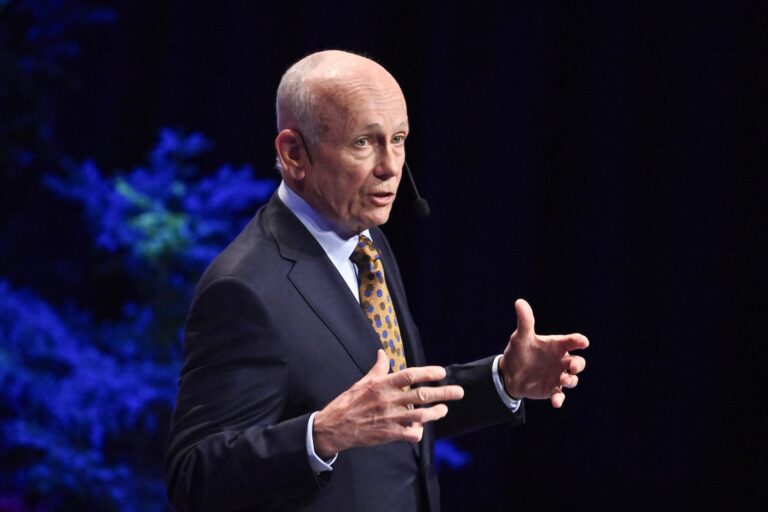
A man wearing a headset microphone sits on a stage. He is speaking and gesturing with his hands. The background is dark blue.
News

Ottawa will invest up to $1.6B in Cohere as firm’s valuation hits $35.7B

By Catherine McIntyre
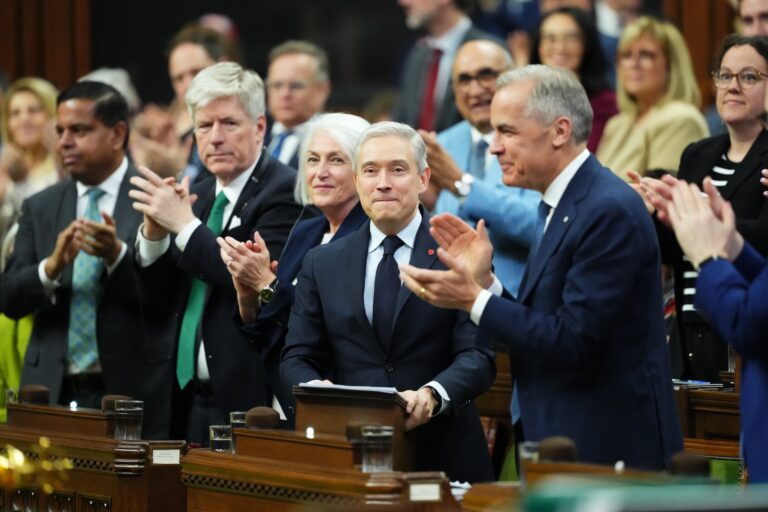
Prime Minister Mark Carney and the rest of the Liberal front bench stand applauding Finance Minister François-Philippe Champagne in the House of Commons. Champagne is in the middle of the frame, with his hands on a desk lectern.
Special Report

What business wants from the 2026 federal budget

By David Reevely, Joanna Smith, Anita Balakrishnan, Claire Brownell, Chaimae Chouiekh, Murad Hemmadi and Meghan Potkins
The Bay Street Financial District is shown with the Canadian flag in Toronto on Friday, August 5, 2022. THE CANADIAN PRESS/Nathan Denette
News

An obscure data standard is the latest open banking holdup—and an unlikely political hot potato

By Claire Brownell
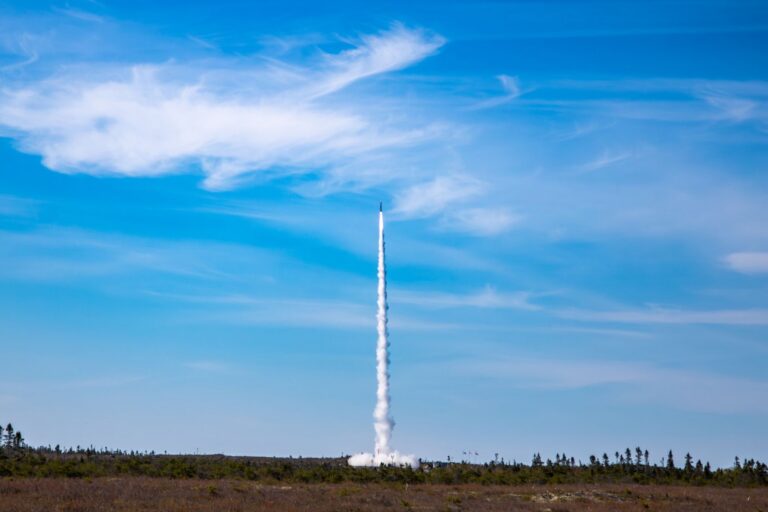
A shot across an expanse of low forest of a rocket launching into blue skies.
News

Canada faces a satellite-launch crunch as SpaceX retires its workhorse rocket

By David Reevely

In-depth, agenda-setting reporting

Great journalism delivered straight to your inbox.

A man wearing a dark suit jacket, blue button-down shirt and spotted brown-and-blue tie stands in front of a black and blue background, gesturing and speaking into a microphone.
Commentary

Carmichael: Canada’s Nobel-winning economist thinks Carney is on the right track

By Kevin Carmichael

Briefing

Canadian investors can’t let foreign capital crowd them out of infrastructure deals, Weston says

By Anita Balakrishnan   |   Oct 30, 2026

Cohere outlines plans to spend $4B on R&D and AI infrastructure in Canada

By Catherine McIntyre   |   Oct 30, 2026

Binance starts recovering frozen assets following US$6.3B hack

By Claire Brownell   |   Oct 30, 2026

Best business newsletter in Canada

Get up to speed in minutes with insights and analysis on the most important stories of the day, every weekday.

Exclusive events

See the bigger picture with reporters and industry experts in subscriber-exclusive events.

Membership in The Logic Council

Membership provides access to our popular Slack channel, participation in subscriber surveys and invitations to exclusive events with our journalists and special guests.

Recent Popular Stories

News

RBC’s AI chief sounds the alarm over AI agents

By Chaimae Chouiekh   |   Oct 22, 2026
Analysis

Why a midterm sweep for the Democrats won’t end Canada’s trade nightmare

By Joanna Smith   |   Oct 29, 2026
News

Bank of Canada raises key interest rate amid soaring energy costs

By Kevin Carmichael   |   Oct 28, 2026
Bank of Canada Governor Tiff Macklem in a suit, speaking and gesturing with his right hand.
News

Brookfield’s new CEO flexes the firm’s soft power with its $50B Canadian bet

By Anita Balakrishnan   |   Oct 21, 2026
News

An obscure data standard is the latest open banking holdup—and an unlikely political hot potato

By Claire Brownell   |   Oct 27, 2026
The Bay Street Financial District is shown with the Canadian flag in Toronto on Friday, August 5, 2022. THE CANADIAN PRESS/Nathan Denette
Special Report

What business wants from the 2026 federal budget

By David Reevely, Joanna Smith, Anita Balakrishnan, Claire Brownell, Chaimae Chouiekh, Murad Hemmadi and Meghan Potkins   |   Oct 28, 2026
Prime Minister Mark Carney and the rest of the Liberal front bench stand applauding Finance Minister François-Philippe Champagne in the House of Commons. Champagne is in the middle of the frame, with his hands on a desk lectern.

Canada's most influential executives and policymakers are reading The Logic

  • CPP Investments
  • Sun Life Financial
  • C100
  • Amazon
  • Telus
  • Mastercard
  • bdc
  • Shopify
  • Rogers
  • RBC
  • General Motors
  • MaRS
  • Government of Canada
  • Uber
  • Loblaw Companies Limited
logic-logo

Canada's Business and Tech Newsroom

100% human-crafted journalism

Newsroom

  • News Tips
  • AI Policy
  • Editorial Disclosures
  • Story Pitches

Company

  • About Us
  • Terms of Service
  • Privacy Statement
  • Corporate Information

Contact

  • Contact Us
  • Advertise
  • FAQs
  • Work at The Logic

© 2026 The Logic Inc. All Rights Reserved.

Trusted by leaders

Error

Account creation failed.

Please email us at [email protected].

Create Account

[wppb-register form_name=”cozmo-registration-form-for-modal”]

I do have an account
Login
or

[wppb-login]

I don’t have an account