Skip to content

Canada's Business and Tech Newsroom

  • Professional Subscription
  • Partnerships & Advertising
  • Licensing & Syndication
Log In Subscribe
Welcome,
  • My Account
  • Log Out
  • Business
  • Tech
  • National
  • The Big Read
  • Briefings
  • Commentary
Search
Log In Subscribe
Welcome,
  • My Account
  • Log Out
Commentary

Carmichael: Will a little stress make corporate Canada stronger?

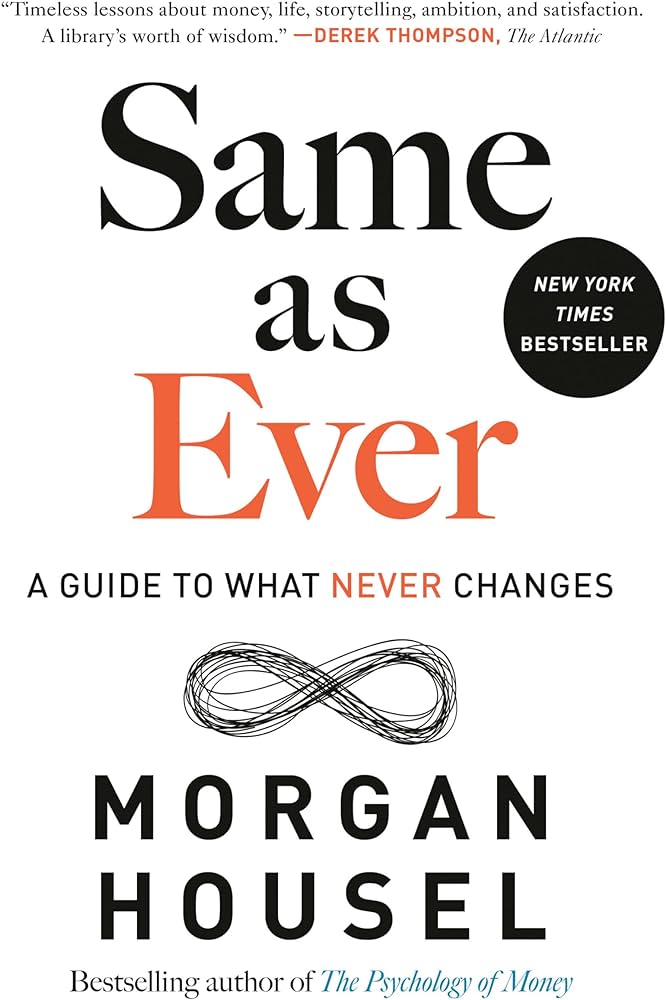
Business writer Morgan Housel is best known for his first book, The Psychology of Money, which remains high on Amazon’s list of business bestsellers more than three years after it was published.

Housel’s second book, Same as Ever, came out at the end of last year. Like Psychology of Money, he strings together an impressive array of anecdotes and quotations from wise people to support his observations about the way the world works, which this time out combine to form a helpful guide for how to use history to inform the present.

Commentary

Carmichael: Will a little stress make corporate Canada stronger?

A new book suggests innovation requires friction. The country should have no shortage in the years ahead

By Kevin Carmichael
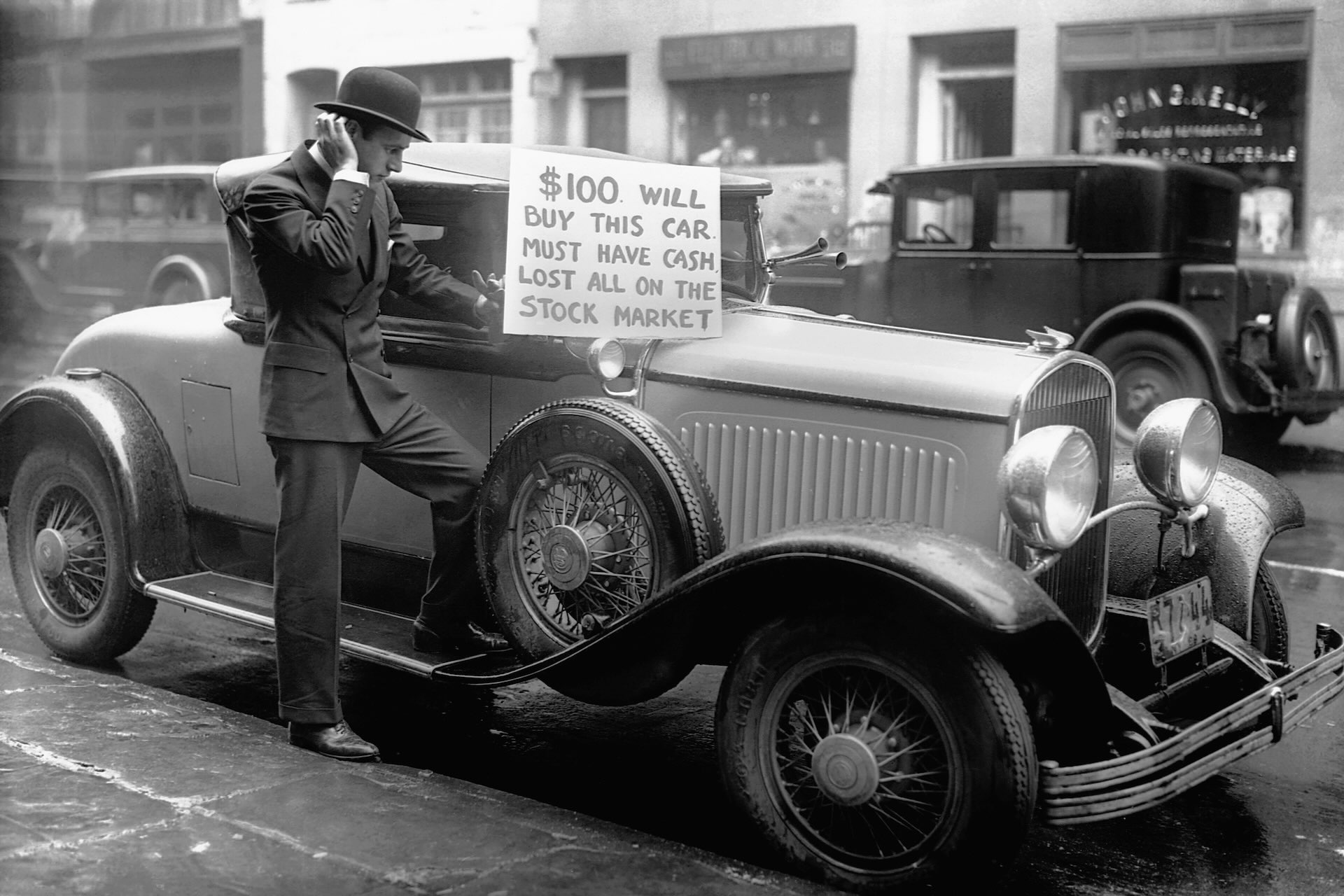
Bankrupt investor Walter Thornton tries to sell his luxury roadster for $100 cash on the streets of New York City following the 1929 stock market crash. Photo: Getty Images
Jan 10, 2024
A A
A Small A Medium A Large
Share

Gift

Share

Business writer Morgan Housel is best known for his first book, The Psychology of Money, which remains high on Amazon’s list of business bestsellers more than three years after it was published.

Housel’s second book, Same as Ever, came out at the end of last year. Like Psychology of Money, he strings together an impressive array of anecdotes and quotations from wise people to support his observations about the way the world works, which this time out combine to form a helpful guide for how to use history to inform the present.

So far, Amazon buyers are keener on what Housel has to say about money. While the new book made the New York Times bestseller’s list for business in December, it appears to be fading fast. Housel, who got his start as a columnist at The Motley Fool and The Wall Street Journal, will understand why. The reading public has been so conditioned to respond to novelty that even a famous writer will struggle to get people to read a catalogue of the things that never change. 

The past isn’t prologue. Shopify isn’t destined to fail because Nortel Networks and Research in Motion failed. There are echoes throughout time because human behaviour changes so slowly. We respond to things today in much the same way our ancestors did thousands of years ago. That fact makes Housel’s book a useful guide for anyone who cares to get an edge in this era of technological, demographic and geopolitical disruption. It’s going to be chaotic. History is there to help. 

Related Articles

A factory worker holds a clear sheet with holes in it.

Carmichael: Canada’s economy needs a narrative vibe shift

By Kevin Carmichael
Federal Reserve chair Jerome Powell stands behind a blue podium.

Carmichael: Why interest-rate cuts will come to the U.S. before Canada

By Kevin Carmichael

Penguin Random House sent me a copy of Same as Ever at about the same time The Logic was ramping up work on our year-in-review and year-in-preview packages. It’s difficult to assess Canada’s prospects for 2024. The economy could slide into a mild recession before the winter is over, but that would be much better than what most forecasters were contemplating a year ago. In other words, all things considered, the economy is fine. 

Fine is pretty good compared with where we’ve been, and the damage that the combination of surging inflation and a historic interest-rate spike might have caused. Though the worst-case scenario—a proper recession that results in a spike in unemployment—remains a possibility, with inflation easing and central banks talking about interest-rate cuts, a soft landing is the most probable outcome. 

But how do you feel about fine being as good as it gets? 

Canada is a longshot to emerge from the disruption ahead as one of the winners. Maybe the all-in bets that the federal government, Ontario and Quebec made on electric vehicles in 2023 will pay off like the unpopular politicians who placed them have promised. Maybe the oilpatch has ambitions grander than pumping every last barrel. Maybe regulators in the United States and Europe will force Amazon, Alphabet, Meta and Microsoft to make room for AI upstarts such as Toronto’s Cohere and Quebec City’s Coveo. Maybe Beijing and Washington will call a truce in their Great Power struggle, NATO will provide Ukraine with the weapons and technology it needs to push Russia’s army off its territory and someone will find a path to lasting peace in the Middle East. 

You’ll notice that Canada’s prospects depend on things largely outside its control. Even the bet on electric vehicles is contingent on vehicle and battery makers whose ultimate allegiance is to other countries. But that’s what short-term thinking and complacency gets you. It turns out you need more than free-trade agreements to facilitate trade—you need a fully funded military, too. Technology is power and for too long Canada shrugged as its best tech was commercialized elsewhere. Shopify is widely admired, but it says something about Canada’s ambitions when its entry in the global tech race is a company that makes it easier to buy stuff. 

How did we end up here? Housel has this observation in a chapter about how a little stress makes you stronger: “When everything is great—when wealth is flush, when the outlook is bright, when responsibility is low, and threats appear gone—you get some of the worst, dumbest, least-productive human behaviour.”

That’s a pretty good description of Canada over the past couple of decades. We called ourselves a “trading nation,” even though about three-quarters of that trade amounted to moving goods to the world’s biggest economy. We ignored the longer-term implications of climate change and assumed short-term worry about peak oil would be enough to make us an energy superpower. We assumed Washington would handle global security on behalf of the world’s democracies and underfunded our military. We avoided the worst of the global financial crisis, then took advantage of low interest rates to orchestrate a housing boom that rivalled the one that nearly caused a depression in the United States.

It became too easy for companies and their shareholders to make money in Canada. The profit margins of non-financial companies here were close to nine per cent of operating revenue in 2022, compared with about four per cent in the late 1980s, according to calculations by CIBC economists Benjamin Tal and Ali Jaffery. Those margins likely were influenced more by global trends than by C-suite decisions. Tal and Jaffery estimate that muted wage growth, globalization and the ability to get away with outsized markups were the biggest factors. All those trends have now reversed, meaning profits will come harder in the future.

“Canadian firms will have no choice but to make drastic changes,” Tal and Jaffrey said in a report they published last month. The country’s most important companies have provided little evidence lately that they are up for leading any kind of charge. Maybe that’s because they haven’t had to. 

Gift the full article

Housel’s collection of historical anecdotes suggests innovation requires friction. For example, U.S. productivity surged during the Great Depression, as did high school graduation rates, because there were no jobs for teenagers. The result, according to Housel: the U.S. won the Second World War because it entered the 1940s as an industrial powerhouse with a newly enlarged pool of educated workers. 

“The fear, the pain, the struggle are motivators that positive feelings can never match,” he wrote. Let’s hope that’s the same as ever, because the years ahead will be scary and painful. 

Kevin Carmichael is The Logic’s economics columnist and editor-at-large. He has spent more than two decades covering economics, business and finance for outlets including Bloomberg News, The Globe and Mail and the Financial Post, where he also served as editor-in-chief.
#commentary #economy #Morgan Housel

Loading...

Thanks for sharing!

You have shared 5 articles this month and reached the maximum amount of shares available.

Close
This account has reached its share limit.

If you would like to purchase a sharing license please contact The Logic support at [email protected].

Close
Want to share this article?

Upgrade to all-access now

Close
Gift the full article!

You have gifted 0 article(s) this month and have 5 remaining.

Copy link and gift
Copy Link
Email to a friend
Send Email
Gift on Social Media

Recipients will be able to read the full text of the article after submitting their email address. They will not have access to other articles or subscriber benefits.

Photo: Getty Images

Most Popular This Week

Andrew Forde, wearing a beige tweed blazer, black slacks and a white sweater, speaks on a stage at the Elevate conference in Toronto with three large blue screens in the backdrop. One screen displays the session topic, AI, another displays the logos for sponsors KPMG and Google, and a third screen depicts a photo of a stop sign covered in stickers. The stop-sign photo is labelled, “Stickers that beat supercomputers.”
News

KPMG’s AI whisperer says some Bay Street firms are falling into a productivity trap

By Anita Balakrishnan
The Big Read

ApplyBoard faces a reckoning as Canada’s immigration boom turns into a bust

By Claire Brownell and David Reevely
A shot of Anthony Hu in a semi-dark office, with his face illuminated by two computer screens.
The Big Read

Anthropic’s Mythos cracked software open like an egg. It’s just the beginning

By David Reevely
Susan Hawkins, chief executive officer of Payments Canada gestures with her hands as she speaks on stage in front of black screen at the Payments Canada Summit in Toronto.
Exclusive

Not all banks and fintechs will get access to the Real-Time Rail at launch

By Claire Brownell

In-depth, agenda-setting reporting

Great journalism delivered straight to your inbox.

News

Canada’s new AI strategy aims to boost firms selling overseas

By Murad Hemmadi

Briefing

Anthropic says world needs option to slow AI development, as models learn to self-improve

By Murad Hemmadi   |   Jun 5, 2026 | 3:37 PM ET

Ottawa taps the brakes on efforts to speed up project permitting

By Laura Osman   |   Jun 5, 2026 | 2:52 PM ET

Kevin O’Leary scales back Wonder Valley Utah plans after objections from a key state legislator

By David Reevely   |   Jun 5, 2026 | 1:42 PM ET

Best business newsletter in Canada

Get up to speed in minutes with insights and analysis on the most important stories of the day, every weekday.

Exclusive events

See the bigger picture with reporters and industry experts in subscriber-exclusive events.

Membership in The Logic Council

Membership provides access to our popular Slack channel, participation in subscriber surveys and invitations to exclusive events with our journalists and special guests.

Recent Popular Stories

News

Canada’s surprise plan to buy Saab command jets leaves competitors seeking answers

By David Reevely   |   May 29, 2026
A closeup of a scale model of a jet covered in pixellated camouflage, with sensor equipment attached to the top of its fuselage. There are civilians and uniformed military personnel milling in the background.
Exclusive

Canada awards Ford $464M to make F-Series trucks in Ontario

By Murad Hemmadi, Anita Balakrishnan and Joanna Smith   |   May 7, 2026
Blurred red, white and black cars zoom down a street in front of Ford’s Oakville, Ont., assembly plant on Friday April 5, 2024.
News

European and Asian firms want a stake in Canada’s photonics factory, Joly says

By Murad Hemmadi   |   May 7, 2026
The Big Read

ApplyBoard faces a reckoning as Canada’s immigration boom turns into a bust

By Claire Brownell and David Reevely   |   May 27, 2026
Exclusive

RBC Insurance chief to depart in shakeup of key strategic role

By Chaimae Chouiekh and Anita Balakrishnan   |   May 27, 2026
Low-angle view of an RBC logo sign in front of a tall glass-and-concrete office tower, with surrounding skyscrapers visible in the background.
Exclusive

Shopify makes cuts to its operations team in latest round of layoffs

By Aleksandra Sagan   |   May 4, 2026
Tobias Lutke in a black shirt and grey jeans sitting on a couch, gesturing with both hands pinching the air as he speaks

Canada's most influential executives and policymakers are reading The Logic

  • CPP Investments
  • Sun Life Financial
  • C100
  • Amazon
  • Telus
  • Mastercard
  • bdc
  • Shopify
  • Rogers
  • RBC
  • General Motors
  • MaRS
  • Government of Canada
  • Uber
  • Loblaw Companies Limited
logic-logo

Canada's Business and Tech Newsroom

100% human-crafted journalism

Newsroom

  • News Tips
  • AI Policy
  • Editorial Disclosures
  • Story Pitches

Company

  • About Us
  • Terms of Service
  • Privacy Statement
  • Corporate Information

Contact

  • Contact Us
  • Advertise
  • FAQs
  • Work at The Logic

© 2026 The Logic Inc. All Rights Reserved.

Trusted by leaders

Error

Account creation failed.

Please email us at [email protected].

Create Account

[wppb-register form_name=”cozmo-registration-form-for-modal”]

I do have an account
Login
or

[wppb-login]

I don’t have an account