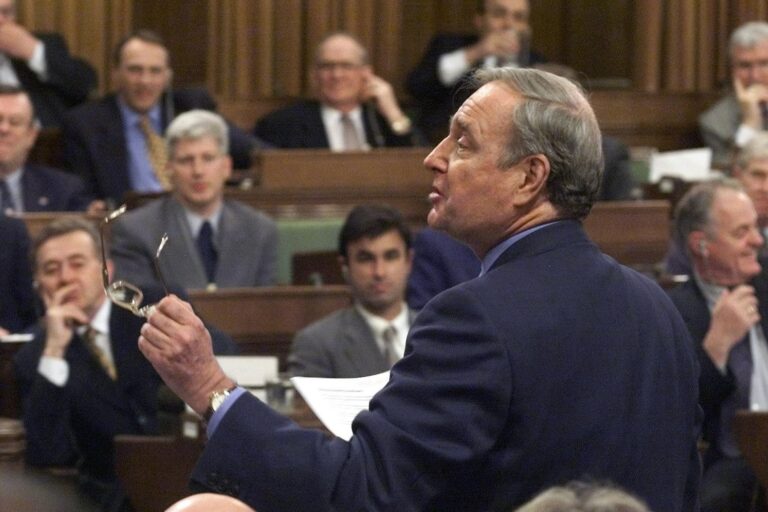
The press conference was over, but Bank of Canada governor Tiff Macklem had more to say. “There’s a couple of things you didn’t ask us about that I wanted to comment on,” Macklem said at the end of a 40-minute session after the central bank opted to leave the benchmark interest rate unchanged on June 4.
Skip to content
Commentary
Carmichael: We don’t have time for a climate finance slowdown
The politics have gotten more complicated, but the threat of climate change still makes everything else seem small
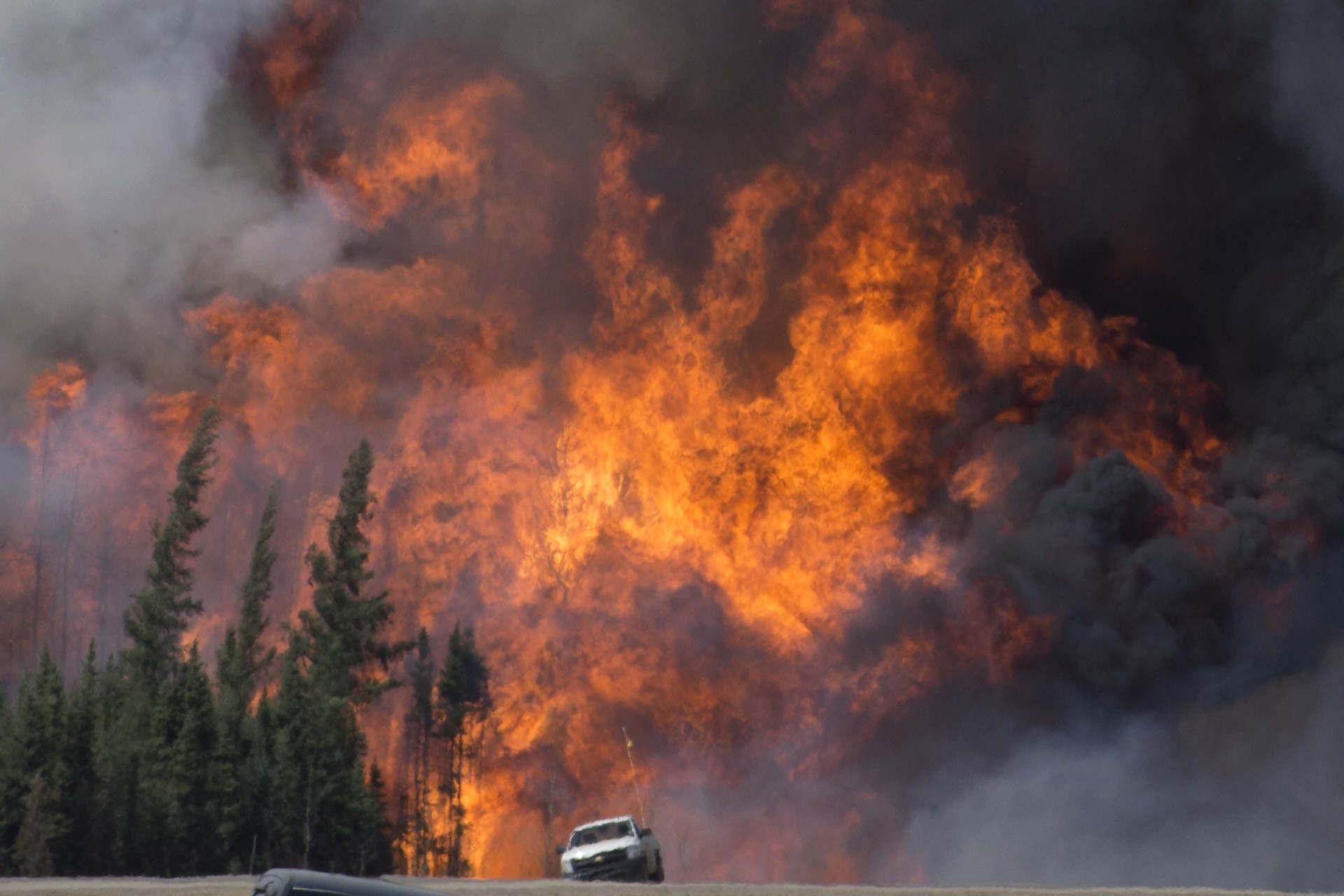
A wildfire rips through a forest south of Fort McMurray, Alta. on Highway 63 on May 7, 2016. Photo: The Canadian Press/Jonathan Hayward
The press conference was over, but Bank of Canada governor Tiff Macklem had more to say. “There’s a couple of things you didn’t ask us about that I wanted to comment on,” Macklem said at the end of a 40-minute session after the central bank opted to leave the benchmark interest rate unchanged on June 4.
One of those things was who the central bank was backing in the Stanley Cup Final, set to begin later that evening. “Go Oilers,” Macklem exclaimed a little too loudly, given how things ended. “Let’s bring home the Stanley Cup!”
The other thing Macklem wanted to comment on was the forest fires that were ravaging the Prairies. “We are watching the devastating forest fires in Western Canada, and we are very much thinking about the people whose lives are being terribly impacted,” he said.
“We very much hope these fires are brought under control, and we thank and salute the brave firefighters who are doing their very best to do that,” Macklem continued. “These fires are having an economic impact. It’s too early to give you an estimate. The situation is clearly pretty fluid.”
Related Articles

The most recent winners of the Nobel Prize in economics believe institutions dictate prosperity, and that institutions are shaped by politics. They say history is contingent, and the choices made in certain moments determine where nations land on a spectrum of success and failure. Canada is in such a moment, and its leaders have begun making what could be a series of consequential decisions.
What decisions do we make when every day feels like a Dr. Seuss story? I’ll speak for myself. As the northern reaches of Western Canada burned, I had used my turn at the press conference to ask Macklem what he meant when he said he’d need proof that inflation was “contained” before he’d consider rate cuts.
The impulse to squeeze a central bank’s every utterance for hidden meaning is a condition of my having learned this job during a period when monetary policy was often the only variable economic actors had to anticipate. Now, it’s maybe one of a dozen, but my habit still is to assume that everything starts with interest rates.
Monetary policy can’t stop forest fires, but there would have been a way to engage Macklem on the subject. In the spring of 2018, former finance minister Bill Morneau appointed Macklem, who was dean of the Rotman School of Management at the time, to lead a study on how the government could marshal the finance industry to help fight climate change. Macklem and the other three members of the expert panel delivered an interim report that fall and a final report in June 2019.
Macklem and his co-authors anticipated that environmental calamity would become commonplace. “The effects of climate change are upon us,” they wrote six years ago. “Shifting weather patterns are amplifying the natural risks we already face—floods, storms, heat and drought—leading to more frequent and extreme loss events.”
They left Morneau with 15 “practical, concrete” suggestions. Given the peril, maybe Macklem has thoughts on what’s become of his work on climate. One of the recommendations led to the creation of the Sustainable Finance Action Council (SFAC), which spent three years trying to figure out what it would take to get the finance industry to price the threats and opportunities inherent in climate change. That grunt work was mostly for naught. “There’s a whole website of recommendations that stand unimplemented,” said Barbara Zvan, chief executive of University Pension Plan Ontario, who served on both Macklem’s expert panel and the SFAC.
Let’s go back to 2018. Two years earlier, fire had obliterated Fort McMurray. Climate change was the Taylor Swift of existential threats. That is, while it was possible to worry about things such as extreme income inequality and China’s intentions, one terror stood above all others. That made it easier to focus the mind, and yet we accomplished so little. “There’s a slowdown,” said Delia Cristea, chief operating officer at Power Sustainable, the cleantech investor backed by Power Corporation of Canada. “The direction of travel remains the same, [but] the road is a bit bumpier for some.”
That slowdown is linked to the MAGA-inspired political backlash against climate policy and the failure of the previous government to channel all of its studying into action. Now, the politics are even more complicated. Climate change has to share the stage with pandemics, the cost of living, political polarization, war and the threat of U.S. annexation.
And let’s not forget technological disruption, which includes not only artificial intelligence, but also quantum technology that could force a “complete rewrite of what’s possible,” and that is on the cusp of a “Gutenberg moment,” Evan Solomon, the minister of AI and digital innovation, said in a video message sent to the Quantum Now conference in Montreal on Thursday.
That’s both exciting and terrifying. But where does it leave the climate? It might depend on our ability to think differently.
Climate change isn’t just an issue for environment ministers, cleantech investors and specialized reporters. “Planet is an all-systems issue, a systemic issue, an all-issues issue,” Cristea said.
We need to get comfortable with complexity, figuring out how it all fits together. How can whatever money the federal government spends on quantum be used to advance the fight against climate change? What is causing investors to back away from net-zero commitments? Why is there such a political divide over something that affects everyone?
The answer, if there is one, is somewhere in that maze. Time to start looking.
Kevin Carmichael is The Logic’s economics columnist and editor-at-large. He has spent more than two decades covering economics, business and finance for outlets including Bloomberg News, The Globe and Mail and the Financial Post, where he also served as editor-in-chief.



Loading...
Thanks for sharing!
You have shared 5 articles this month and reached the maximum amount of shares available.
CloseThis account has reached its share limit.
If you would like to purchase a sharing license please contact The Logic support at [email protected].
CloseGift the full article!
You have gifted 0 article(s) this month and have 5 remaining.
Recipients will be able to read the full text of the article after submitting their email address. They will not have access to other articles or subscriber benefits.
Photo: The Canadian Press/Jonathan Hayward
Most Popular This Week




In-depth, agenda-setting reporting
Great journalism delivered straight to your inbox.
Commentary
Carmichael: Being boxed in will help Canada focus on what matters
Briefing
Rio Tinto gets nearly $165M in additional federal funds for Quebec aluminum
U.S. to lift tariffs on some Canadian products crucial to Maine: Collins
Carney warns of tech dependence after Starlink disruptions in Ukraine
Best business newsletter in Canada
Get up to speed in minutes with insights and analysis on the most important stories of the day, every weekday.
Exclusive events
See the bigger picture with reporters and industry experts in subscriber-exclusive events.
Membership in The Logic Council
Membership provides access to our popular Slack channel, participation in subscriber surveys and invitations to exclusive events with our journalists and special guests.






