Skip to content

Canada's Business and Tech Newsroom

  • Professional Subscription
  • Partnerships & Advertising
  • Licensing & Syndication
Log In Subscribe
Welcome,
  • My Account
  • Log Out
  • Business
  • Tech
  • National
  • The Big Read
  • Briefings
  • Commentary
Search
Log In Subscribe
Welcome,
  • My Account
  • Log Out
Commentary

Carmichael: Canada’s bankers face a new test of character

A key pillar of Mark Carney’s book Value(s) is his contention that capitalism needs more government because markets are amoral. Recent history is on his side. Leaving profit-maximizing companies and welfare-maximizing consumers to pursue their desires unchecked led to a massive financial crisis, a climate crisis and social networks that addict children, hurt our mental health and undermine democracy.

Carney, who shared the 2021 National Business Book Award, argues that liberal democracies lost their way by forgetting that capitalism was meant to be anchored by moral values. Milton Friedman effectively put an end to that idea in 1970 with his essay on why the only values managers should worry about are profit margins, stock prices and dividend cheques. By the late 1980s, the dominant ethos of business was the pursuit of wealth, so much so that Oliver Stone’s film Wall Street, a critique of ruthless corporate raiders that entrenched “greed is good” in the lexicon, ended up inspiring a generation of bankers.

Commentary

Carmichael: Canada’s bankers face a new test of character

OSFI now has the authority to judge the integrity of the country’s financial services leaders. Government overreach or a helpful check?

By Kevin Carmichael
OSFI superintendent Peter Routledge, wearing a black suit, sits on a chair and speaks to a panel moderator wearing a blue suit.
OSFI superintendent Peter Routledge speaks at a Scotiabank event on Sept. 7, 2023. Photo: OSFI | X
Feb 3, 2024
A A
A Small A Medium A Large
Share

Share

A key pillar of Mark Carney’s book Value(s) is his contention that capitalism needs more government because markets are amoral. Recent history is on his side. Leaving profit-maximizing companies and welfare-maximizing consumers to pursue their desires unchecked led to a massive financial crisis, a climate crisis and social networks that addict children, hurt our mental health and undermine democracy.

Carney, who shared the 2021 National Business Book Award, argues that liberal democracies lost their way by forgetting that capitalism was meant to be anchored by moral values. Milton Friedman effectively put an end to that idea in 1970 with his essay on why the only values managers should worry about are profit margins, stock prices and dividend cheques. By the late 1980s, the dominant ethos of business was the pursuit of wealth, so much so that Oliver Stone’s film Wall Street, a critique of ruthless corporate raiders that entrenched “greed is good” in the lexicon, ended up inspiring a generation of bankers.

Related Articles

Carmichael: BDC launches mental health program for small business owners

By Kevin Carmichael

Carmichael: The inflation struggle proves the case for the Bank of Canada’s independence

By Kevin Carmichael

Alas, it’s easier to critique the moral emptiness of modern capitalism than to do something about it. A decade after the Great Recession, the banks that caused it had paid more than US$320 billion in fines, but only one banker from the U.S. or the U.K. had gone to jail. The ESG movement has stoked a political backlash against “woke capitalism,” blunting the Business Roundtable’s embrace of stakeholder capitalism in 2019.

If societies are unhappy with the way business conducts itself, regulation remains the most effective way to curb capitalism’s ethical shortcomings. With little fanfare, Canada’s banking regulator has gone about doing something to that effect. 

Earlier this week, the Office of the Superintendent of Financial Institutions published integrity guidelines that, among other things, give OSFI the authority to pass judgment on the character of the leaders of the banks and insurance companies that it regulates.

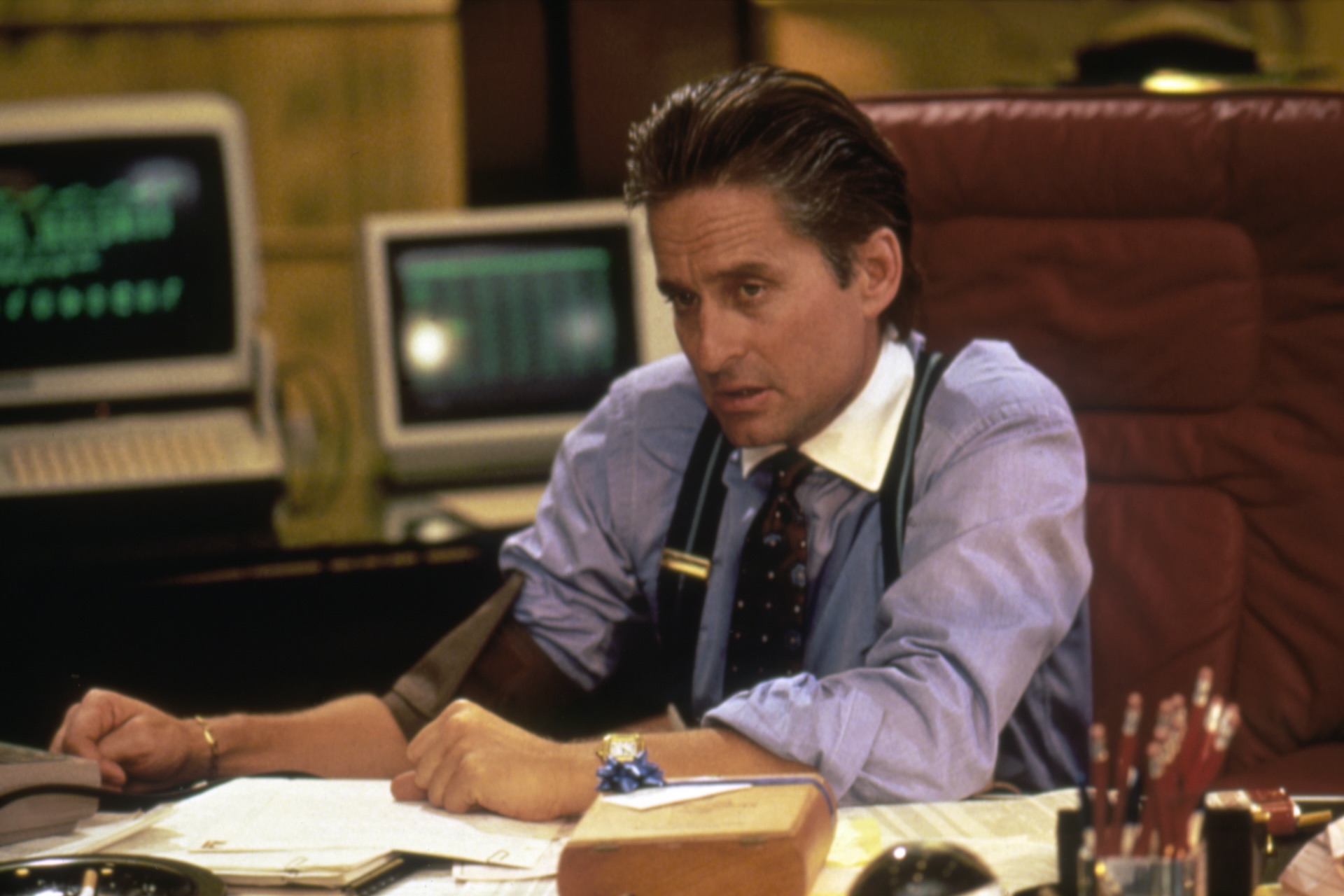
In effect, the regulator has decided that Gekko-inspired bankers represent a threat to financial stability, making character a risk vector that needs oversight. 

“The way people behave depends to an extent on their character,” the guidelines state. “Responsible persons and leaders who behave honestly and responsibly demonstrate elements of good character. The more senior someone is in an organization, the more power and influence they typically wield. It is, therefore, particularly important that responsible persons demonstrate integrity through their actions, behaviours, and decisions.”

Gordon Gekko, a character played by Michael Douglas in the film Wall Street, sits at a desk with papers strewn about. He has greased-back brown hair and wears a blue button-down shirt, a reddish-brown tie, suspenders and a gold watch. Computers showing stock prices are in the background.
Michael Douglas playing Gordon Gekko on the set of Wall Street. Photo: Sunset Boulevard/Corbis via Getty Images

It’s hard to read that and not worry about government overreach. You can use math to estimate how much cash a bank should keep in reserve to keep it from failing, but how do you measure character? Assuming you could thread society’s core beliefs into an ethical standard, should a liberal democracy’s banking regulator have the right to overrule a board’s hiring decisions? 

Well, maybe. The financial industry hasn’t covered itself in glory in recent decades, and though examples of Canadian malfeasance are rare, the stakes warrant extraordinary levels of diligence. A banking licence comes with privileges, such as taxpayer-backed deposit insurance and, in the case of the biggest lenders, an implicit guarantee of a government bailout should one ever be needed. The banks are special, and therefore warrant special attention. The lax approach of American and British regulators contributed to one of the worst recessions in history. But there’s an opportunity cost to punishing bad behaviour after the fact instead of trying to prevent it. Carney wrote that the capital that the banks used to pay their fines could have supported around US$5 trillion in lending to households and businesses.  

Peter Routledge, the superintendent, insists he isn’t some woke renegade. In an interview, he said the integrity guidelines, which also include measures to protect banks from foreign interference, represent OSFI’s best attempt to implement Parliament’s overhaul of the Office of the Superintendent of Financial Institutions Act last year. The industry had time to review draft guidelines and no one appears to have complained too loudly. Nonetheless, Routledge said, the regulator will apply the new standards carefully and he is open to adjustments. 

“I can’t mention names, but there have been institutions that have been undermined by character issues,” Routledge said. He clarified that none of the bad actors on his mind were under his jurisdiction, but that doesn’t mean it could never happen here. “I can’t ignore it,” he said.

If the guidance sounds a little abstract, that’s because it is. Unlike the U.S., Canada’s approach to financial regulation is to set out principles rather than publish thousands of pages of prescriptive rules. The idea is that a rules-based approach inevitably creates loopholes that bad actors are adept at finding, while a principles-based approach leaves more room for regulatory discretion. OSFI will want to know what financial institutions did to ensure they hired leaders of good character, but it isn’t going to provide a checklist of the moral virtues that it thinks make for an ethical banker.

“We don’t give them the Ten Commandments,” Routledge said. “We won’t define it. We’ll just say to the boards, ‘We expect you to define it.’” 

Still, it might be time to watch Wall Street as its director intended: a morality tale, not a how-to. 

Kevin Carmichael is The Logic’s economics columnist and editor-at-large. He has spent more than two decades covering economics, business and finance for outlets including Bloomberg News, The Globe and Mail and the Financial Post, where he also served as editor-in-chief.

#commentary #economy

Loading...

Thanks for sharing!

You have shared 5 articles this month and reached the maximum amount of shares available.

Close
This account has reached its share limit.

If you would like to purchase a sharing license please contact The Logic support at [email protected].

Close
Want to share this article?

Upgrade to all-access now

Close
Gift the full article!

You have gifted 0 article(s) this month and have 5 remaining.

Copy link and gift
Copy Link
Email to a friend
Send Email
Gift on Social Media

Recipients will be able to read the full text of the article after submitting their email address. They will not have access to other articles or subscriber benefits.

OSFI superintendent Peter Routledge, wearing a black suit, sits on a chair and speaks to a panel moderator wearing a blue suit.

Photo: OSFI | X

Gordon Gekko, a character played by Michael Douglas in the film Wall Street, sits at a desk with papers strewn about. He has greased-back brown hair and wears a blue button-down shirt, a reddish-brown tie, suspenders and a gold watch. Computers showing stock prices are in the background.

Michael Douglas playing Gordon Gekko on the set of Wall Street.

Most Popular This Week

A head-on shot of James Neufeld seated with others at a round table in a meeting room. Eleanor Olszewski is seated to his left. There's a laptop open in front of Neufeld.
News

For this Alberta tech firm, ‘Buy Canadian’ isn’t working as advertised

By David Reevely
News

Everything you need to know about the debate over stablecoin yields

By Claire Brownell
In this photo illustration, the Manulife company logo is seen displayed on a smartphone screen.
News

Manulife and Intact buck a global trend by reporting AI returns

By Anita Balakrishnan
A photo of Daniel Sax shot through a circular piece of ironwork on a stairway balustrade. He's looking off-camera, and is wearing a dark blue jacket bearing his company's logo.
The Big Read

Mining the moon. Selling nuclear reactors. For this Canadian, it’s all part of the plan

By David Reevely

In-depth, agenda-setting reporting

Great journalism delivered straight to your inbox.

Commentary

Carmichael: Canada’s wartime economic triumph can teach us something today

By Kevin Carmichael

Briefing

Nokia to spin out space communications business through Canadian SPAC deal

By David Reevely   |   Jun 19, 2026 | 4:11 PM ET

Ontario police aren’t reporting spyware use, senior privacy official warns

By David Reevely   |   Jun 19, 2026 | 3:37 PM ET

Magna founder Stronach found guilty of indecent and sexual assault

By Anita Balakrishnan   |   Jun 19, 2026 | 3:33 PM ET

Best business newsletter in Canada

Get up to speed in minutes with insights and analysis on the most important stories of the day, every weekday.

Exclusive events

See the bigger picture with reporters and industry experts in subscriber-exclusive events.

Membership in The Logic Council

Membership provides access to our popular Slack channel, participation in subscriber surveys and invitations to exclusive events with our journalists and special guests.

Recent Popular Stories

News

Manulife and Intact buck a global trend by reporting AI returns

By Anita Balakrishnan   |   Jun 16, 2026
In this photo illustration, the Manulife company logo is seen displayed on a smartphone screen.
Commentary: Quebec Ink

Quebec just found out what not having digital sovereignty really means

By Martin Patriquin   |   Jun 8, 2026
A yellow ambulance is pictured outside of a hospital in Montreal. A red sign in the foreground reads, “Urgence / Emergency.”
News

Canada’s surprise plan to buy Saab command jets leaves competitors seeking answers

By David Reevely   |   May 29, 2026
A closeup of a scale model of a jet covered in pixellated camouflage, with sensor equipment attached to the top of its fuselage. There are civilians and uniformed military personnel milling in the background.
The Big Read

Mining the moon. Selling nuclear reactors. For this Canadian, it’s all part of the plan

By David Reevely   |   Jun 12, 2026
A photo of Daniel Sax shot through a circular piece of ironwork on a stairway balustrade. He's looking off-camera, and is wearing a dark blue jacket bearing his company's logo.
News

Canadians could demand firms delete their personal data under new privacy bill

By Laura Osman   |   Jun 15, 2026
Evan Solomon in a suit and tie, gesturing with his left hand as he speaks, Several people sit and stand behind him looking in other directions. There's an orange curtain behind him lit from above.
The Big Read

We found every data centre in Canada

By Murad Hemmadi, David Reevely, Aleksandra Sagan, Chaimae Chouiekh, Martin Patriquin and Catherine McIntyre   |   Apr 8, 2026
Four vertical slices of aerial view photos. From left, a building in downtown Toronto housing several data centres, a picture of the Albertan wilderness where the proposed Wonder Valley data centre would go, a lit-up QScale data centre in Quebec, and a data centre at a Hydro-Quebec dam.

Canada's most influential executives and policymakers are reading The Logic

  • CPP Investments
  • Sun Life Financial
  • C100
  • Amazon
  • Telus
  • Mastercard
  • bdc
  • Shopify
  • Rogers
  • RBC
  • General Motors
  • MaRS
  • Government of Canada
  • Uber
  • Loblaw Companies Limited
logic-logo

Canada's Business and Tech Newsroom

100% human-crafted journalism

Newsroom

  • News Tips
  • AI Policy
  • Editorial Disclosures
  • Story Pitches

Company

  • About Us
  • Terms of Service
  • Privacy Statement
  • Corporate Information

Contact

  • Contact Us
  • Advertise
  • FAQs
  • Work at The Logic

© 2026 The Logic Inc. All Rights Reserved.

Trusted by leaders

Error

Account creation failed.

Please email us at [email protected].

Create Account

[wppb-register form_name=”cozmo-registration-form-for-modal”]

I do have an account
Login
or

[wppb-login]

I don’t have an account