Skip to content

Canada's Business and Tech Newsroom

  • Professional Subscription
  • Partnerships & Advertising
  • Licensing & Syndication
Log In Subscribe
Welcome,
  • My Account
  • Log Out
  • Business
  • Tech
  • National
  • The Big Read
  • Briefings
  • Commentary
Search
Log In Subscribe
Welcome,
  • My Account
  • Log Out
Commentary

Carmichael: The case for building a national energy grid

Bemused? Baffled? Siemens executive Matthias Rebellius was one of those when our conversation turned to Canada’s lack of a national energy grid. 

“Every province optimizes on its own,” Rebellius said in an interview last month on the sidelines of the Conférence de Montréal. “I was surprised, and questioning whether this is the right approach.”

Commentary

Carmichael: The case for building a national energy grid

It’s not a tech problem—it’s a human one

By Kevin Carmichael
Power transmission lines and a wind turbine near Pincher Creek, Alta., in June 2024. Photo: The Canadian Press/Jeff McIntosh
Jul 6, 2024
A A
A Small A Medium A Large
Share

Share

Bemused? Baffled? Siemens executive Matthias Rebellius was one of those when our conversation turned to Canada’s lack of a national energy grid. 

“Every province optimizes on its own,” Rebellius said in an interview last month on the sidelines of the Conférence de Montréal. “I was surprised, and questioning whether this is the right approach.”

Some of you are rolling your eyes. What does this European business guy know about how federations work? Quite a lot, probably. Siemens is based in Germany, which consists of 16 states that aren’t known for consistently rowing in the same direction. EU politics are something else altogether. Yet somehow, a couple of dozen countries with deep histories of conquest and slaughter managed to string together the world’s largest synchronous electricity grid.

I asked Rebellius, a member of Siemens’ managing board, if Canada was unique in its resistance to cooperating on electricity generation. “A country of that magnitude, and the amount of energy which is being generated? I’m not aware of any other example in the world.” 

Siemens is a major builder of the infrastructure and technology that will let countries move away from fossil fuels by greening their grids. Our interview was delayed because after he appeared on stage at the conference he was mobbed by people seeking a meeting. The energy transition is happening apace. 

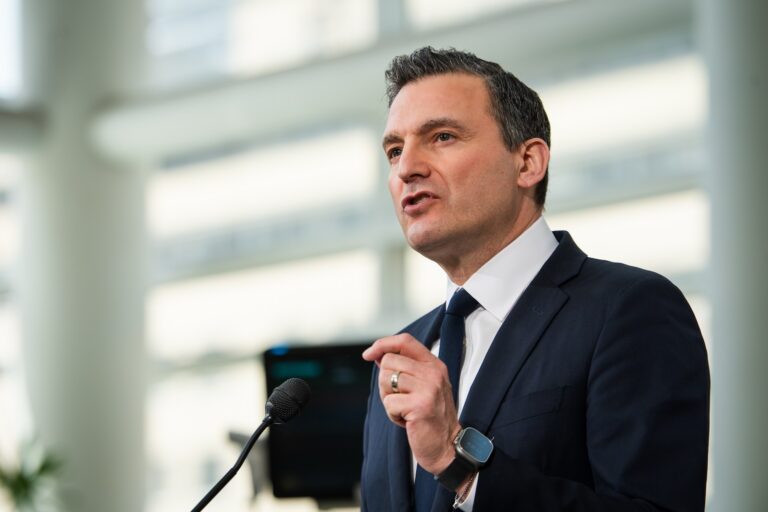
Siemens executive and managing board member Matthias Rebellius. Photo: Siemens/Handout

The question is whether that pace is fast enough. The answer almost certainly is, “No.” It’s incredible that climate change has disappeared as a subject of political urgency at the very moment that dire prophecies of killer heat waves and rolling forest fires have come true. 

Pierre Poilievre has become the country’s most popular politician on the back of four simple promises, one of which is killing the carbon tax—a policy that any future government committed to reducing greenhouse gas emissions will miss once it’s gone. Even Liberals appear less keen to talk about climate. Prime Minister Justin Trudeau told reporters on July 4 that he needed to do a better job delivering on housing, child care and dental care, according to a Politico report. The same day, Finance Minister Chrystia Freeland reeled off a similar climate-free list of priorities, Politico reported.

Related Articles

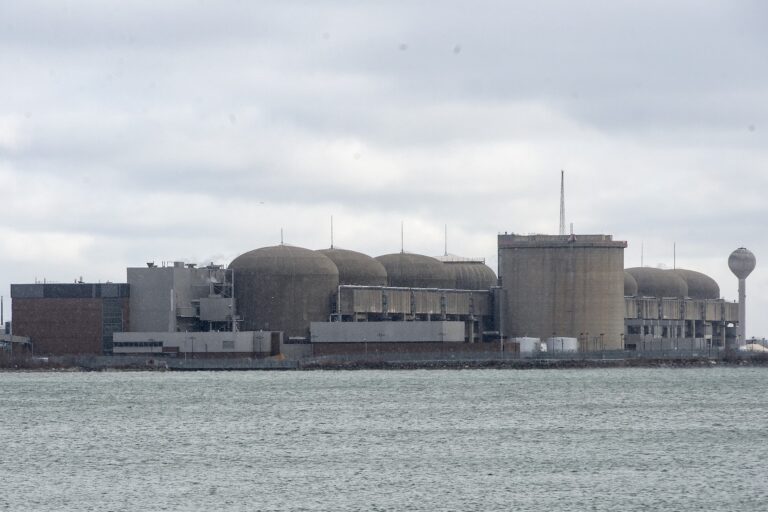
A cluster of large, concrete industrial-style buildings is visible across the waters of Lake Ontario. The complex includes seven cylindrical structures with dome-shaped tops.

Canada’s two nuclear powers battle to build nuclear power

By David Reevely
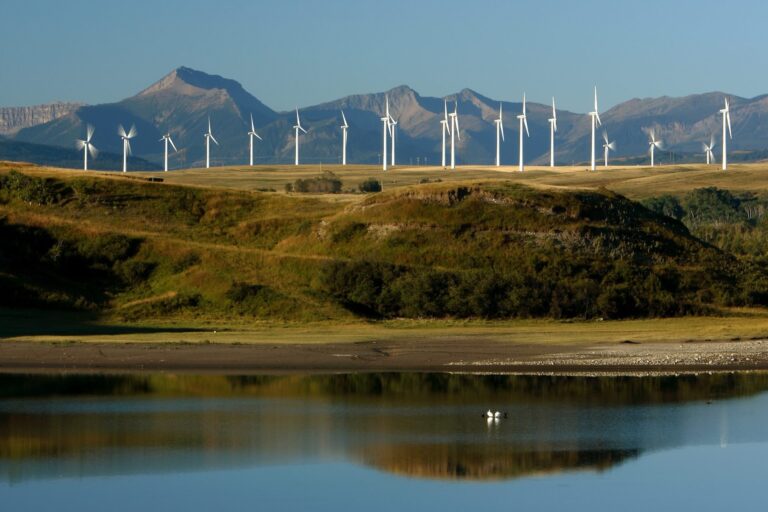
A wind farm with a bunch of windmills on a hill. In the foreground is the Oldman River and in the distance the Rocky Mountains.

Tech companies, heavy emitters drive a renewables boom in Alberta

By Jesse Snyder

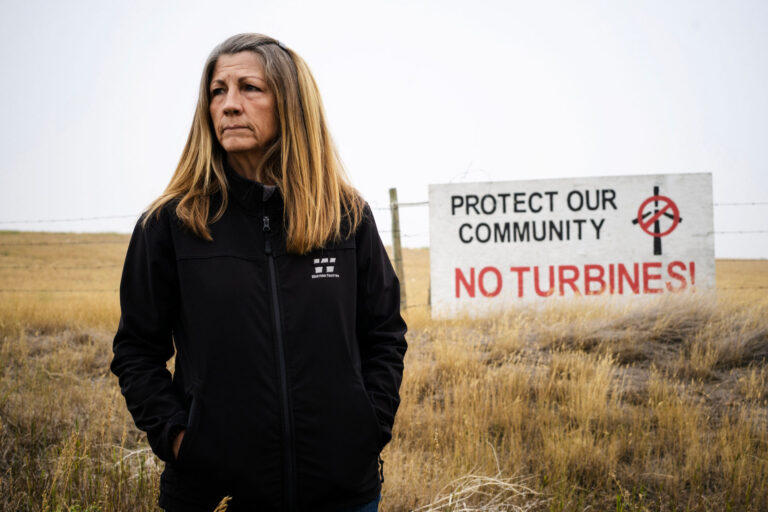
Renewables in my backyard? Alberta’s cleantech boom sparks a familiar backlash

By Jesse Snyder

That’s a bad omen for whether we can muster the political will necessary to overcome the provincial jealousies and short-termism that keep Canada from optimizing its potential. But let’s talk about building a national grid anyway. This country once built a national railway through the Canadian Shield and the Rockies. We can do hard things. 

Technology is no longer an excuse for delay. It’s ready for prime time. A podcast on Canada’s electricity grid by consultancy BBA included this observation by one expert: “All the tools are there today. We just need to collaborate to have the regulatory construct and the rules and the market services, and then the transmission built.” 

In other words, reversing climate change is no longer a technological problem. It’s a human one. 

More than 80 per cent of the Canadian grid is already emissions-free. But as the Public Policy Forum has observed, that’s deceptive. Nova Scotia only generates about a third of its power from low-carbon sources, and Alberta a mere 10 per cent because both jurisdictions rely so heavily on coal and natural gas. Those provinces and some others have a long way to travel on their own. 

Those weaknesses would be strengths if they were part of a national grid. We have all the elements required to build a stable network capable of scaling relatively quickly to an emissions-free system. 

Canada looks green because hydro made economic sense for Quebec and British Columbia before climate change was part of the calculations, and because Ontario invested in nuclear decades ago. Building new dams and nuclear plants will take time. Renewable sources such as solar and wind must be part of the answer, but they require backup for when the sun isn’t shining and the wind isn’t blowing. Fossil fuels actually facilitate the development of renewable sources because they reduce the risk of outages and contain costs in the short term. 

I think provinces get off easy when we assign responsibility for reaching the net-zero targets. So does the team of public policy advisers at law firm Bennett Jones, a group that includes former British Columbia premier Christy Clark and former Alberta premier Jason Kenney. The firm’s latest economic outlook is mostly about the productivity problem, but the authors went out of their way to make the point that the grid will need to double to match demand from a net-zero economy. “The federal government has introduced some policy instruments to support the effort,” the report said. “Provinces must drive planning and execution as a matter of priority.”

There’s little evidence that Canada’s premiers are interested in national projects. Serge Dupont, one of the lead authors of the Bennett Jones analysis, advised de-emphasizing the construction of an east-west grid for now because sticker shock at the costs involved could paralyze whatever political momentum currently exists to back green energy projects. Given the widening gap between the demand and supply curves, the best short-term strategy is for each province to focus on building up its capacity, while maybe seeking ways to cooperate on renewable energy projects near provincial borders, he said. 

Siemens is working on such a project with New Brunswick Power and Nova Scotia Power—backed by federal money, of course. Siemens is ready to do more. Alas, we’re not.

Kevin Carmichael is The Logic’s economics columnist and editor-at-large. He has spent more than two decades covering economics, business and finance for outlets including Bloomberg News, The Globe and Mail and the Financial Post, where he also served as editor-in-chief. 

#commentary #economy

Sponsored Content

How to shift your workforce from AI experimentation to adoption

By Jessica Aftimus Rosa

The real-world economic offshoots of sovereign AI

By Deborah Aarts
Illustration of a plane flying above a mailbox

Increasing healthcare access across Canada

By Deborah Aarts
Paid promotional content

Loading...

Thanks for sharing!

You have shared 5 articles this month and reached the maximum amount of shares available.

Close
This account has reached its share limit.

If you would like to purchase a sharing license please contact The Logic support at [email protected].

Close
Want to share this article?

Upgrade to all-access now

Close
Gift the full article!

You have gifted 0 article(s) this month and have 5 remaining.

Copy link and gift
Copy Link
Email to a friend
Send Email
Gift on Social Media

Recipients will be able to read the full text of the article after submitting their email address. They will not have access to other articles or subscriber benefits.

Photo: The Canadian Press/Jeff McIntosh

Siemens executive and managing board member Matthias Rebellius.

Most Popular This Week

News

Tangerine plans new products as it reinvents itself as a tech-powered challenger bank

By Claire Brownell
A shot across an expanse of low forest of a rocket launching into blue skies.
News

People hired to promote Canadian rocket firm didn’t actually help, company alleges in lawsuit defence

By David Reevely
News

Ottawa taps Patrick Pichette to lead new digital transformation agency

By Murad Hemmadi
News

AI giants sign federal pledge that Canadian data centres will bring benefits

By Murad Hemmadi

In-depth, agenda-setting reporting

Great journalism delivered straight to your inbox.

News

EDC brings its big balance sheet and contact book to the AI business

By Murad Hemmadi

Briefing

Cohere in talks to raise as much as US$3B: Report

By Murad Hemmadi   |   Sep 11, 2026

Stellantis agrees to sell Ontario factory to armoured-vehicle maker Roshel

By Catherine McIntyre   |   Sep 11, 2026

Fullscript ownership changes hands with two new private equity firms taking control

By Catherine McIntyre   |   Sep 11, 2026

Best business newsletter in Canada

Get up to speed in minutes with insights and analysis on the most important stories of the day, every weekday.

Exclusive events

See the bigger picture with reporters and industry experts in subscriber-exclusive events.

Membership in The Logic Council

Membership provides access to our popular Slack channel, participation in subscriber surveys and invitations to exclusive events with our journalists and special guests.

Recent Popular Stories

News

Ottawa taps Patrick Pichette to lead new digital transformation agency

By Murad Hemmadi   |   Sep 3, 2026
News

Tangerine plans new products as it reinvents itself as a tech-powered challenger bank

By Claire Brownell   |   Sep 8, 2026
News

AI giants sign federal pledge that Canadian data centres will bring benefits

By Murad Hemmadi   |   Sep 3, 2026
News

Dominic Barton will keep role at Rio Tinto while chairing federal investment agency

By Anita Balakrishnan   |   Sep 3, 2026
News

People hired to promote Canadian rocket firm didn’t actually help, company alleges in lawsuit defence

By David Reevely   |   Sep 4, 2026
A shot across an expanse of low forest of a rocket launching into blue skies.
News

Trump ups trade war stakes with bans on Canadian booze and other imports

By Joanna Smith   |   Sep 8, 2026
Canadian and U.S. flags wave beside Gordie Howe International Bridge under a clear blue sky.

Canada's most influential executives and policymakers are reading The Logic

  • CPP Investments
  • Sun Life Financial
  • C100
  • Amazon
  • Telus
  • Mastercard
  • bdc
  • Shopify
  • Rogers
  • RBC
  • General Motors
  • MaRS
  • Government of Canada
  • Uber
  • Loblaw Companies Limited
logic-logo

Canada's Business and Tech Newsroom

100% human-crafted journalism

Newsroom

  • News Tips
  • AI Policy
  • Editorial Disclosures
  • Story Pitches

Company

  • About Us
  • Terms of Service
  • Privacy Statement
  • Corporate Information

Contact

  • Contact Us
  • Advertise
  • FAQs
  • Work at The Logic

© 2026 The Logic Inc. All Rights Reserved.

Trusted by leaders

Error

Account creation failed.

Please email us at [email protected].

Create Account

[wppb-register form_name=”cozmo-registration-form-for-modal”]

I do have an account
Login
or

[wppb-login]

I don’t have an account