The federal government has promised new regulations that will require online platforms like Facebook and YouTube to remove illegal content, or face penalties. But opposition MPs and some experts say digital-trade provisions in USMCA limit Canada’s ability to make internet policy, or hold Big Tech accountable for the spread of such material, and its consequences.
Skip to content

News
USMCA could limit Canada’s ability to regulate online platforms, warn opposition MPs and experts
Deputy Prime Minister Chrystia Freeland and USMCA lead negotiator Steve Verheul appear before the House of Commons trade committee in February 2020. Photo: THE CANADIAN PRESS/Adrian Wyld
The federal government has promised new regulations that will require online platforms like Facebook and YouTube to remove illegal content, or face penalties. But opposition MPs and some experts say digital-trade provisions in USMCA limit Canada’s ability to make internet policy, or hold Big Tech accountable for the spread of such material, and its consequences.
Talking Point
Experts and opposition MPs warn USMCA limits Canada’s ability to make its own internet policy, amid a growing international push against the kind of broad immunity measures offered by the U.S.’s increasingly controversial Section 230—on which a portion of the trade deal is based. Ottawa disputes that reading, saying USMCA’s provisions that prevent governments from holding online platforms liable for content their users post won’t stop it from regulating the tech giants.
Under USMCA’s digital-trade chapter, countries can’t make rules holding online platforms liable for third-party material they distribute or make available, effectively shielding platforms from legal responsibility for the content their users post. U.S. tech lobby groups like the Internet Association and the Computer and Communications Industry Association—which both count Amazon, Facebook, Google, Pinterest and others among their members—pushed for the inclusion of such a provision during the negotiations to update NAFTA. The measure that made it into USMCA largely mirrors Section 230 of the 1996 U.S. Communications Decency Act, which industry organizations say contributed to the tech sector’s growth in the U.S.
The Liberal government has promised new regulations on social media platforms, starting with a requirement to take down illegal content—such as hate speech, terrorist propaganda and child exploitation—within 24 hours at peril of “significant penalties.” It’s also developing policy on the spread of disinformation online.
Ottawa insists the adoption of USMCA—which Parliament is currently considering—won’t change that. The deal’s digital-trade provisions “will not affect Canada’s ability to regulate internet platforms, including its ability to remove harmful content and enforce regulations,” said Katherine Cuplinskas, press secretary to Deputy Prime Minister Chrystia Freeland, who led the negotiations.
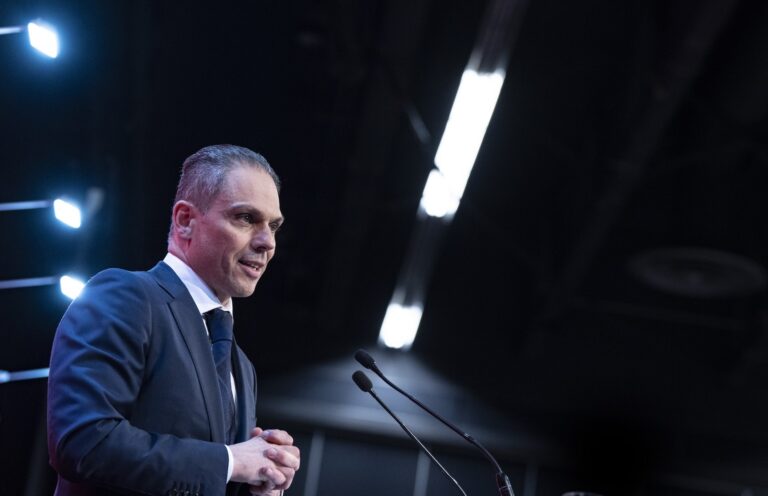
Opposition members disagree. Conservative industry critic Michelle Rempel Garner does not support the government’s plans, saying it should let law enforcement and the courts enforce existing laws on hate speech, libel and other illegal behaviour; in October 2015, for example, a Toronto man was convicted of criminally harassing and threatening the MP on Twitter. But she expressed concern that USMCA limits Canada’s regulatory options on platform liability and other digital trade issues. “We’ve hamstrung ourselves before we’ve had the conversation on the scope of who is liable,” she said.
All three countries have committed to an automatic six-year review of USMCA, and Rempel Garner said Canadian policymakers need to be ready to evaluate its digital-trade provisions. In February, the House industry committee, on which she sits, called for the government to analyze how the deal’s platform-liability measures will impact its regulatory proposals and review other technology provisions within a year of the deal taking effect.
NDP MP Charlie Angus also said “safe harbour” provisions such as those in USMCA and the U.S.’s Section 230 should be revisited. “We accepted the bogus argument that [online platforms] are just dumb pipes,” he said. “We live in a dramatically changed world now, because it’s a machine-driven AI that drives YouTube, [or] what you see on Facebook.” But he said the Liberals’ takedown proposal—for which the House of Commons’ ethics committee, of which he is a member, has long advocated—is insufficient. “It’s whack-a-mole if we have to keep going and finding this video or that video that is hate-driven or showing a terrorist act,” he said, noting that USMCA also limits governments’ access to platforms’ algorithms, which he said are responsible for the spread of such content.
A takedown law such as the one the Liberals have proposed “would seem to violate Section 230 as it’s practiced now in the United States,” said Adam Candeub, a law professor at Michigan State University, although he added Canada would have “some wiggle room” under USMCA based on how it implements such a measure.
The government did not answer The Logic’s questions about which country had proposed the online platform liability provisions or why Canada had agreed to them. But Ottawa’s trade negotiators considered previous Canadian court decisions in their goals for the deal’s digital-trade provisions, according to a government source who requested anonymity because they were not authorized to speak publicly.
Section 230 has come under renewed scrutiny from policymakers from both major U.S. parties and some major companies are increasingly suggesting safe-harbour provisions need to be revisited. Republican Senator Ted Cruz opposed Section 230 on the belief that online platforms are censoring conservative messages, while Democrat counterpart Mark Warner argued in a February speech that they’ve used it as a shield against tackling malicious behaviour. In the December 2019 negotiations with the Trump administration over passing the USMCA, House Speaker Nancy Pelosi unsuccessfully tried to remove the deal’s liability-limiting language. Meanwhile, U.S. corporate giants like IBM and Disney have lobbied to limit Section 230 domestically, or the inclusion of similar provisions in trade deals.
Lawmakers in other countries are also looking at USMCA as an example of what to avoid. In February, British MP Damian Collins—a key member of the international grand committee of parliamentarians examining online platforms—said he would urge the U.K.’s Conservative government not to allow Section 230-like provisions in any post-Brexit trade deal with the U.S.
Twitter declined to comment on the USMCA safe-harbour provisions or Ottawa’s regulatory proposals. Alexandra Klein, a Google Canada spokesperson, directed The Logic to an April 2019 blog post where a company government relations executive wrote the deal “allows for platform-based trade, and also empowers internet platforms to combat harmful content online and fight piracy.”
“We applaud the efforts of the U.S., Mexican, and Canadian governments in finalizing this agreement, which sets a global standard for addressing the challenges of the digital economy,” said Meg Sinclair, head of communications for Facebook Canada.
Candeub doesn’t believe limiting or changing platform immunity will necessarily damage internet freedom, as some tech groups have suggested. “You could say it’s really important for smaller firms [to] develop without the fear of litigation,” he said. “[But] at this point, it really seems to be just a question of whether Big Tech will have more liability or not.”



Loading...
Thanks for sharing!
You have shared 5 articles this month and reached the maximum amount of shares available.
CloseThis account has reached its share limit.
If you would like to purchase a sharing license please contact The Logic support at [email protected].
CloseGift the full article!
You have gifted 0 article(s) this month and have 5 remaining.
Recipients will be able to read the full text of the article after submitting their email address. They will not have access to other articles or subscriber benefits.
Photo: THE CANADIAN PRESS/Adrian Wyld
Most Popular This Week




In-depth, agenda-setting reporting
Great journalism delivered straight to your inbox.
News
National Bank CEO warns AI alone won’t give banks a lasting edge
Briefing
Canada and Ontario commit over $5B to support tariff-hit steel sector
Hackers will see cars as major targets in next 3 years, 83% of car-tech workers say
EA shutting down Edmonton studio BioWare
Best business newsletter in Canada
Get up to speed in minutes with insights and analysis on the most important stories of the day, every weekday.
Exclusive events
See the bigger picture with reporters and industry experts in subscriber-exclusive events.
Membership in The Logic Council
Membership provides access to our popular Slack channel, participation in subscriber surveys and invitations to exclusive events with our journalists and special guests.





