Skip to content

Canada's Business and Tech Newsroom

  • Professional Subscription
  • Partnerships & Advertising
  • Licensing & Syndication
Log In Subscribe
Welcome,
  • My Account
  • Log Out
  • Business
  • Tech
  • National
  • The Big Read
  • Briefings
  • Commentary
Search
Log In Subscribe
Welcome,
  • My Account
  • Log Out
Exclusive

Bell is developing wearable technology it claims is better than Apple Watch or Fitbit

Bell is developing wearable-device technology it claims is superior to an Apple Watch or Fitbit, The Logic has learned. 

The technology measures its wearer’s heart rate, temperature, speed and location, among other variables. The telecommunications giant is looking at rolling out a version for use by the general population, as well as features for diabetics and the elderly, and some that could be used to monitor parolees and prisoners. 

Exclusive

Bell is developing wearable technology it claims is better than Apple Watch or Fitbit

By Zane Schwartz
Photo: BCE / Illustration by Hanna Lee
Nov 18, 2019
A A
A Small A Medium A Large
Share

Gift

Share

Bell is developing wearable-device technology it claims is superior to an Apple Watch or Fitbit, The Logic has learned. 

The technology measures its wearer’s heart rate, temperature, speed and location, among other variables. The telecommunications giant is looking at rolling out a version for use by the general population, as well as features for diabetics and the elderly, and some that could be used to monitor parolees and prisoners. 

Talking Point

The wearables market is growing, but crowded. London-based research firm GlobalData estimates that yearly worldwide revenue from wearables will jump from nearly US$23 billion in 2018 to US$54 billion by 2023. Bell’s patent application suggests a way for it to make revenue regardless of who comes out ahead in the wearables market, by offering technology tailored to specific populations.

Bell would be the first Canadian telecom to launch this kind of wearable technology. 

“The point of difference between what Bell is proposing and what’s already out there in the market would be quite unique,” said Jonathan Peake, a senior lecturer at the Queensland University of Technology. 

Bell has applied for patents in the U.S. and Canada that lay out a comprehensive vision for how its wearable technology could be used both by individuals looking to monitor ill loved ones, and by institutions wanting to track large populations. 

The U.S. patent application, which was filed in December 2018 and became public in June, discusses how the telecom can build its own wearable bracelet. However, the company told The Logic it no longer intends to produce its own hardware and is instead hoping other firms will integrate its technology into their devices. 

“We aren’t building a new device, but rather network technology toolkits for application developers and third-party device manufacturers to use in providing direct cellular connections for their devices, and specifically for providing connectivity to Bell’s LTE-M network,” said company spokesperson Marc Choma. 

Bell already has some LTE-based partnerships. In October 2018, it announced a deal with Ford to provide in-car Wi-Fi via built-in 4G LTE. 

The telecom’s patent application claims its technology is superior to the Apple Watch, Fitbit and Life Alert, due to its longer battery life and direct connection with a cellular network. 

“The usefulness of some wearable devices may be inhibited by a short battery life, particularly for long-term monitoring situations such as those involving the elderly, where the wearable device may have to be recharged every few days,” reads the application. 

“The LTE-M network provides low-power connections for a broad range of [Internet of Things] applications, and in the case of medical monitoring solutions for seniors, can provide life-saving alerts for a variety of conditions,” Choma said.

Bell is in the midst of a broader tech push as it looks to diversify beyond its core internet and cellphone businesses. In February, the company announced a smart-city partnership with Markham, Ont. It’s also developing a vehicle-tracking business and a real-time delivery arm for shippers.

The wearables market is growing, but crowded. London-based research firm GlobalData estimates that yearly worldwide revenue from wearables will jump from almost US$23 billion in 2018 to US$54 billion by 2023. Google is the latest Big Tech firm with designs on the space—it’s buying Fitbit for US$2.1 billion; it was worth nearly US$10 billion as recently as 2015, but increased competition from dozens of wearables firms, most notably Apple and Samsung, have slashed Fitbit’s value. 

Bell’s patent application suggests an opportunity regardless of which company comes out ahead in the general wearables market, by offering technology tailored to specific populations. For diabetics, Bell proposes a blood sugar monitor that would integrate with a smart device. For law enforcement, it suggests location and heart rate-monitoring features. 

“The smart bracelet may be used to monitor prisoners or parolees, tracking their location with low power consumption and also being able to measure other parameters such as their heart rate, which may be an indication that they are using illegal substances if it becomes too high,” reads the patent. 

Bell’s patent application suggests the device’s battery life would be extended by using a less text-rich screen.

“The wearable device may provide a relatively simple user interface, for example using LEDs rather than a full display to reduce power consumption, so that the wearable device may monitor the user for a long period of time without requiring the wearable device to be removed for recharging,” reads the document.

Specific parameters for the device would be set via either a paired mobile app or a web page where it could be set to alert the user, a caregiver, or emergency services, depending on different circumstances.

Gift the full article

For example, if a wearer falls, the device could notify a caregiver. If the user’s heart rate increases to 180 beats per minute, it could call an ambulance. The device could also come with an SOS system, where pressing a button a certain number of times would notify emergency services. It could also be used to monitor its wearer’s location. 

“If the user goes more than 5 m outside of a geofence…the smart bracelet may be configured to turn on a red LED light and read a message to the user over the bracelet’s speaker,” reads the patent application, “for example: ‘We have seen that you have left your predetermined location setting. An emergency alert notification has been sent to your emergency contacts.’”

#Apple Watch #Bell #Fitbit

Loading...

Thanks for sharing!

You have shared 5 articles this month and reached the maximum amount of shares available.

Close
This account has reached its share limit.

If you would like to purchase a sharing license please contact The Logic support at [email protected].

Close
Want to share this article?

Upgrade to all-access now

Close
Gift the full article!

You have gifted 0 article(s) this month and have 5 remaining.

Copy link and gift
Copy Link
Email to a friend
Send Email
Gift on Social Media

Recipients will be able to read the full text of the article after submitting their email address. They will not have access to other articles or subscriber benefits.

Photo: BCE / Illustration by Hanna Lee

Most Popular This Week

A man wearing a dark shirt is pictured against a brick wall. He is looking directly into the camera. with a serious facial expression.
The Big Read

How Sheldon McCormick brought Communitech back from the brink

By Catherine McIntyre
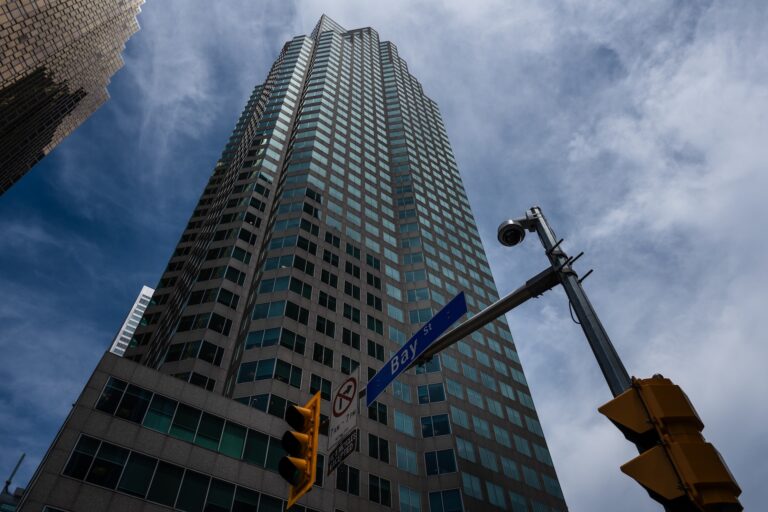
A skyscraper on Bay Street in Toronto, viewed from street level looking up, with a traffic light and street sign in the foreground against a blue sky with clouds.
Analysis

Canada’s AI hiring boom has reached Bay Street’s top executives

By Chaimae Chouiekh
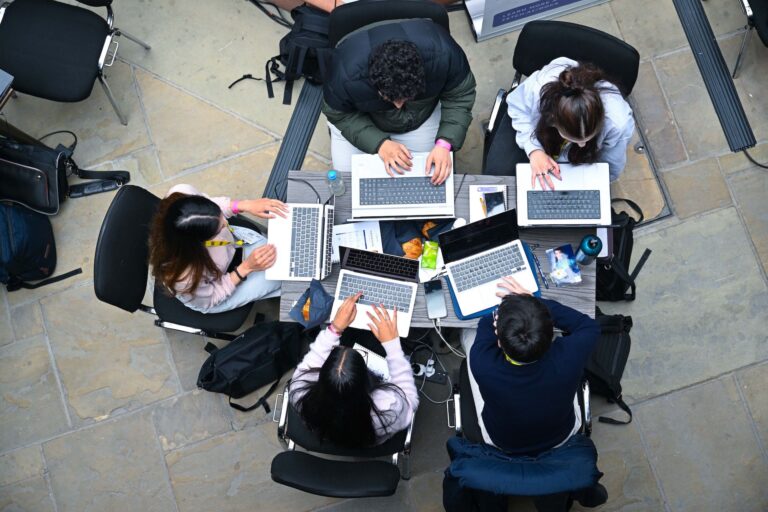
A shot from above of five people clustered around a table, all working on near-identical laptop computers. Their computer bags lie on the floor and some are wearing yellow lanyards.
News

1 in 3 professionals are using unauthorized AI on the job, global survey finds

By Anita Balakrishnan
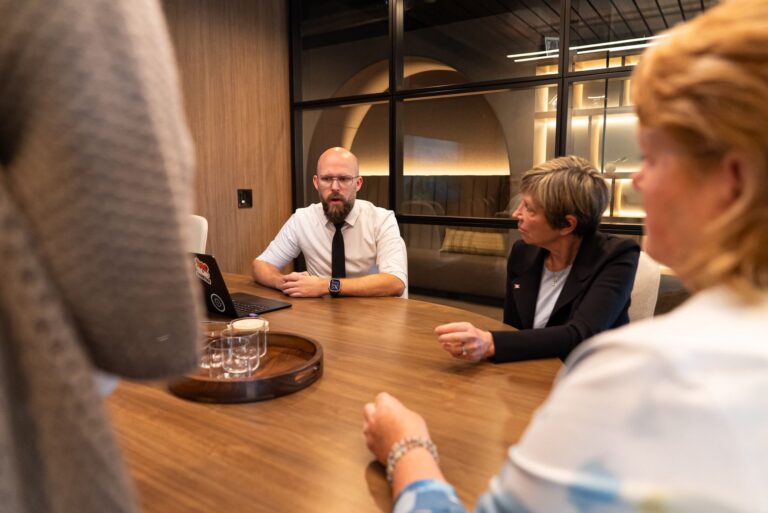
A head-on shot of James Neufeld seated with others at a round table in a meeting room. Eleanor Olszewski is seated to his left. There's a laptop open in front of Neufeld.
News

For this Alberta tech firm, ‘Buy Canadian’ isn’t working as advertised

By David Reevely

In-depth, agenda-setting reporting

Great journalism delivered straight to your inbox.

News

Canada joins the movement to make AI more open source

By Murad Hemmadi

Briefing

Quebecor urges CRTC to block Corus restructuring as part of takeover push

By Laura Osman   |   Jun 26, 2026 | 1:22 PM ET

Howard Lutnick intervened to delay opening of Gordie Howe International Bridge: Report

By Joanna Smith   |   Jun 26, 2026 | 12:54 PM ET

BoC consultation reveals distrust of inflation figures

By Kevin Carmichael   |   Jun 25, 2026

Best business newsletter in Canada

Get up to speed in minutes with insights and analysis on the most important stories of the day, every weekday.

Exclusive events

See the bigger picture with reporters and industry experts in subscriber-exclusive events.

Membership in The Logic Council

Membership provides access to our popular Slack channel, participation in subscriber surveys and invitations to exclusive events with our journalists and special guests.

Recent Popular Stories

Analysis

It turns out Trump does need something from Canada—aluminum

By Joanna Smith   |   Jun 25, 2026
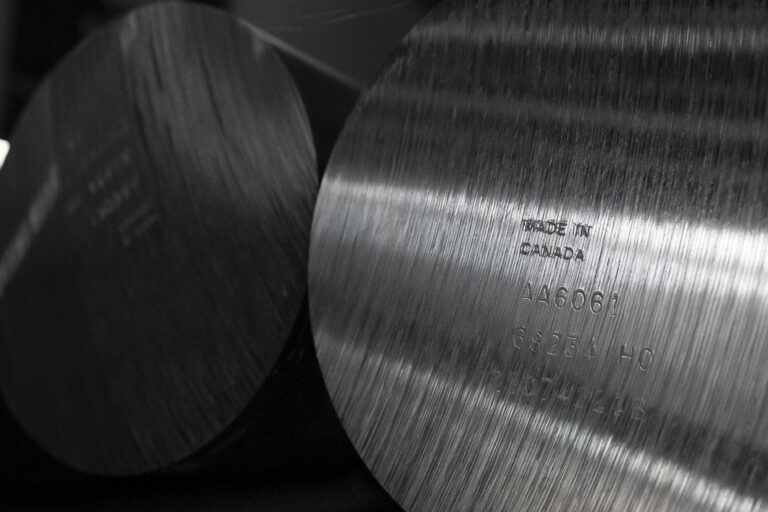
A close-up of a made-in-Canada stamp on the end of a cylindrical piece of raw aluminum.
Exclusive

Ssense has laid off photo and make-up teams and says AI will do much of their work

By Catherine McIntyre   |   Jun 22, 2026
News

Alberta to free up a huge amount of power to attract Big Tech and its data centres

By Meghan Potkins   |   Jun 24, 2026
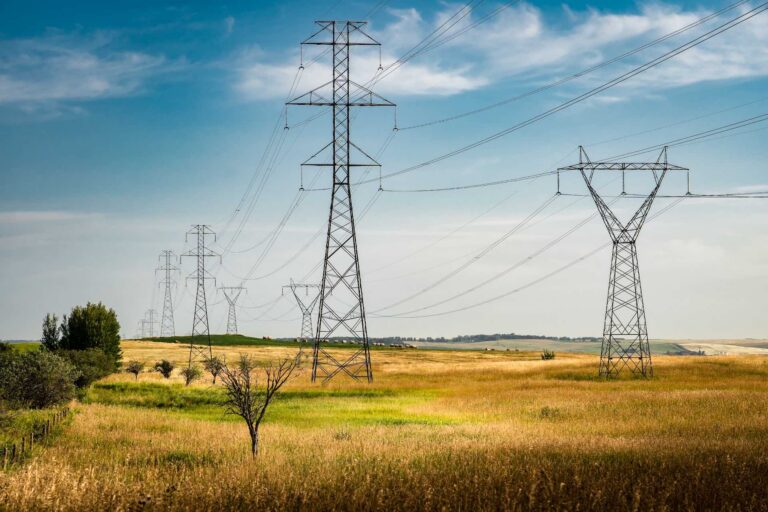
A wide landscape shot of high-tension power lines over green and golden fields in rolling countryside.
News

Canada gets low returns from events like the World Cup. Ottawa wants to know why

By Laura Osman   |   Jun 19, 2026
A wide shot of the Vancouver skyline shot from the east, featuring the Science World geodesic dome painted as a FIFA 2026 World Cup soccer ball. B.C. Place stadium appears on the right side of the frame.
News

What makes a nuclear reactor Canadian? Billions of dollars ride on the answer

By David Reevely   |   Jun 23, 2026
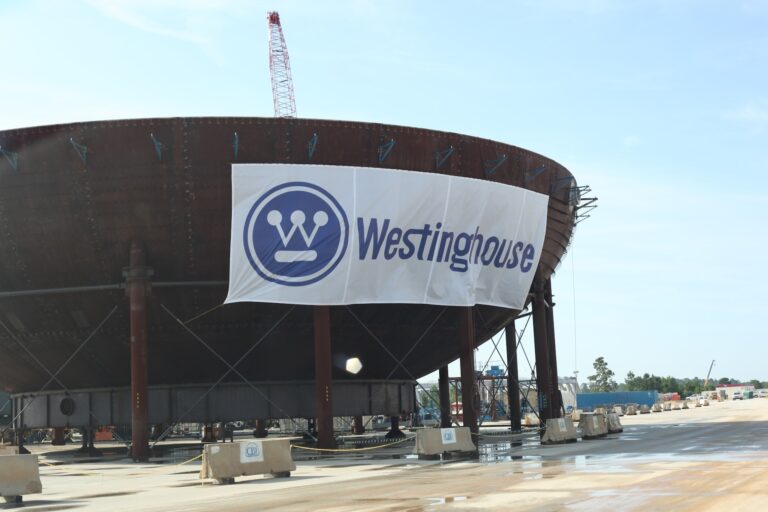
A bowl-shaped structure surrounded by concrete barriers. A white sign with a blue Westinghouse logo is suspended across one side of the structure.
News

How a former Russian TV anchor ended up suing Canada’s go-to rocket company

By David Reevely   |   Jun 22, 2026
A shot across an expanse of low forest of a rocket launching into blue skies.

Canada's most influential executives and policymakers are reading The Logic

  • CPP Investments
  • Sun Life Financial
  • C100
  • Amazon
  • Telus
  • Mastercard
  • bdc
  • Shopify
  • Rogers
  • RBC
  • General Motors
  • MaRS
  • Government of Canada
  • Uber
  • Loblaw Companies Limited
logic-logo

Canada's Business and Tech Newsroom

100% human-crafted journalism

Newsroom

  • News Tips
  • AI Policy
  • Editorial Disclosures
  • Story Pitches

Company

  • About Us
  • Terms of Service
  • Privacy Statement
  • Corporate Information

Contact

  • Contact Us
  • Advertise
  • FAQs
  • Work at The Logic

© 2026 The Logic Inc. All Rights Reserved.

Trusted by leaders

Error

Account creation failed.

Please email us at [email protected].

Create Account

[wppb-register form_name=”cozmo-registration-form-for-modal”]

I do have an account
Login
or

[wppb-login]

I don’t have an account