Skip to content

Canada's Business and Tech Newsroom

  • Professional Subscription
  • Partnerships & Advertising
  • Licensing & Syndication
Log In Subscribe
Welcome,
  • My Account
  • Log Out
  • Business
  • Tech
  • National
  • The Big Read
  • Briefings
  • Commentary
Search
Log In Subscribe
Welcome,
  • My Account
  • Log Out
Commentary

Carmichael: Overspending could worsen the shock of Trump’s tariffs

One good thing about polycrisis is the playbooks don’t get dusty.

Thirteen of Canada’s 14 first ministers pledged after their meeting this week that in the event of a trade war, they would “ensure the rapid availability of substantial resources that effectively mitigate economic impacts to workers and businesses.”

Commentary

Carmichael: Overspending could worsen the shock of Trump’s tariffs

Our instinct is to cushion the blow. Our focus needs to be on resilience

By Kevin Carmichael
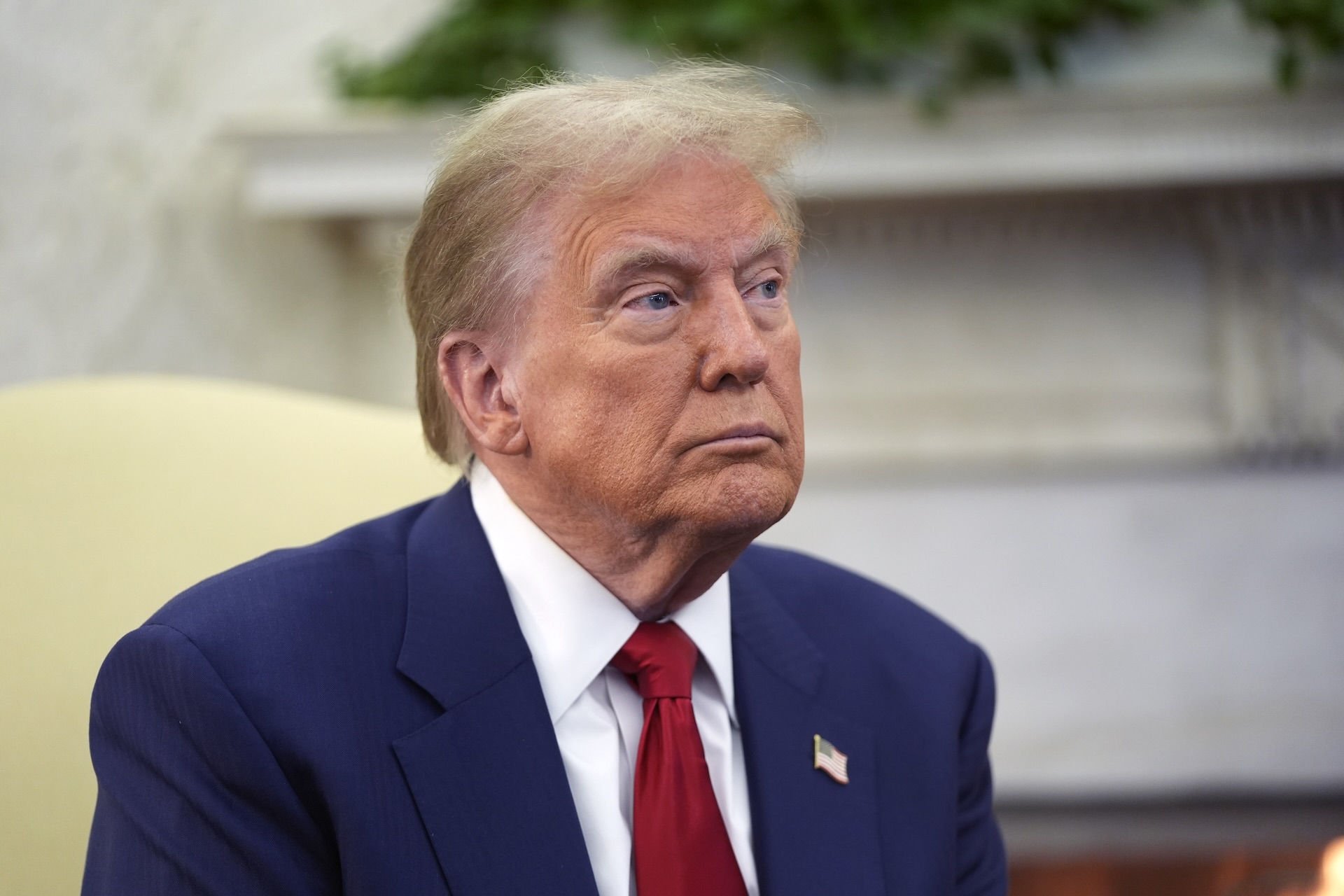
A photo of Donald Trump in a blue suit and red tie with the White House’s Oval Office in the background.
President-elect Donald Trump in the White House in November 2024, in Washington, D.C Photo: AP Photo/Evan Vucci
Jan 18, 2025
A A
A Small A Medium A Large
Share

Gift

Share

One good thing about polycrisis is the playbooks don’t get dusty.

Thirteen of Canada’s 14 first ministers pledged after their meeting this week that in the event of a trade war, they would “ensure the rapid availability of substantial resources that effectively mitigate economic impacts to workers and businesses.”

That’s the COVID-19 play of spraying so much foam on the runway that everyone walks away from the crash landing unharmed. The pandemic lockdowns caused a violent recession, but it was over within a couple of months, according to the C.D. Howe Institute. The play that saved the economy from a deadly virus should also work against Trump and his trade policies, right?

Let’s have a think about that.

A couple of weeks before Christmas, I visited former Bank of Canada governor David Dodge, someone who knows about economic crises. He served Pierre Trudeau’s government during the inflation shock of the late 1970s, was an important figure at the Finance Department during the budget crisis that followed in the 1980s and 1990s, and led the central bank through the aftermath of the 9/11 terrorist attacks on the U.S. in 2001. His job at Bennett Jones compelled him to understand the Great Recession and the COVID-19 pandemic. He might have stopped to write a book. Dodge chose to stay in the fight.

Related Articles

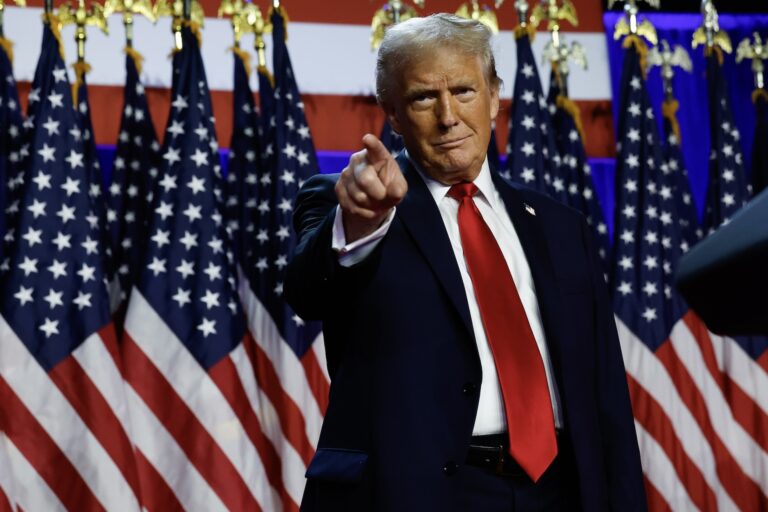
Donald Trump in a suit with a red tie stands in front of a row of American flags and points in the distance

Carmichael: The first thing to do about Trump’s tariff threat

By Kevin Carmichael
A truck carries a cargo container at the Port of Vancouver Centerm container terminal as others are stacked under gantry cranes.

Carmichael: Some hard truths about ‘trade powerhouse’ Canada

By Kevin Carmichael
Conservative leader Pierre Poilievre standing behind a lectern with signs advocating for axing the sales tax on homes.

Carmichael: How to build an anti-fragile economy

By Kevin Carmichael

A new fight was brewing, as Trump had recently made his tariff threat. I asked Dodge what period of history most reminded him of what we were about to experience. “In the shorter run,” he said, “I think 2008-2009 resonates.”

For younger readers, that’s the Great Recession, when a wave of bank failures in the U.S. and Europe sparked a global calamity. Innocents suffered along with the guilty. Then-prime minister Stephen Harper, a balanced-budget zealot, felt compelled to end an 11-year stretch of surpluses and deploy one of the world’s biggest stimulus plans. The provinces followed with fiscal rescues of their own.

“I’m not sure we did it right, but it [would be] the same sort of jolt,” Dodge said. “If we have a sudden shock, then we have to figure out a way that we’re going to deal with that sudden shock.”

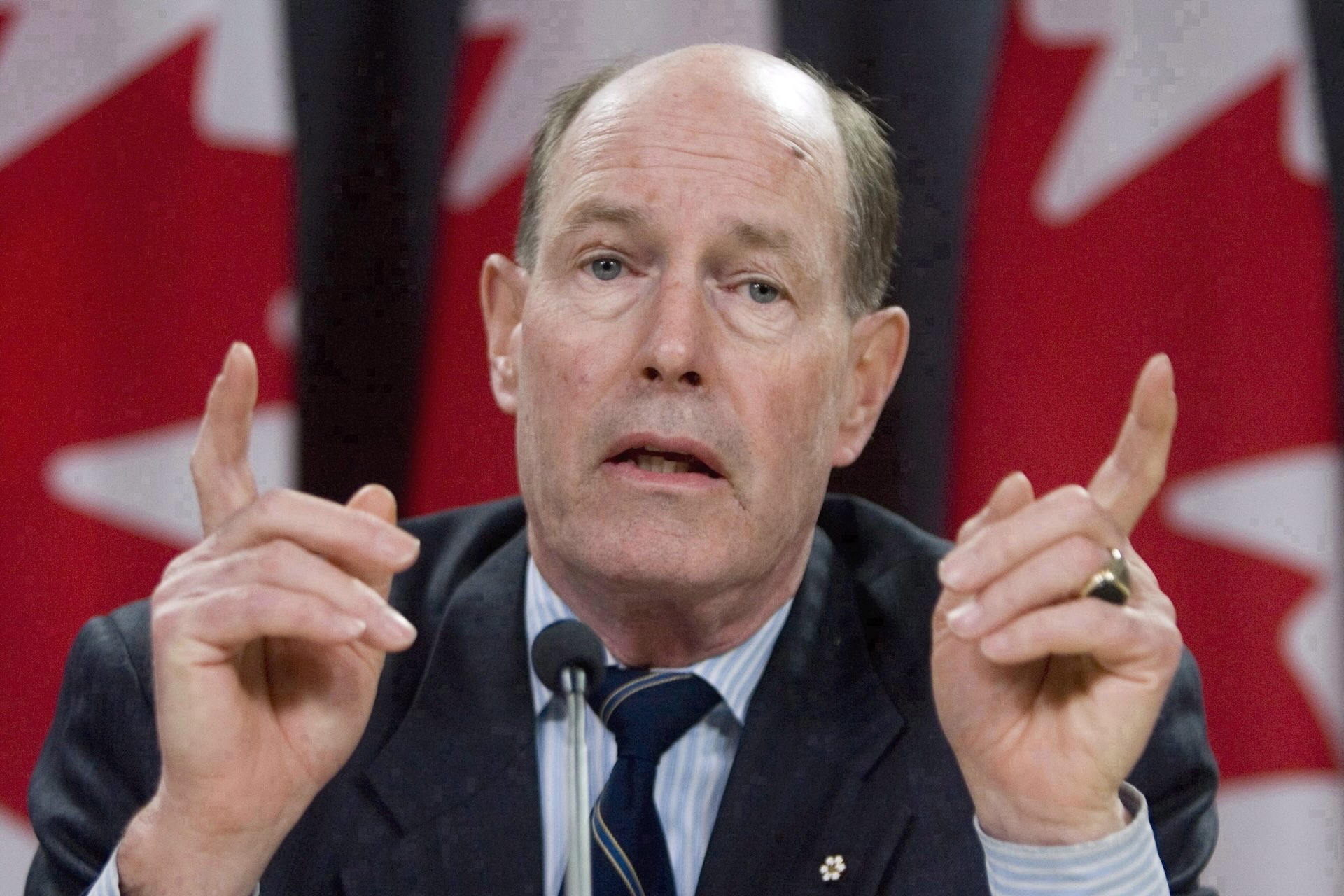
David Dodge, wearing a suit, is sitting and pointing his fingers in the air as he speaks. Canadian flags are in the background.
David Dodge, then-governor of the Bank of Canada, at a news conference in Ottawa in January 2008. Photo: The Canadian Press/Tom Hanson

Dodge’s critique of the response to the Great Recession was that too little of the stimulus was used to invest in things that would have enhanced the country’s capacity to generate inflation-free growth—a missed opportunity that we’re paying for now, as inadequate public investment in housing and infrastructure exacerbated the cost-of-living crisis that followed the pandemic.

One error Harper made was turning off the taps too soon. The shift to austerity exacerbated the blow from the collapse of oil prices in 2014, and forced the Bank of Canada to leave interest rates unusually low for an unusually low period of time. The central bank’s projections showed lower-for-longer interest rates were necessary to stave off deflation and hit its inflation target. But monetary policy during that period had the side effect of juicing housing demand and facilitating a surge in household debt as buyers chased runaway prices. We’re paying for that mistake now.

The COVID-19 rescue was informed by the lessons of the Great Recession. A consensus formed that the recovery was weak because governments weren’t sufficiently generous, especially when it came to getting money to actual people. “We really did not believe it would be a good thing to allow the economic tissue, the economic muscle of the country to be destroyed,” former finance minister Chrystia Freeland said in October at an event in Washington, D.C. “We gave huge support to individual Canadians. We gave huge support to businesses. That cost a lot of money.”

If they could do it again, Prime Minister Justin Trudeau and his cabinet probably would spend a little less money. Economists at Scotiabank estimated that inflation caused by government spending forced the Bank of Canada to increase the benchmark interest rate by an additional two percentage points. Post-pandemic inflation was mostly the result of Russia’s invasion of Ukraine and supply-chain snarls, but all that demand-side stimulus stoked prices too.

“We tried to protect too much,” Dodge said. “That was exactly the problem in the first oil-price shock,” he added. “We used the word ‘cushion’ at the time. That was the operative word. We were big on passing out pillows to try to cushion the problem, rather than saying, ‘No, we’ve got a problem. We’ve got to adjust.’”

The tariff shock could be severe. Statistics Canada estimates that some 1.8 million people—about nine per cent of the workforce—are employed in industries that are heavily dependent on U.S. demand for Canadian exports. Trudeau and the premiers appear primed to retaliate, which would amplify the shock. Hence the promise of pillows for everyone in harm’s way. The first ministers indicated they would use revenue raised from tit-for-tat tariffs to pay for them.

It could work. Canada hits back as hard as it can, disrupting carefully constructed supply chains and robbing American companies of a source of easy profits. The upset might be enough to prompt a negotiation and end the trade war relatively quickly.

But then what? Canada almost certainly will have had to concede something, given the imbalance in the relationship. A “win” could still be a loss. The economy, already weakened by the drop in productivity, would be even weaker.

Gift the full article

Maybe a better strategy is to rely less on pillows and get to work on making the economy more resilient. There could be no escaping tariffs. Trump talks about them as a source of revenue that will pay for tax cuts and reduce the budget deficit. That’s why Dodge started to reflect on the 1970s. “The condition was that energy was permanently more expensive,” he said. “We had to adjust and get on with it.”

Kevin Carmichael is The Logic’s economics columnist and editor-at-large. He has spent more than two decades covering economics, business and finance for outlets including Bloomberg News, The Globe and Mail and the Financial Post, where he also served as editor-in-chief. 
#commentary #COVID-19 #David Dodge #Donald Trump #economy #Great Recession #inflation #tariffs

Loading...

Thanks for sharing!

You have shared 5 articles this month and reached the maximum amount of shares available.

Close
This account has reached its share limit.

If you would like to purchase a sharing license please contact The Logic support at [email protected].

Close
Want to share this article?

Upgrade to all-access now

Close
Gift the full article!

You have gifted 0 article(s) this month and have 5 remaining.

Copy link and gift
Copy Link
Email to a friend
Send Email
Gift on Social Media

Recipients will be able to read the full text of the article after submitting their email address. They will not have access to other articles or subscriber benefits.

A photo of Donald Trump in a blue suit and red tie with the White House’s Oval Office in the background.

Photo: AP Photo/Evan Vucci

David Dodge, wearing a suit, is sitting and pointing his fingers in the air as he speaks. Canadian flags are in the background.

David Dodge, then-governor of the Bank of Canada, at a news conference in Ottawa in January 2008.

Most Popular This Week

News

Everything you need to know about the debate over stablecoin yields

By Claire Brownell
In this photo illustration, the Manulife company logo is seen displayed on a smartphone screen.
News

Manulife and Intact buck a global trend by reporting AI returns

By Anita Balakrishnan
A photo of Daniel Sax shot through a circular piece of ironwork on a stairway balustrade. He's looking off-camera, and is wearing a dark blue jacket bearing his company's logo.
The Big Read

Mining the moon. Selling nuclear reactors. For this Canadian, it’s all part of the plan

By David Reevely
News

Bay Street backs Canada’s AI strategy, but warns the devil is in the details

By Anita Balakrishnan and Chaimae Chouiekh

In-depth, agenda-setting reporting

Great journalism delivered straight to your inbox.

A head-on shot of James Neufeld seated with others at a round table in a meeting room. Eleanor Olszewski is seated to his left. There's a laptop open in front of Neufeld.
News

For this Alberta tech firm, ‘Buy Canadian’ isn’t working as advertised

By David Reevely

Briefing

Lululemon issues apology for using Japanese-inspired design to honour China

By Anita Balakrishnan   |   Jun 17, 2026 | 4:11 PM ET

Shai Gilgeous-Alexander drops Converse to lace up for corporate parent Nike

By Murad Hemmadi   |   Jun 17, 2026 | 3:55 PM ET

Oil market could see a ‘significant’ supply surplus again in 2027: IEA

By Meghan Potkins   |   Jun 17, 2026 | 3:28 PM ET

Best business newsletter in Canada

Get up to speed in minutes with insights and analysis on the most important stories of the day, every weekday.

Exclusive events

See the bigger picture with reporters and industry experts in subscriber-exclusive events.

Membership in The Logic Council

Membership provides access to our popular Slack channel, participation in subscriber surveys and invitations to exclusive events with our journalists and special guests.

Recent Popular Stories

Commentary: Quebec Ink

Quebec just found out what not having digital sovereignty really means

By Martin Patriquin   |   Jun 8, 2026
A yellow ambulance is pictured outside of a hospital in Montreal. A red sign in the foreground reads, “Urgence / Emergency.”
News

OMERS investment chief departs for Singapore’s Temasek

By Chaimae Chouiekh   |   Jun 10, 2026
News

Manulife and Intact buck a global trend by reporting AI returns

By Anita Balakrishnan   |   Jun 16, 2026
In this photo illustration, the Manulife company logo is seen displayed on a smartphone screen.
News

Canada’s surprise plan to buy Saab command jets leaves competitors seeking answers

By David Reevely   |   May 29, 2026
A closeup of a scale model of a jet covered in pixellated camouflage, with sensor equipment attached to the top of its fuselage. There are civilians and uniformed military personnel milling in the background.
The Big Read

We found every data centre in Canada

By Murad Hemmadi, David Reevely, Aleksandra Sagan, Chaimae Chouiekh, Martin Patriquin and Catherine McIntyre   |   Apr 8, 2026
Four vertical slices of aerial view photos. From left, a building in downtown Toronto housing several data centres, a picture of the Albertan wilderness where the proposed Wonder Valley data centre would go, a lit-up QScale data centre in Quebec, and a data centre at a Hydro-Quebec dam.
The Big Read

Mining the moon. Selling nuclear reactors. For this Canadian, it’s all part of the plan

By David Reevely   |   Jun 12, 2026
A photo of Daniel Sax shot through a circular piece of ironwork on a stairway balustrade. He's looking off-camera, and is wearing a dark blue jacket bearing his company's logo.

Canada's most influential executives and policymakers are reading The Logic

  • CPP Investments
  • Sun Life Financial
  • C100
  • Amazon
  • Telus
  • Mastercard
  • bdc
  • Shopify
  • Rogers
  • RBC
  • General Motors
  • MaRS
  • Government of Canada
  • Uber
  • Loblaw Companies Limited
logic-logo

Canada's Business and Tech Newsroom

100% human-crafted journalism

Newsroom

  • News Tips
  • AI Policy
  • Editorial Disclosures
  • Story Pitches

Company

  • About Us
  • Terms of Service
  • Privacy Statement
  • Corporate Information

Contact

  • Contact Us
  • Advertise
  • FAQs
  • Work at The Logic

© 2026 The Logic Inc. All Rights Reserved.

Trusted by leaders

Error

Account creation failed.

Please email us at [email protected].

Create Account

[wppb-register form_name=”cozmo-registration-form-for-modal”]

I do have an account
Login
or

[wppb-login]

I don’t have an account