All of Canada’s six largest banks have built up holdings in U.S. bitcoin exchange-traded funds since their January launch, underscoring how quickly exposure to crypto has spread throughout the international financial system thanks to the popular investment vehicle.
Skip to content

News
Canadian banks have built up millions in U.S. bitcoin ETF holdings
BMO has the highest exposure at US$13.5 million, filings show, after the investment vehicle’s January debut
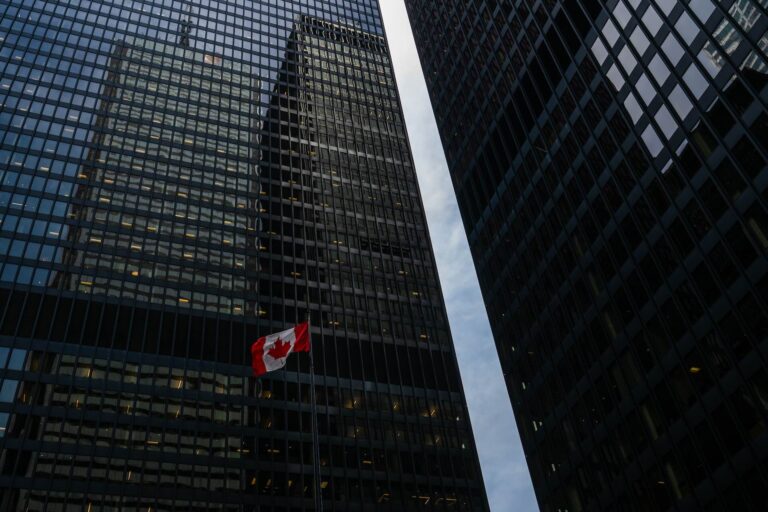
Canada’s Big Six banks have all reported U.S. bitcoin ETF holdings to the Securities and Exchange Commission since the first quarter of 2024. Photo: The Canadian Press/Nathan Denette
All of Canada’s six largest banks have built up holdings in U.S. bitcoin exchange-traded funds since their January launch, underscoring how quickly exposure to crypto has spread throughout the international financial system thanks to the popular investment vehicle.
Talking Points
- The Big Six banks have all reported U.S. bitcoin ETF holdings to the Securities and Exchange Commission since the first quarter of 2024, reflecting how quickly exposure to crypto has spread throughout the international financial system thanks to the popular—and relatively new—investment vehicle
- CIBC and National Bank said the US$102,000 and US$24,000 in bitcoin ETFs they respectively hold represent client positions, but it’s unclear whether Canada’s other large banks have invested in the securities themselves
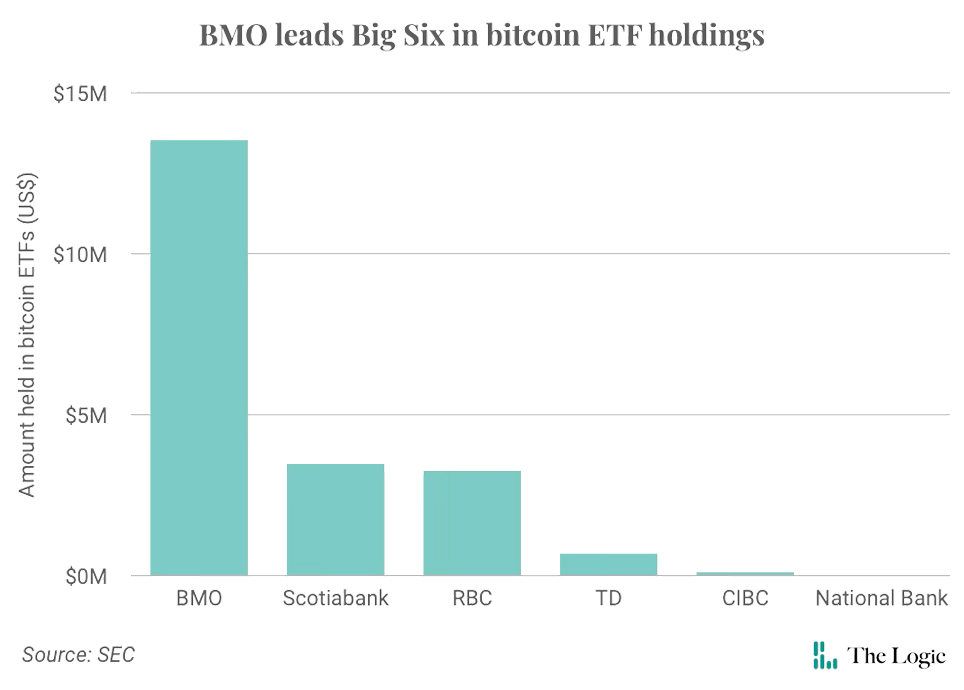
Third-quarter filings to the U.S. Securities and Exchange Commission released earlier this month show the Big Six banks hold a total of about US$21 million in U.S. bitcoin ETFs, with the Bank of Montreal holding the bulk of it at US$13.5 million. The holdings are not new—all six banks have reported them since the first quarter of 2024, shortly after the ETFs became available.
National Bank spokesperson Alexandre Guay said client positions account for the approximately US$24,000 in bitcoin ETFs it holds. Clients have the option to buy crypto ETFs directly through the bank’s online brokerage platform or through advisers, “with some limitations based on the risk profile,” he said. CIBC spokesperson Geoff Dillon also confirmed the US$102,000 held by the bank is made up of client positions.
BMO and Scotiabank did not respond when asked if the US$13.5 million and US$3.5 million they respectively hold in U.S. bitcoin ETFs are made up of client investments or the bank’s own, and whether their advisers recommend crypto ETFs. RBC spokesperson Lara Banlaoi and TD spokesperson Alicia Skrinjar said they were unable to provide a response by deadline about the US$3.3 million and US$285,000 respectively held by their banks.
Related Articles


Eric Richmond, general counsel at Montreal-based crypto-trading platform Shakepay, said the introduction of bitcoin ETFs has forced banks to start taking digital assets seriously and beef up their internal expertise. “The banks need to feel comfortable that they can sell these products to their clients,” he said.
While the relative size of the banks’ bitcoin ETF holdings is small, it’s a notable shift given that Canadian lenders have historically been anything but comfortable with crypto. It also highlights how the introduction of crypto ETFs has made it impossible to put clear guardrails between crypto markets and the traditional financial system.
ETFs are securities that trade on exchanges and can be bought and sold through online accounts and traditional brokers, just like stocks. Bitcoin ETFs are typically backed by reserves of the digital asset and track their price movements, and have proven wildly popular, surpassing US$100 billion in assets.
Unlike their U.S. counterparts—which have experimented with digital asset platforms, blockchain-based payments and tokenization of financial instruments—Canadian banks have yet to release their own crypto products or investment vehicles. A September announcement from New York City-based financial services firm Broadridge that an unnamed major Canadian bank is using its blockchain-based platform for managing treasury securities is the closest any have come to engaging with the sector beyond research.
Canadian regulators have encouraged this conservative stance. The Bank of Canada flagged crypto as an emerging risk to the financial system in 2021. The Office of the Superintendent of Financial Institutions is in the process of developing guidelines for how banks must disclose their exposure to crypto assets, saying digital innovation “presents risks to our financial system.” OSFI’s rules that impose significant capital costs on banks that hold crypto are set to go into effect in January.
It’s unclear how much the banks hold in Canadian bitcoin ETFs, which launched in 2021, three years ahead of their U.S. counterparts. There is no comparable reporting requirement for financial institutions holding Canadian securities.
OSFI did not respond to a request for comment by deadline. The Financial Consumer Agency of Canada directed The Logic to a 2022 statement it issued alongside OSFI and the Canada Deposit Insurance Corporation, which states the agencies have been monitoring how banks are managing the risks posed by crypto assets and expect the companies they regulate to ensure these risks have been properly addressed.
U.S. investor protection groups have raised concerns about bitcoin ETFs. In a statement issued by Better Markets when the SEC approved bitcoin ETFs in January, CEO Dennis Kelleher said they “will enable the mass marketing of a known worthless, volatile and fraud-filled financial product to Main Street Americans.” Mark Hays, senior policy analyst with Americans for Financial Reform Education Fund, said in a statement that “the crypto industry is desperate for the imprimatur of legitimacy that an established financial instrument provides.”The SEC resisted approving bitcoin ETFs for years, citing market manipulation concerns. In a statement released on the day they were approved, SEC chair Gary Gensler said “bitcoin is primarily a speculative, volatile asset that’s also used for illicit activity” and warned investors to “remain cautious about the myriad risks associated with bitcoin and products whose value is tied to crypto.”
ETFs don’t protect investors from bitcoin’s wild volatility, but Katrin Tinn, a finance professor at McGill University, said they do protect them from another major risk crypto holders have historically faced. Crypto-trading platforms have a long history of collapse and fraud, a risk that’s mitigated by having a regulated financial institution responsible for holding the digital assets underlying ETFs, Tinn said.
“Certainly it’s a volatile asset, but banks are investing in risky assets in general,” she said. “As long as those risks are managed, I don’t find it too risky.”



Loading...
Thanks for sharing!
You have shared 5 articles this month and reached the maximum amount of shares available.
CloseThis account has reached its share limit.
If you would like to purchase a sharing license please contact The Logic support at [email protected].
CloseGift the full article!
You have gifted 0 article(s) this month and have 5 remaining.
Recipients will be able to read the full text of the article after submitting their email address. They will not have access to other articles or subscriber benefits.
Photo: The Canadian Press/Nathan Denette
Most Popular This Week




In-depth, agenda-setting reporting
Great journalism delivered straight to your inbox.
Commentary
Carmichael: Canada’s biggest companies aren’t wired for growth. That’s a problem for us all
Briefing
Stellantis considering selling Ontario factory, union says
Intellectual property from failed New Brunswick nuclear developer sold to Ontario’s Nuclea Energy
Drone maker Volatus reports revenue dip as it struggles with its supply chains
Best business newsletter in Canada
Get up to speed in minutes with insights and analysis on the most important stories of the day, every weekday.
Exclusive events
See the bigger picture with reporters and industry experts in subscriber-exclusive events.
Membership in The Logic Council
Membership provides access to our popular Slack channel, participation in subscriber surveys and invitations to exclusive events with our journalists and special guests.