OTTAWA — Canada is considering signing the first binding international treaty on artificial intelligence.
Skip to content


News
Canada mulls signing up to first global treaty on AI
Europe-led convention aims to protect human rights and democracy as the technology is rolled out across the world
Parliament Hill in Ottawa in April 2024. Photo: The Canadian Press/Sean Kilpatrick
OTTAWA — Canada is considering signing the first binding international treaty on artificial intelligence.
The U.S., U.K. and European Union and others all joined the framework convention on AI, human rights, democracy and the rule of law last month. Countries that sign the treaty agree to make rules for how government departments and firms within their borders develop and deploy the technology.
Talking Points
- Canada is considering joining the framework convention on AI, human rights, democracy and the rule of law
- The U.S., U.K. and EU have all signed the treaty, spearheaded by the Council of Europe, which is designed to act as a backstop for national laws governing the technology’s development and use
Canada participated in the negotiation of the convention, which was led by the Council of Europe (CoE), an international human rights organization, starting in 2019.
Canada is “pleased with the outcomes for this treaty,” said Kevin Sweet, a spokesperson for Global Affairs Canada, adding that it has the potential to set important new legal standards around the use of AI. Sweet said the federal government was “actively assessing” the convention and consulting with provinces, territories and Indigenous groups about whether Canada should sign it.
Policymakers in many of the countries that have signed the treaty have already passed or proposed domestic AI regulations that go further than the convention’s commitments. The convention is meant to act as a backstop as governments update their laws in response to the potentially disruptive technology. It notes that AI has the “potential to promote human prosperity” and innovation, but carries significant risks.
Related Articles

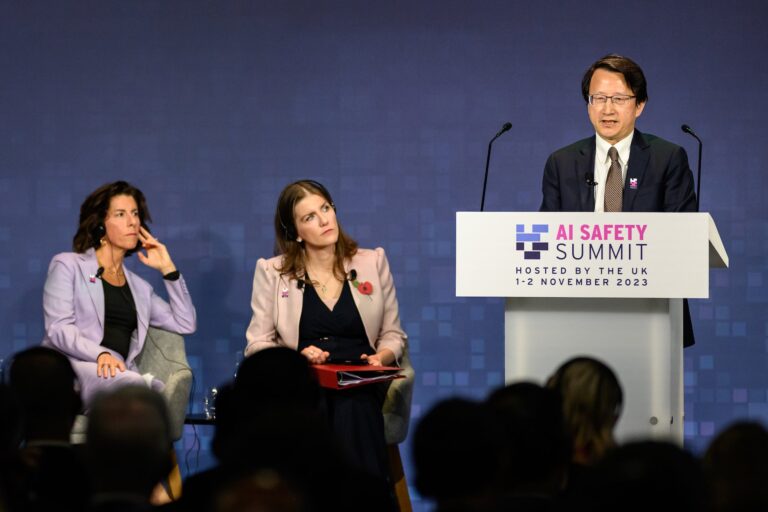
Signatories commit to requiring that AI systems are reliable, don’t discriminate and respect privacy. They also agree to impose transparency measures such as ensuring any machine-generated content is properly labelled and disclosing to people when they’re interacting with AI. The treaty includes a carve-out for governments using AI in applications related to national security.
The Liberal government’s proposed Artificial Intelligence and Data Act includes similar requirements for “high-impact” settings like healthcare, employment and policing. But it doesn’t outright ban any uses of the technology. The convention requires countries to look at whether there are some cases in which using AI systems would be so harmful that it shouldn’t be allowed.
The Yukon government backs Canada signing the treaty, which “strikes a responsible balance between the benefits and risks of AI,” said spokesperson Francis Lefebvre. Quebec and Nova Scotia are analyzing the convention, officials said. British Columbia, New Brunswick and Saskatchewan declined to comment on whether they support the initiative, citing rules around recent and upcoming elections.
While the CoE claims the convention is the first binding AI treaty, it’s one of several international efforts to set ground rules for the technology. The United Nations, OECD and G7 have published high-level principles for the development and use of AI. Ottawa has sought a prominent role in international policy conversations about AI, and is set to launch a new safety institute to study the technology.



Loading...
Thanks for sharing!
You have shared 5 articles this month and reached the maximum amount of shares available.
CloseThis account has reached its share limit.
If you would like to purchase a sharing license please contact The Logic support at [email protected].
CloseGift the full article!
You have gifted 0 article(s) this month and have 5 remaining.
Recipients will be able to read the full text of the article after submitting their email address. They will not have access to other articles or subscriber benefits.
Photo: The Canadian Press/Sean Kilpatrick
Most Popular This Week



In-depth, agenda-setting reporting
Great journalism delivered straight to your inbox.
News
Canada-U.K. digital trade is set to grow under new phase of Pacific Rim trade pact
Briefing
Barton appointed chair of Canada investment agency as it takes a bigger role in luring capital
Invest in Canada CEO resigns in run-up to international investment summit
GM to invest about $360M more in Canada and return Sierra truck production to Oshawa
Best business newsletter in Canada
Get up to speed in minutes with insights and analysis on the most important stories of the day, every weekday.
Exclusive events
See the bigger picture with reporters and industry experts in subscriber-exclusive events.
Membership in The Logic Council
Membership provides access to our popular Slack channel, participation in subscriber surveys and invitations to exclusive events with our journalists and special guests.