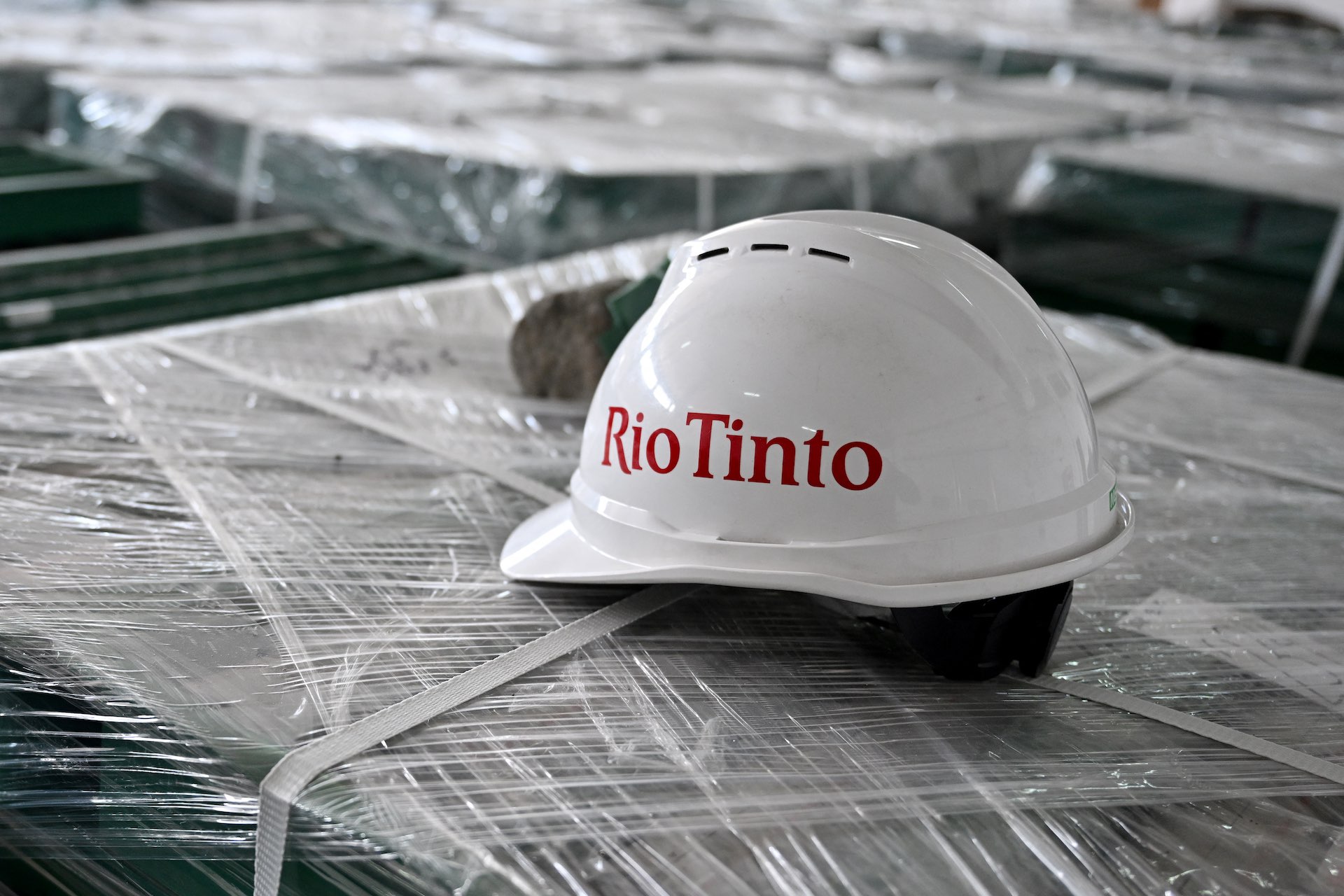
Rio Tinto just put lithium M&A officially in play—a jolt for the industry, and potentially big news for Canada.
CEO Jakob Stausholm said the mining giant plans to establish “world-class lithium hubs” in Quebec following its US$6.7-billion deal to buy Arcadium Lithium.
“The hard rock opportunities in Canada are very attractive to us,” Stausholm said Wednesday on a conference call with analysts. Rio Tinto monitored not just the company, but the entire industry for 20 years looking for the right time to buy, he said.
The big picture: The deal’s a game-changer for the lithium industry, easing doubts that mounted as EV-sales growth slowed and other battery technologies came to market.
For the two companies, meanwhile, it offers greater scale, which could be key as Quebec’s battery industry struggles against global giants.
China, home to two of the world’s biggest lithium companies, Tianqi Lithium and Ganfeng Lithium, has complicated North America’s EV ambitions. On Monday U.S. State Department undersecretary Jose Fernandez accused China’s firms of pushing down the price of lithium “until competition disappears.”
Digging Canada: Investment in lithium by a stable and diversified firm like Rio Tinto is surely a relief to the industry in Canada—especially after a slump in global prices.
In a research note obtained by my colleague Aimée Look, RBC Capital Markets analysts wrote that “this makes Quebec an ideal location for supplying the growing electric vehicle market in North America.”
Arcadium co-owns the beleaguered Nemaska Lithium with Investissement Quebec, and recently acquired a startup in Ontario. It had previously paused a second Quebec project while it looked for investors.
“We clearly are extremely keen to find ways to accelerate the projects,” said Arcadium CEO Paul Graves on the call. “Within Rio, we can.”
More to come?: The deal will be watched closely on Bay Street, where the Toronto Stock Exchange hosts about 40 per cent of the world’s publicly traded mining companies, many of them suffering as automakers delay plans to make EV batteries.
“We are seeing a lot of activity under the surface around this, and I would expect that now these deals are starting to be announced, there’s going to be more down the road,” said Tim McCormick, partner at law firm BLG in Toronto. “The larger mining companies and energy companies in the world are looking at Canadian assets, without a doubt.”
Graves suggested the downturn in lithium prices is temporary, and he’s not the only one. Analysts at commodity price-reporting agency Fastmarkets forecast that lithium demand will go back to outstripping supply in 2027. Brian Szeto, vice-president of energy and natural resource credit ratings for Morningstar DBRS, said in an interview that acquisitions are a faster way to grow than trying to build new mines, so “we’ve seen a lot of big deals happen.”
Not everyone sees the deal as a sign major miners are rushing toward M&A, even if it signals long-term confidence in the lithium market.
“Rio has been one of the few mining conglomerates in recent years that has expressed
bullish sentiment around lithium,” wrote TD Cowen analysts David Deckelbaum, Robert Hodges and Aaron Pzena in a research note obtained by Aimée.
“While we generally view the deal as a one-off for the lithium industry, we would anticipate prevailing positive sentiment.”
Read Shift—The Logic’s authoritative weekly newsletter on automotive technology industry news—for more; and if you know someone who should be reading it, they can sign up here.