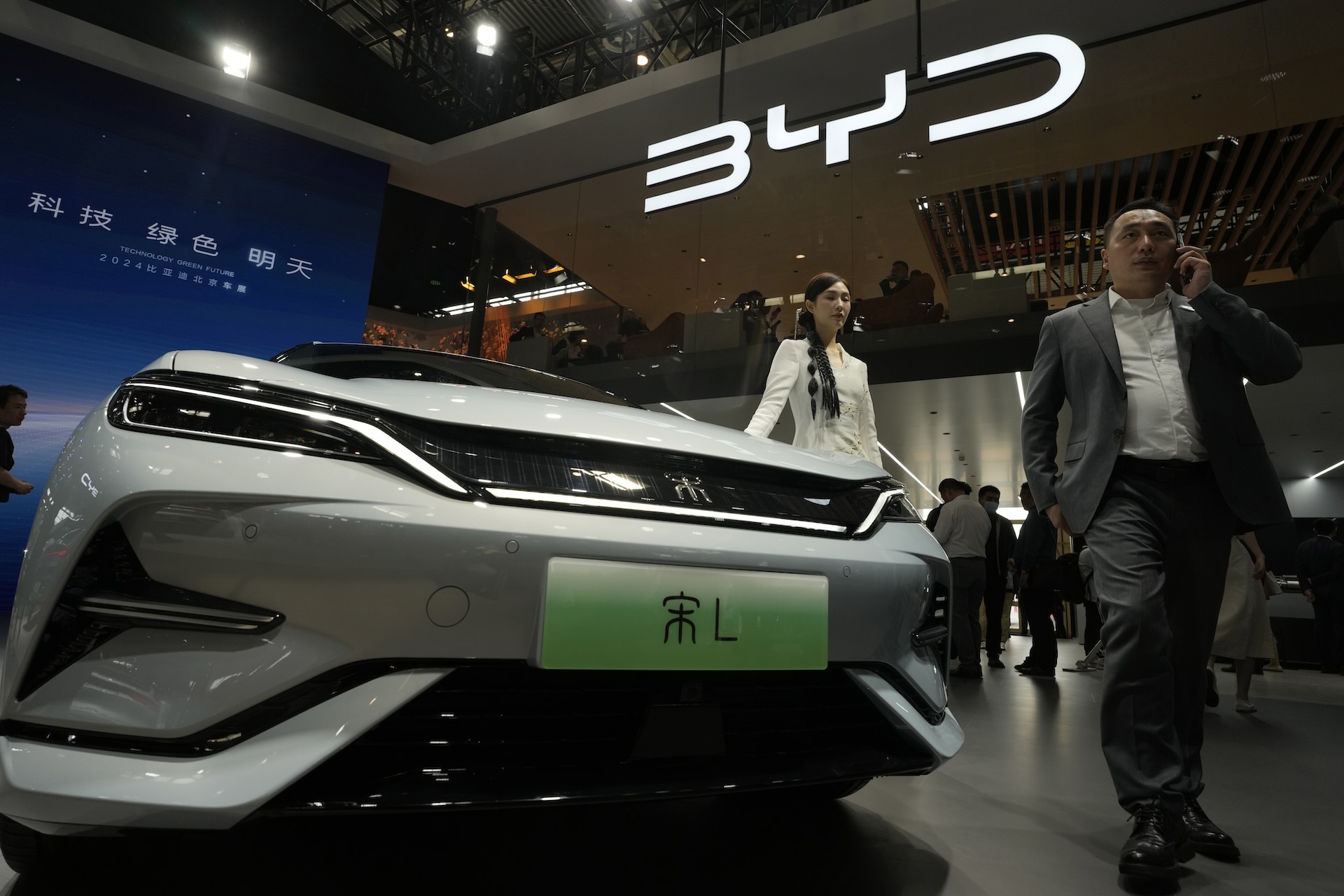
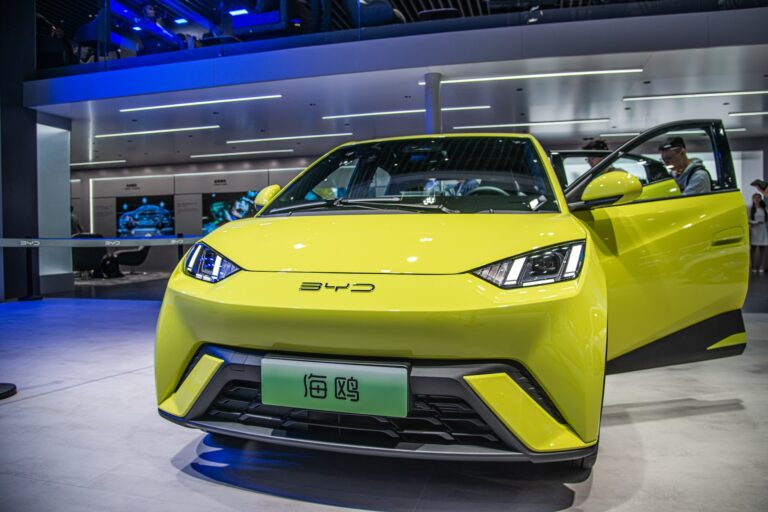
Electric vehicles imported from China will effectively double in price beginning Oct. 1 with a 100 per cent tariff, Prime Minister Justin Trudeau announced Monday, matching the White House’s tighter trade measures on China.
The policy will drastically raise prices on Chinese-made EVs, a move that the auto industry says will protect domestic manufacturers. But others urged the government to also ensure there are low-cost EVs available to fill the gap, as Canadian car buyers already struggle to afford upgrading to zero-emission vehicles.
The details: The tax applies to vehicles in 23 categories, including EVs as well as some hybrid passenger cars, trucks and buses imported from China. Steel and aluminum products imported from China will face a 25 per cent tariff starting Oct. 15. The only vehicles that will qualify for EV purchase subsidies will be those made in countries with which Canada has free-trade agreements.
Canadian Vehicle Manufacturers’ Association CEO Brian Kingston said the tightened trade policy is a “welcome step” to harmonize with the U.S., given the cross-border integration of automotive supply chains.
The impact: For Tesla, which accounts for the lion’s share of EVs imported from China into Canada, the tariff may mean shifting production to its factories in the U.S. or Germany. It could also stymie plans of Chinese automakers eyeing the Canadian market, like BYD.
Philippe Rheault, director of the China Institute at the University of Alberta, noted that Canada’s approach is fairly blunt compared with counterparts like Europe, where tariffs range from nine to 36.3 per cent depending on the manufacturer. The policy may also limit Canadian companies’ future opportunities to learn from leading Chinese EV manufacturers, he noted.
Joanna Kyriazis, director of public affairs at Clean Energy Canada, said Canada could have taken a more “elegant” approach considering the climate and Canadians’ cost-of-living crisis, arguing that blocking competition could keep EV prices high. Those that benefit from the tariffs—like the domestic auto industry and their home-base province of Ontario—should now commit to protecting domestic jobs in EV plants, offering more rebates and installing more chargers, she said.
What’s next: Daniel Breton, CEO of Electric Mobility Canada, said the tariff isn’t a surprise, but he urged the government to ensure that cheaper EVs like the Volkswagen ID.3 are brought to Canada, and noted that the government might consider applying the same tax regime to gas-powered vehicles made in China.
Meanwhile, the Liberal government said it’s launching a 30-day consultation on potential restrictions on Chinese-made semiconductors, battery parts, critical minerals and solar panel components.
Policymakers will need to evaluate which components they can actually buy or make today in North America and allied countries, Daniel Ujczo, U.S.-based international trade attorney at Thompson Hine. “There’s going to be a balancing act there,” he said.