Bemused? Baffled? Siemens executive Matthias Rebellius was one of those when our conversation turned to Canada’s lack of a national energy grid.
“Every province optimizes on its own,” Rebellius said in an interview last month on the sidelines of the Conférence de Montréal. “I was surprised, and questioning whether this is the right approach.”
Some of you are rolling your eyes. What does this European business guy know about how federations work? Quite a lot, probably. Siemens is based in Germany, which consists of 16 states that aren’t known for consistently rowing in the same direction. EU politics are something else altogether. Yet somehow, a couple of dozen countries with deep histories of conquest and slaughter managed to string together the world’s largest synchronous electricity grid.
I asked Rebellius, a member of Siemens’ managing board, if Canada was unique in its resistance to cooperating on electricity generation. “A country of that magnitude, and the amount of energy which is being generated? I’m not aware of any other example in the world.”
Siemens is a major builder of the infrastructure and technology that will let countries move away from fossil fuels by greening their grids. Our interview was delayed because after he appeared on stage at the conference he was mobbed by people seeking a meeting. The energy transition is happening apace.
Siemens executive and managing board member Matthias Rebellius. Photo: Siemens/Handout
The question is whether that pace is fast enough. The answer almost certainly is, “No.” It’s incredible that climate change has disappeared as a subject of political urgency at the very moment that dire prophecies of killer heat waves and rolling forest fires have come true.
Pierre Poilievre has become the country’s most popular politician on the back of four simple promises, one of which is killing the carbon tax—a policy that any future government committed to reducing greenhouse gas emissions will miss once it’s gone. Even Liberals appear less keen to talk about climate. Prime Minister Justin Trudeau told reporters on July 4 that he needed to do a better job delivering on housing, child care and dental care, according to a Politico report. The same day, Finance Minister Chrystia Freeland reeled off a similar climate-free list of priorities, Politico reported.
That’s a bad omen for whether we can muster the political will necessary to overcome the provincial jealousies and short-termism that keep Canada from optimizing its potential. But let’s talk about building a national grid anyway. This country once built a national railway through the Canadian Shield and the Rockies. We can do hard things.
Technology is no longer an excuse for delay. It’s ready for prime time. A podcast on Canada’s electricity grid by consultancy BBA included this observation by one expert: “All the tools are there today. We just need to collaborate to have the regulatory construct and the rules and the market services, and then the transmission built.”
In other words, reversing climate change is no longer a technological problem. It’s a human one.
More than 80 per cent of the Canadian grid is already emissions-free. But as the Public Policy Forum has observed, that’s deceptive. Nova Scotia only generates about a third of its power from low-carbon sources, and Alberta a mere 10 per cent because both jurisdictions rely so heavily on coal and natural gas. Those provinces and some others have a long way to travel on their own.
Those weaknesses would be strengths if they were part of a national grid. We have all the elements required to build a stable network capable of scaling relatively quickly to an emissions-free system.
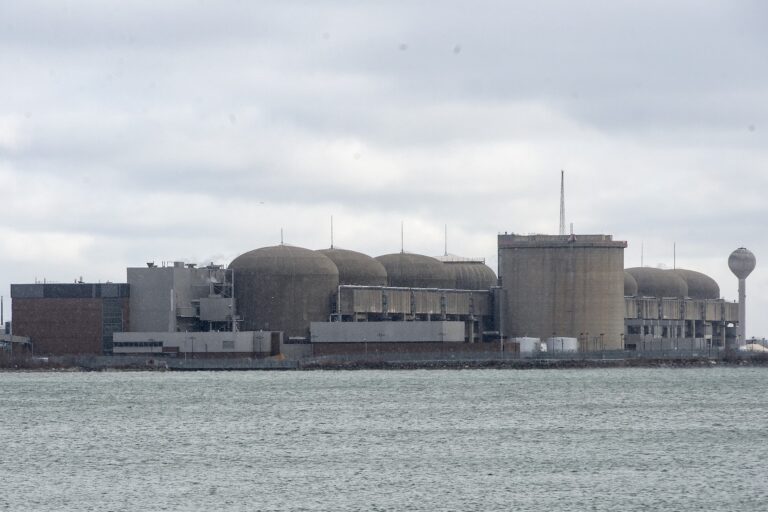
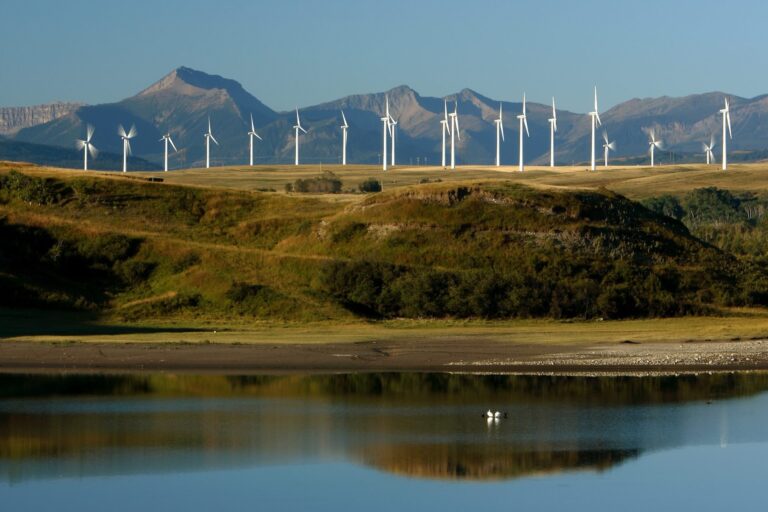
Canada looks green because hydro made economic sense for Quebec and British Columbia before climate change was part of the calculations, and because Ontario invested in nuclear decades ago. Building new dams and nuclear plants will take time. Renewable sources such as solar and wind must be part of the answer, but they require backup for when the sun isn’t shining and the wind isn’t blowing. Fossil fuels actually facilitate the development of renewable sources because they reduce the risk of outages and contain costs in the short term.
I think provinces get off easy when we assign responsibility for reaching the net-zero targets. So does the team of public policy advisers at law firm Bennett Jones, a group that includes former British Columbia premier Christy Clark and former Alberta premier Jason Kenney. The firm’s latest economic outlook is mostly about the productivity problem, but the authors went out of their way to make the point that the grid will need to double to match demand from a net-zero economy. “The federal government has introduced some policy instruments to support the effort,” the report said. “Provinces must drive planning and execution as a matter of priority.”
There’s little evidence that Canada’s premiers are interested in national projects. Serge Dupont, one of the lead authors of the Bennett Jones analysis, advised de-emphasizing the construction of an east-west grid for now because sticker shock at the costs involved could paralyze whatever political momentum currently exists to back green energy projects. Given the widening gap between the demand and supply curves, the best short-term strategy is for each province to focus on building up its capacity, while maybe seeking ways to cooperate on renewable energy projects near provincial borders, he said.
Siemens is working on such a project with New Brunswick Power and Nova Scotia Power—backed by federal money, of course. Siemens is ready to do more. Alas, we’re not.
Kevin Carmichael is The Logic’s economics columnist and editor-at-large. He has spent more than two decades covering economics, business and finance for outlets including Bloomberg News, The Globe and Mail and the Financial Post, where he also served as editor-in-chief.