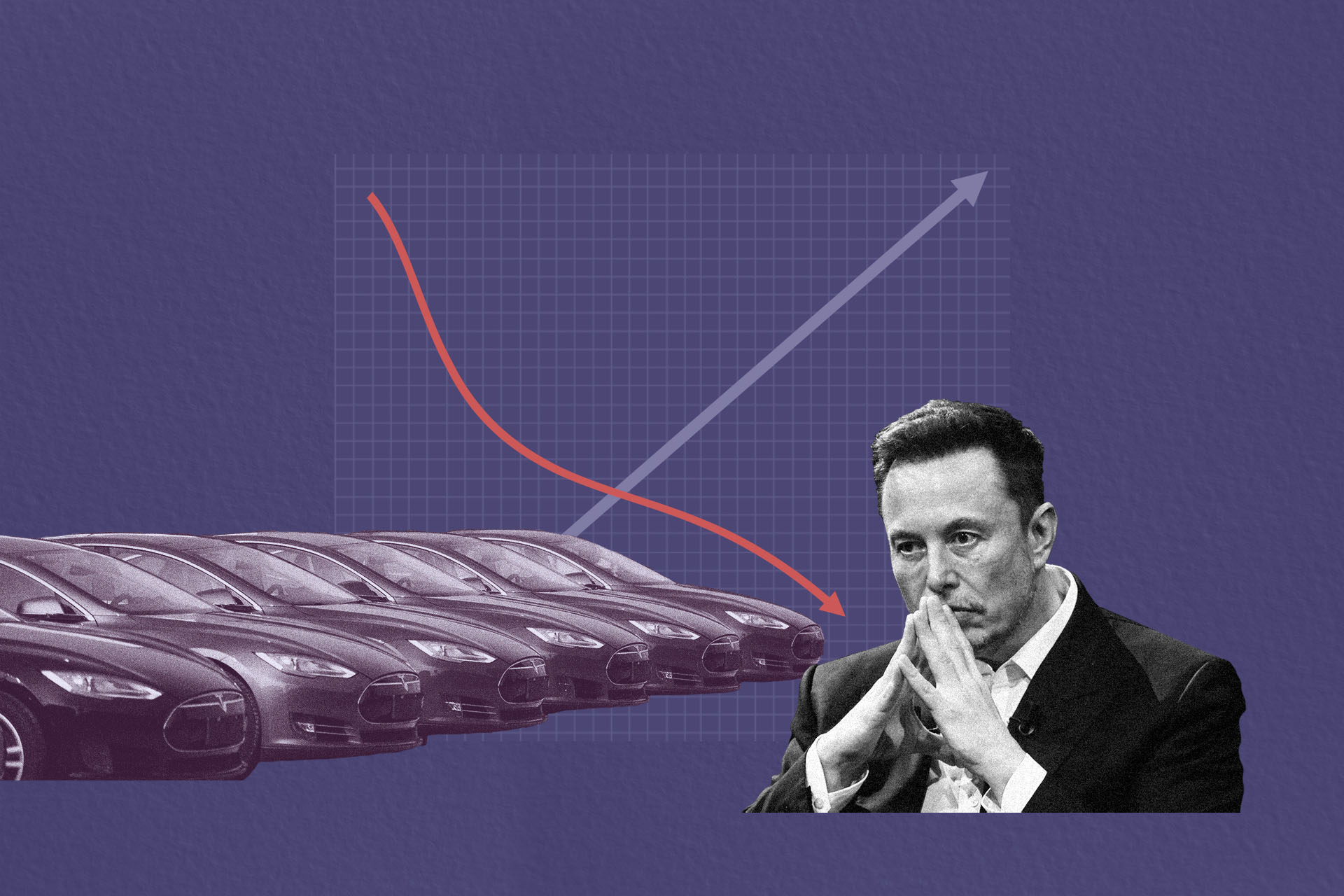
Zero-interest-rate auto loans are fading in the rear view—and automakers’ optimism about making EVs affordable is receding along with them.
From Osaka to Stuttgart to Detroit, CEOs are warning that ambitious plans to convert drivers to EVs may not crystallize as they’d once hoped. Axios put it simply enough: The vibes have been bad.
The bear case: Tesla battery supplier Panasonic slashed its battery division’s annual profit forecast by 15 per cent, citing stunted demand for luxury EVs. The comments came on the heels of hand-wringing from LG and Tesla executives, who cautioned that high interest rates could stifle EV demand.
There were also warnings that EV supply may shrink. The rental-car company Hertz pulled back on its EV plans amid high repair costs and falling resale values. Mercedes-Benz said it was committed to its EV targets, but said that EV price cuts and supply-chain issues were “brutal.”
General Motors binned its plans to make an affordable EV with Honda, and scaled back its EV production goals. And on Oct. 26, Ford said it would delay about US$12 billion in spending on EVs—although it did agree three days later to invest over US$8 billion in both gas- and electric-vehicle plants as part of its contract with union workers.
The bull case: Toyota is still piling billions of dollars into its North Carolina battery plant. Hyundai is cautiously sticking to its EV plans, and Stellantis is creating a new EV brand—albeit one that focuses on affordability.
The view from Canada: New EV registrations were still on the rise in the second quarter, up nearly 35 per cent year over year. But Charlotte Argue, senior manager of sustainable mobility at Geotab, noted in an interview that Canada still has work to do. Many would-be EV buyers have been stuck on waitlists of a year or more, and EV evangelists have struggled to convert women buyers to EVs at the same rate as men.
The overall auto sector has seen some red flags, too, as interest rates rise. Equifax found that average monthly car-loan payments are up about $100 from a year ago, and there has been a “noticeable uptick in arrears” among used-car owners.
The lion’s share of Canadians also don’t know about tax deductions for EVs, and in many provinces, the majority also aren’t aware of EV rebates, according to a September survey of 1,500 adults from Electric Mobility Canada.
Still, an October Scotiabank report warned, “We might be backing the cars that people want today but cannot afford tomorrow,” and that EV prices need to “be a fraction of today’s prices” to reach mass market by 2035—the deadline by which all new vehicles sold in Canada must be zero emissions.
“The cost pressures we were hearing from automakers are legitimate,” Scotiabank’s Rebekah Young told me this week. “We’ve still got some runway until some of the climate targets really start biting. But it does mean that, I think, plans have to change.”
Young said Canada should ideally look for a win-win-win-win approach to EVs, where households get cheaper EVs, domestic automakers get more business, governments see GDP rise and the country reaches its climate goals.
Simple enough, right?
Read Shift—The Logic’s authoritative weekly newsletter on automotive technology industry news—for more; and if you know someone who should be reading it, they can sign up here.