The Bank of Canada first hinted that the world had changed in October 2022. That’s when governor Tiff Macklem said supply chains broken by the COVID-19 pandemic wouldn’t return to normal.
Skip to content

 BoC governor Tiff Macklem and senior deputy governor Carolyn Rogers appear before the House finance committee in Ottawa on April 25, 2022. Photo: The Canadian Press/Sean Kilpatrick

Commentary
Carmichael: If this is the new normal, our monetary policy needs a rethink
Central banks have made their share of mistakes coming out of the pandemic
New homes are constructed in Ottawa in August 2023. Photo: The Canadian Press/Sean Kilpatrick
The Bank of Canada first hinted that the world had changed in October 2022. That’s when governor Tiff Macklem said supply chains broken by the COVID-19 pandemic wouldn’t return to normal.
It was a significant conclusion. In 2014, Macklem, then senior deputy governor, said in a speech that increased productivity and competition in the retail sector, led by Walmart’s hyper-efficient supply chains, was an example of “good disinflation” that helped explain why overall inflation was unusually low. Now, in the wake of the pandemic, companies are putting a greater emphasis on redundancy. The strategy will decrease the risk of empty shelves and barren car lots, but at a higher cost that sellers will seek to recoup by raising prices.
Even before COVID, the era of high economic growth and low inflation that marked the 1990s and the first two decades of the new millennium was beginning to look like an historical outlier rather than a new normal.
China’s entry into the global trading system brought a glut of labour, dramatically lowering the cost of production. Wealthy American boomers were still in the acquisitive phase of their lives, creating extraordinary demand for goods and services. Governments broadly embraced freer trade, reducing friction and lowering costs. The world was relatively peaceful, as violent conflict was confined to corners far removed from global commerce.
Related Articles


These meta forces exerted downward pressure on inflation. That kept interest rates low, which helped equity markets soar and freed capital to finance the technology boom that created Amazon, Google and Facebook.
One of the reasons post-pandemic life is so difficult is that we no longer have all those forces at our backs.
Just-in-time delivery only works when intellectual property can move freely to low-cost places of assembly, and when the goods assembled there can be shipped around the world without worry of tariffs, sanctions and being sunk at sea by a stray missile. Boomers are retired or retiring, so are more concerned with saving than spending. Millennials are plentiful enough to replace them, but they entered their prime spending years amid record housing prices and stagnant wage increases.
The past couple of years have added to the list mental trauma from a deadly pandemic, recurrent bouts with violent weather, surging inflation, higher borrowing costs and war in Europe and the Middle East.
It’s difficult to adjust to all of this when, up until recently, deciding between Facebook and Snapchat felt like an existential question. The pandemic was a hard reboot. Everything stopped, and it became pretty clear that everything was about to change.
Yet inertia and habit make it hard to accept that. Executives stick with the hurdle rates set in the recent past, when profits came easier. Investors insist on the same fat profit margins, and policymakers stick with what they know.
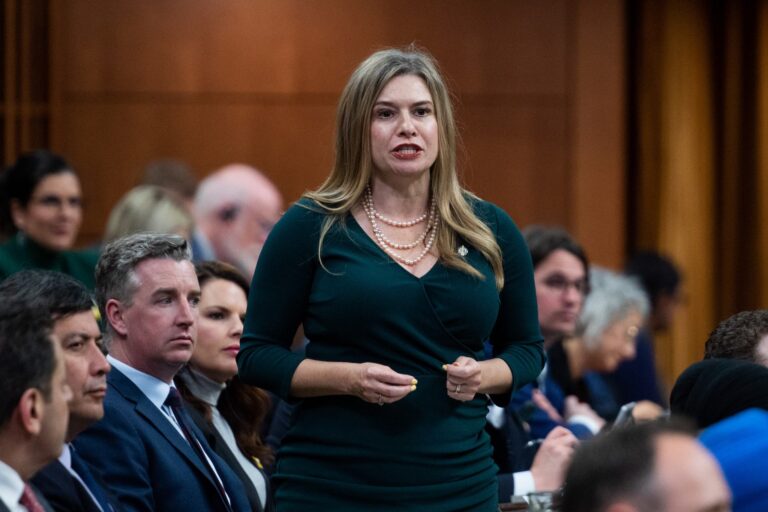
Central banks have made their share of mistakes, and might be continuing to make some. Macklem acknowledged in April 2022 that he’d misread what was going on in the economy in 2021, leaving the central bank flat-footed when inflation took off early in 2022.
Australia’s government had an independent panel review the Reserve Bank of Australia’s performance after the central bank failed to contain inflation coming out of the pandemic. It would make sense to do something similar in Canada. The decision to set interest rates at a level that would keep year-over-year increases in the consumer price index at two per cent was taken in the 1990s, a very different time from the one we’re in now.
The Bank of Canada’s latest quarterly economic report added to the list of variables that aren’t behaving like they used to.
For years, the exchange rate would reliably rise with commodity prices—especially oil—because Canada is a net exporter. Higher interest rates also are supposed to cause exchange rates to rise because bonds become attractive assets for international investors. Yet the Canadian dollar hasn’t traded above 80 U.S. cents since the autumn of 2021, even though commodity prices have been elevated.
The Bank of Canada would have assumed it could count on a higher currency to cool demand by making exports relatively less competitive, while also reducing the cost of U.S. imports. Therefore, “everything else equal, we’ve got to rely more on interest rates,” Macklem said at a press conference on Oct. 25.
More confounding is the housing market. In decades past, a spike in the cost of servicing a mortgage would have been offset by drops in other shelter expenses, neutralizing the effect of interest-rate increases on an important segment of the consumer price index.
But Canada wasn’t accepting record levels of immigration when that relationship was established. The Bank of Canada said in its quarterly outlook that “structural supply challenges” are dulling the effect of higher interest rates on shelter costs. That’s created a situation where the central bank is both cooling inflation by restraining demand, while contributing to it by making overall shelter costs more expensive.
The federal government probably shouldn’t slow immigration. We need those people to fill job vacancies that remain higher than before the pandemic, and to take over from the boomers as active consumers and taxpayers. But it will take time for builders to catch up with demand, if they ever do.
So, shelter probably has become a permanent source of inflation. To get inflation back to target, the Bank of Canada will have to find an offset somewhere else, and the only tool at its disposal is higher interest rates.
Can the economy stand it? That’s why a rethink of Canada’s approach to monetary policy is necessary. It’s a different world, which means we might need different policies.
Kevin Carmichael is The Logic’s economics columnist and editor-at-large. He has spent more than two decades covering economics, business and finance for outlets including Bloomberg News, The Globe and Mail and the Financial Post, where he also served as editor-in-chief.


Loading...
Thanks for sharing!
You have shared 5 articles this month and reached the maximum amount of shares available.
CloseThis account has reached its share limit.
If you would like to purchase a sharing license please contact The Logic support at [email protected].
CloseGift the full article!
You have gifted 0 article(s) this month and have 5 remaining.
Recipients will be able to read the full text of the article after submitting their email address. They will not have access to other articles or subscriber benefits.
Photo: The Canadian Press/Sean Kilpatrick
BoC governor Tiff Macklem and senior deputy governor Carolyn Rogers appear before the House finance committee in Ottawa on April 25, 2022.
Most Popular This Week



In-depth, agenda-setting reporting
Great journalism delivered straight to your inbox.
News
EU plan to reduce internal business barriers is a ‘huge opportunity’ for Canadian firms
Briefing
Ottawa pumps $6.5B into Canada’s tariff-battered forest industry
Wealthsimple users slam cuts to perks and interest rates
CRTC orders telecom companies to stop charging extra fees by Dec. 27
Best business newsletter in Canada
Get up to speed in minutes with insights and analysis on the most important stories of the day, every weekday.
Exclusive events
See the bigger picture with reporters and industry experts in subscriber-exclusive events.
Membership in The Logic Council
Membership provides access to our popular Slack channel, participation in subscriber surveys and invitations to exclusive events with our journalists and special guests.