Brendan King insists he couldn’t be happier about his decision two years ago to cancel Vendasta’s initial public offering. The Saskatoon-based e-commerce software company planned to go public just as a frenzied market for new tech listings started to slow. King, Vendasta’s CEO, said in hindsight “it looks genius”—even though it has meant raising more venture capital.
Skip to content


News
Saskatoon’s Vendasta raises another $20M to fuel acquisition strategy
E-commerce scale-up gets second round of investment since shelving IPO
Brendan King, CEO of Vendasta, at the company's office in Saskatoon. Photo: Matt Smith for The Logic
Brendan King insists he couldn’t be happier about his decision two years ago to cancel Vendasta’s initial public offering. The Saskatoon-based e-commerce software company planned to go public just as a frenzied market for new tech listings started to slow. King, Vendasta’s CEO, said in hindsight “it looks genius”—even though it has meant raising more venture capital.
On Wednesday, Vendasta announced the close of a $20-million Series E equity round led by Boulder, Colo.-based Foundry. The other investors were not named. King declined to disclose the company’s new valuation, but said “it’s a nice step up” from the undisclosed valuation set in its last round, when it raised roughly $120 million in May 2021 after pulling its IPO.
Talking Points
- Vendasta has raised $20 million in a Series E led by Foundry and converted a $52.5-million debenture from a 2021 funding round into equity
- The company, which scrapped its IPO plans for more venture capital in 2021, still plans to join the public markets in the future, should economic conditions improve
Vendasta also announced it has converted a $52.5-million debenture into equity. It entered into the debenture agreement with Luxor Capital and the Canadian Business Growth Fund as part of that 2021 round, with the condition the company would be able to convert it if it conducted another raise at an agreed-upon valuation. Wednesday’s deal terms met that threshold.
Vendasta plans to use the money to grow via acquisition, continuing its strategy of the last several years. Since its 2021 raise, it has acquired Broadly, Yesware, MatchCraft and CalendarHero. It is focused on acquisitions that either accelerate products Vendasta provides or is developing, King told The Logic Tuesday, or that add new functions to its platform, which helps companies market, sell and deliver their products to small- and medium-sized businesses. Starting next year, King hopes to make a couple of acquisitions a year.
The $20-million raise “was proactive on our part,” said Brad Feld, Foundry partner and co-founder. Vendasta met Foundry after acquiring its portfolio company Yesware about a year and a half ago. When Vendasta acquired Broadly, another of Foundry’s portfolio companies, Foundry approached them about investing.
Feld and his partners saw “a very significant opportunity” for continued acquisitions and believed Vendasta could “be the dominant player in [its] category,” he said. Feld will join Vendasta’s board of directors as part of the deal.
Related Articles
Both Feld and King said the current economic climate can create good buying opportunities. Some startups may struggle to raise money or reach profitability, leaving them with few options. “The leverage that we could see by doing acquisitions in the current market, it became really obvious that Vendasta could grow at a very solid pace,” said Feld, though he noted it would still be “an extremely attractive business based on its organic growth rate” should it never make another acquisition.
Vendasta’s growth has helped see it through what could have been a crisis. In the spring of 2021, the company had been planning a roughly $100-million listing on the Toronto Stock Exchange. As market conditions started to worsen, some tech companies struggled to reach the target prices for their IPOs. Vendasta considered downsizing its offering, King said, but ultimately chose to scrap the plans altogether and raise money privately.
“Oh boy, that was the best decision we ever didn’t want to make,” King said, adding the company was fortunate the choice worked out in its favour, as market conditions could have swung the other way.
A slew of other innovation-economy firms held IPOs on the TSX in 2021, many to great fanfare. Their fortunes, however, have mostly faltered as interest rates rose, inflation soared and Russia invaded Ukraine. Of those that listed in 2021 or later and remain public, the vast majority now see their shares trade well below their IPO prices.
“The cohort group that was going public at the same time,” said King, “my heart bleeds for.”
Employees holding equity options in these companies would now find them worthless, he said, and it’s difficult to attract and pay top talent without valuable options. With the valuation based on its raise, King said, Vendasta can offer better equity options to prospective employees.
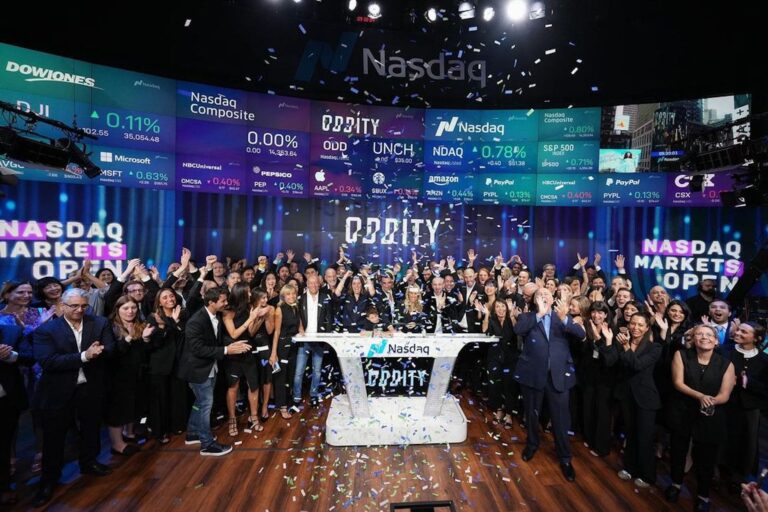
Vendasta still plans to hold an IPO one day, King said, assuming the markets become more receptive to tech stocks. He thinks a Canadian tech company should list on both the TSX and the U.S.-based Nasdaq, which has higher trading volumes. And while Vendasta’s current run rate projects roughly US$100 million in annual revenue, according to King, he believes a company should have a revenue run rate of US$250 million to US$300 million to pursue this strategy. The company has to “grow and execute on our plan perfectly to get there in the next couple of years,” he said.
That timeframe is indicative of how Vendasta, like many other tech firms, has changed its approach from grow-at-all-costs to moving quickly towards profitability—an approach investors also now favour.
King said the company has now reached profitability on a monthly basis. “We intend to stay profitable,” he said.



Loading...
Thanks for sharing!
You have shared 5 articles this month and reached the maximum amount of shares available.
CloseThis account has reached its share limit.
If you would like to purchase a sharing license please contact The Logic support at [email protected].
CloseGift the full article!
You have gifted 0 article(s) this month and have 5 remaining.
Recipients will be able to read the full text of the article after submitting their email address. They will not have access to other articles or subscriber benefits.
Photo: Matt Smith for The Logic
Most Popular This Week




In-depth, agenda-setting reporting
Great journalism delivered straight to your inbox.
The Big Read
Alberta’s referendum is just the start of the turmoil
Briefing
EverWind plans $10B data centre and wind development in Nova Scotia
Canada ready to force Stelco to sell its Canadian operations, Joly says
Feds plan a 60 MW defence-oriented data centre for Ottawa
Best business newsletter in Canada
Get up to speed in minutes with insights and analysis on the most important stories of the day, every weekday.
Exclusive events
See the bigger picture with reporters and industry experts in subscriber-exclusive events.
Membership in The Logic Council
Membership provides access to our popular Slack channel, participation in subscriber surveys and invitations to exclusive events with our journalists and special guests.






