Investments in private Canadian companies increased about 60 per cent in the second quarter from the previous three-month period, bringing fundraising back up above pre-pandemic levels after nearly a year of venture capitalist investors hoarding their cash.
Skip to content



Special Report
AI hype helps boost Canadian venture deals in Q2
‘We are all sort of backing larger, faster horses’
Cohere CEO Aidan Gomez speaks at the Collision technology conference in Toronto in June 2023. The Toronto-based AI firm raised US$270 million that month, in a round led by Inovia Capital. Photo: Christopher Katsarov Luna for The Logic
Investments in private Canadian companies increased about 60 per cent in the second quarter from the previous three-month period, bringing fundraising back up above pre-pandemic levels after nearly a year of venture capitalist investors hoarding their cash.
Startups and scaleups in the country raised about US$2.24 billion from April through June, up from US$1.4 billion in the first quarter of the year, according to PitchBook data provided to The Logic. Canadian VC investments had been fluctuating between US$1.1 billion and US$1.9 billion in the year leading up to the pandemic.
Talking Points
- Canadian companies raised about US$2.24 billion in venture capital in the second quarter, up nearly 60 per cent from the previous three months, following a year of slower VC activity
- Large investments in AI and cleantech drove the rise in investment dollars
- The overall number of deals continued to drop, as investors wrote larger cheques in fewer companies
Two sectors in particular are largely responsible for rousing VCs back into action this spring: artificial intelligence and cleantech.
Investors piled about US$546 million into Canadian AI companies in the last quarter, up from about US$462 million a year earlier, PitchBook’s data shows—despite the overall drop in venture capital dollars during that period. The activity comes on the heels of OpenAI’s ChatGPT launch in late 2022, which triggered a mass obsession with generative AI. Canadian AI firms didn’t immediately cash in on the hype, however, and investments in the sector actually slowed in the first quarter of 2023.
But by spring, VCs had begun fuelling what’s become an AI hype cycle. In Canada, several massive deals have bolstered the outsized funding in the sector. Toronto-based AI firm Cohere raised US$270 million in June led by Montreal-based Inovia Capital. The deal valued the firm, which allows clients to add machine-made text to their products, at US$2 billion. BenchSci—another Toronto-based firm, which uses AI to guide drug discovery—raised $95 million in May in a deal led by London-headquartered Generation Investment Management.
Overall, AI companies captured about 24.4 per cent of all venture capital dollars in the last quarter, up from about 20 per cent the previous quarter and 18.5 per cent a year earlier.
Cleantech and climate tech companies have also benefited. Canadian companies in the sector attracted about 31 per cent of all investments last quarter, amounting to nearly US$691 million. That’s up from roughly US$432 million, or 17.3 per cent, of all VC dollars going into clean and climate tech a year earlier.
Related Articles


“Climate tech [in Canada] seems to be weathering what I’d call a slowdown in the whole VC market,” said Susan Rohac, managing partner of BDC Capital’s climate tech fund.
She said she’s seeing more generalist and strategic investors wade into the space. Some firms may be motivated to invest in a cleantech company whose technologies may help them reach their own sustainability or net-zero goals.
Canada’s cleantech market seems to be bucking the global trend, which shows a drop in investments reflecting the broader venture capital slowdown.
Policies like the U.S.’s Inflation Reduction Act and, in Canada, a string of tax credits worth nearly $17 billion are expected to incentivize private investment in areas like clean electricity, clean manufacturing, and carbon capture and storage. But Rohac said investors are likely waiting for details before deploying capital that might benefit from new government initiatives.
“We are all sort of backing larger, faster horses.”
Investors in the sector are more cautious than during the 2021 boom cycle, Rohac said. While valuations are starting to come down from their 2021-2022 highs, she said it’s possible they may reduce more, creating “a little bit of a challenge” for investors—many of whom are taking longer on due diligence before closing a deal.
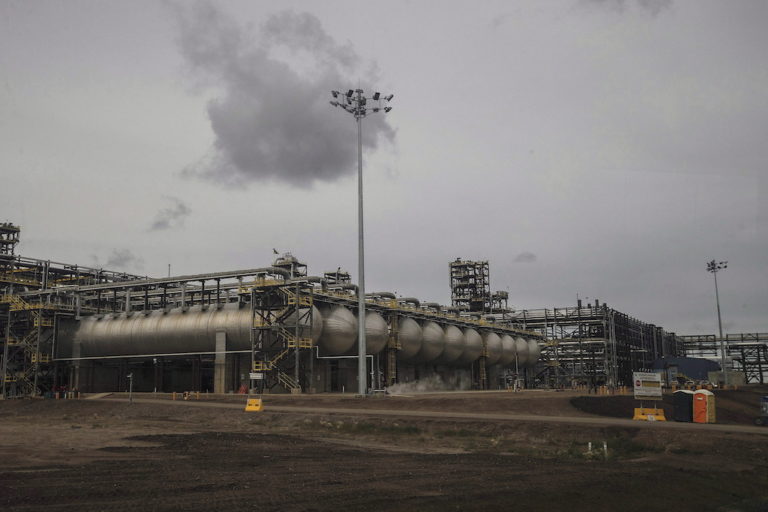
Still, Canadian companies managed to raise several large rounds in the space, increasing its share of overall VC dollars. Burnaby, B.C.-based carbon capture firm Svante clinched US$318 million in a Series E in April, the quarter’s largest deal. And Calgary-based geothermal tech company Eavor raised US$80 million in June.
While total venture capital investments were up across sectors compared to the previous three quarters, they were US$0.26 billion shy of where they were a year ago, and down 55.2 per cent from the US$5 billion in record venture capital Canadian startups raised in Q2 2021.
The number of deals that closed, meanwhile, was the lowest it’s been in any quarter over the past three years, suggesting that fewer large transactions drove the uptick in VC dollars this spring. Indeed, investors participated in five deals over US$100 million in the last quarter.
“There will be a tendency to invest in the patterns that you know, and the patterns that you know tend to be white-men-led companies.”
Rhiannon Davies, managing partner at Halifax-based Sandpiper Ventures, said the data reflects the oft-stated belief that strong companies will continue getting funded, even in a slow market. “We are all sort of backing larger, faster horses,” said Davies. “And that’s one of the benefits of a market like this, is that the [companies] that demonstrate resilience are going to be sustainable.
But she said there’s also potential that investing larger cheques in fewer companies will disadvantage diverse founders. “There will be a tendency—and we saw it at the beginning of COVID—to invest in the patterns that you know, and the patterns that you know tend to be white-men-led companies,” she said. “Smart VCs should still be looking for the untapped opportunities and not just jumping on the pile that everybody else is jumping on.”
The lower deal count may also reflect startups continuing to delay new funding rounds—opting instead to raise small sums from existing investors through bridge rounds—to avoid taking a hit to their valuation.
Shawn Chance, a partner at Toronto-based OMERS Ventures, expects the VC market to be relatively slow for the next quarter—in part because there’s usually less activity in summer—but agrees with Davies’s assessment that it may pick up by year’s end. “What you’re seeing is companies that really don’t want to be raising, but eventually, you’re out of options,” he said.
As many startups deplete their cash, Davies said there may just be a quarter or two left before those firms have to do a proper raise. “You can’t keep going back for bridge rounds,” she said. ”At a certain point you lose your legitimacy and it’s almost as bad as a down round.”
Correction: This story has been updated to correct the total amount invested in Canadian AI, cleantech and climate tech in Q2 2023 and Q2 2022. Data on the total venture dollars invested across all sectors in Q2 2023 was also revised to reflect updated PitchBook figures after publication.



Loading...
Thanks for sharing!
You have shared 5 articles this month and reached the maximum amount of shares available.
CloseThis account has reached its share limit.
If you would like to purchase a sharing license please contact The Logic support at [email protected].
CloseGift the full article!
You have gifted 0 article(s) this month and have 5 remaining.
Recipients will be able to read the full text of the article after submitting their email address. They will not have access to other articles or subscriber benefits.
Photo: Christopher Katsarov Luna for The Logic
Most Popular This Week




In-depth, agenda-setting reporting
Great journalism delivered straight to your inbox.
News
Canada ‘can’t even talk about anything else’ if Trump makes good on latest tariff threat
Briefing
Stellantis considering selling Ontario factory, union says
Intellectual property from failed New Brunswick nuclear developer sold to Ontario’s Nuclea Energy
Drone maker Volatus reports revenue dip as it struggles with its supply chains
Best business newsletter in Canada
Get up to speed in minutes with insights and analysis on the most important stories of the day, every weekday.
Exclusive events
See the bigger picture with reporters and industry experts in subscriber-exclusive events.
Membership in The Logic Council
Membership provides access to our popular Slack channel, participation in subscriber surveys and invitations to exclusive events with our journalists and special guests.